











For practically insulting Governor of Edo State, Adams Oshiomhole during a South-South session held by the Presidential Committee on National Dialogue in Benin City on Monday, a member of the committee, Tony Nyiam has been forced to resign after the committee tendered an unreserved apology to the governor.
It was learnt that the Presidency forced him to resign after all the other committee members threatened to resign if Nyiam was not sent away from the committee within three days of the incident, which would have elapsed on Wednesday.
Huhuonline.com learnt that the situation has created a serious dent in the fragile confidence reposed in the committee by Nigerians, as it has further boosted its rejection by the All Progressives Congress (APC).
Governor Oshiomhole had re-echoed his party's belief that nothing positive would come out of the proposed conference and that it was a waste of time and scarce resources. He was, however, cut short by Nyiam, a retired colonel, who felt the governor was over-exerting his privilege.
He was said to have charged at the governor but was stopped by his colleagues. At a time, he was said to have become almost uncontrollable, an action that seriously embarrassed the other committee members and forced the governor to leave the venue immediately after completing his speech, as thugs, allegedly sponsored b Nyam, almost attacked him.
During the speech, Oshiomhole likened the outcome of the dialogue to the one that was organised by former President Olusegun Obasanjo, which ended up achieving nothing. He expressed belief that nothing concrete could be achieved from the proposed conference
Oshiomhole said he would be surprised if anything changes adding: “Sincerely, I have no business to deceive or mislead anyone. I believe that the outcome of this conference will not be different from that of other conferences we have had in the past.”
Many who attended the session believe that Nyiam's dishonourable outburst and insults was actually a carry-over of his provocation by the governor when the committee first met him before the session. It was learnt that Oshiomhole told the committee members that though he wished them well, he was averse to such a waste of resources and that he had no faith in their going round the country. He declared at the meeting that he had promised to tell the truth since that is what he owes Nigerians.
“I just want to say that I have no faith in this process and I do not think it was necessary at all,” he told the committee members. “I am unable to find any basis to give me some illusion that this exercise will not be different from the others. And I honestly think that in terms of the private sector, when a country keeps debating how we can live together, that cannot be one of the basis on which the outside community will invest in Nigeria.”
The governor had noted that there were more pressing issues facing the country, which the National Conference cannot address.
“When I see eminent Nigerians discussing this issue, I am sure they know that Nigeria’s problem is not this politics of sharing, which the national dialogue is all about: who is getting what, who has this natural endowment, who should do this or not do this. For me this is the act of perfecting poverty. The real challenge is getting Nigeria back to production. The real challenge is creating industrial base and this cannot be resolved through conferences.
“We have moved from parliamentary system in our own wisdom to the presidential system. We have test-run it and it was aborted by the Military and it has reincarnated in the present form,” he said adding that Nigeria needs serious reflection about how to return to those core values that made the country work before now.
“...I do not see how any dialogue can work. I was discussing with somebody last week and he noted that this is the eleventh conference and I ask, what 10 conferences could not do, how would the eleventh one do it?
“Why do we think we can continue doing the same thing the same old way and think that this time the outcome would be different? To me, this is not meant to work and it will not work...We know we want to talk but we do not know what we want to talk about.”
Nyiam, it was learnt, had bottled up the anger that followed this condemnation of their activities only to let lose at the venue of the event, prompting his forced resignation by other members led by Femi Okurounmu.
Condemning the disruption by one of its members on Tuesday, the committee tendered an unreserved apology for what it described as an unruly conduct.
“We want to emphasise that the committee will listen to all shades of opinion in the areas of its mandate and will not henceforth condone the kind of unacceptable behaviour we witnessed in Benin City today,” the committee wrote in a statement.
“The committee wishes to express its sincere appreciation to the Government and People of Edo State for providing support to the committee in its assignment in the state.”
 |
|

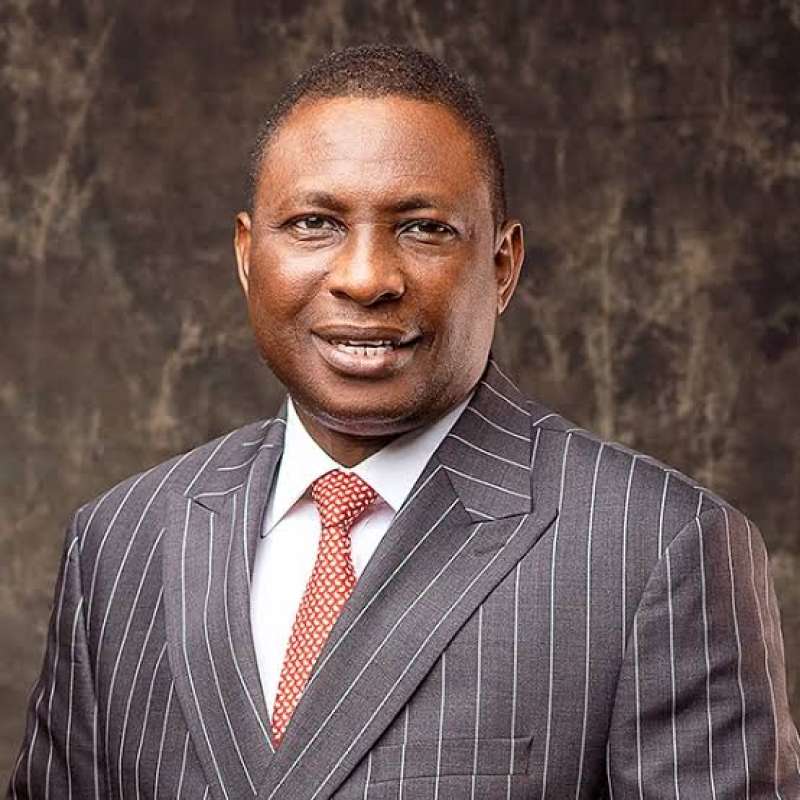
The Chairman of the Economic and Financial Crimes Commission (EFCC), Ola Olukoyede, has offered whistleblowers between 2.5 per cent and 5 per cent of recovered stolen Nigerian assets held abroad for information that leads to their recovery.
Olukoyede disclosed this on Wednesday while delivering a lecture at the Cambridge International Symposium on Economic Crime in the United Kingdom.
According to him, the ability of EFCC operatives to trace assets, cooperation from the judiciary and access to credible intelligence have played important roles in the commission’s success in securing non-conviction-based forfeiture orders.
He also described the EFCC as having some of the best investigators in the world and stressed the importance of protecting and encouraging whistleblowers.
He said anyone with credible information about stolen Nigerian assets taken or hidden anywhere in the world could receive between 2.5 per cent and 5 per cent of the recovered assets as an incentive, with payment made after the recovery.
Olukoyede further revealed that the EFCC had forfeited cash and assets worth more than $500 million to the Federal Government within the past three years.
He cited several cases involving the recovery and forfeiture of assets, including cases linked to a former Chairman of the Central Bank of Nigeria and a former Attorney-General of the Federation.
The EFCC chairman explained that the commission is legally empowered to seek the forfeiture of suspected proceeds of crime by applying to the High Court for an order. He said the process is similar to procedures used in countries such as Australia and Canada.
Olukoyede also recalled a case involving an aircraft allegedly acquired by an individual who was accused of receiving about $30 million in bribes in connection with a power project. He said the aircraft was forfeited about three months ago and had subsequently been added to the presidential air fleet.
He also referred to a property containing about 753 housing units that was forfeited from a former CBN governor, against whom the EFCC has filed criminal charges in three courts.
Speaking about the immediate past Attorney-General of the Federation, Abubakar Malami, Olukoyede said the EFCC opened an investigation following allegations of abuse of office. He claimed that investigators traced about 57 properties to Malami and that approximately 48 of them had been forfeited.
The EFCC chairman further mentioned the forfeiture of a private university allegedly linked to a director in the Federal Ministry of Health. According to him, the official voluntarily surrendered the property following the commission’s investigation.
Olukoyede said the measures demonstrate the importance of asset tracing, international cooperation, credible intelligence and whistleblower protection in the fight against financial crime and the recovery of stolen public assets.
The Dangote Petroleum Refinery has raised concerns over the growing volume of imported petrol entering Nigeria, warning that it could be forced to export more of its own production if the trend continues.
The refinery said imported Premium Motor Spirit (PMS) made up roughly 43 per cent of the petrol supplied to the Nigerian market in July. It argued that the development was creating serious difficulties for a domestic refinery with the capacity to produce enough fuel for the country.
Dangote Refinery explained that it has maintained sizeable petrol reserves since commencing operations to ensure that consumers across Nigeria have access to a reliable supply. Keeping those reserves, it noted, requires substantial expenditure on storage, transportation and working capital.
However, the refinery said the continued granting of import licences without adequate information about expected import volumes has made it increasingly difficult to determine how much petrol should be produced and stored for the local market.
The company said holding large quantities of petrol becomes financially burdensome when there is no certainty about how much imported fuel will compete for the same market. It therefore considers exporting surplus stocks a more commercially viable option than allowing them to remain in storage indefinitely.
According to the refinery, increased exports in recent months should not be interpreted as evidence that Nigeria lacks sufficient refining capacity. Instead, the exports are being driven by excess stock resulting from unpredictable import volumes.
Dangote Refinery maintained that it remains fully committed to supplying the Nigerian market and has the capacity to meet or surpass the country's petrol requirements. It said its decision to export surplus products was aimed at managing inventory efficiently and avoiding unnecessary storage and financing expenses.
The refinery also warned that market disruptions caused by excessive imports could make it harder for domestic refiners to accurately predict demand. Any resulting supply problems, it said, should not automatically be blamed on local refineries.
It urged regulators and other industry stakeholders to improve transparency around petrol imports and strengthen coordination within the downstream petroleum market.
The company argued that policies that give greater support to domestic refining would help Nigeria reduce its dependence on imported fuel, conserve foreign exchange, strengthen energy security and maximise the economic benefits of investments in local refining infrastructure.
Dangote Refinery said it remains prepared to supply the country but stressed that a more predictable and transparent market environment is necessary for efficient production and inventory management.
Business
In The Spotlight
A group of heartless carpetbaggers have captured the Nigerian state, and it appears that they, their biological and political descendants, will hold the levers of government and access to Nigeria’s commonwealth for a long time to come.
When you consider news reports of how previous and current state actors steal public funds, buy choice properties in the toniest districts of Nigeria’s major cities, acquire private jets, and even establish private universities, you wonder if some people have more than two heads, to adopt a Yoruba phrase.
Either because of an inability to deliver the greatest good to the greatest number of Nigerian citizens, or by intention, the political elite have kept the people poor, causing them to depend on the largeness of heart of the same elite to meet their existential needs.
That explains why poor, downtrodden, and unconnected Nigerians eagerly collect crumbs of measly N5,000, rice, gari and whatever else the politicians offer to obtain their election votes or acquiescence after rigging the elections.
When watching an economically disadvantaged individual tell a politician who is seeking to become a legislator the good news that his wife just had a new baby, and he needed to prepare for the naming ceremony, it felt like the oppressed poor were enabling his oppressor to further oppress him.
It was like the classic case of Stockholm syndrome, of victims collaborating with their “captors” to cement the oppressive stranglehold that they already had over the state and the commonwealth of the nation, thus unwittingly arresting their own future development.
A running mate to a former governorship candidate in a Southwestern state hilariously regaled Nigerians with the story of how constituents would have raided all the alcoholic drinks in his refrigerator in the early hours of the morning, even before he woke from the hectic campaign tour of the previous day.
The political elite have practically cornered the Nigerian state for themselves, children, tribesmen and acolytes, and have devised a way to admit only those that they have found to be loyal, or pliable, into their rank of oppressors.
The oppression of the citizens of Nigeria is easily accomplished because of the high illiteracy level amongst the poor masses. The use of the weapon of illiteracy is more evident in Northern Nigeria, whose political leaders somehow turn a blind eye to the illiteracy and underdevelopment of their people.
In 2024, UNICEF revealed that out of Nigeria’s 18.3 million out-of-school children, about 12.1 million, or 66 per cent, were resident in the Northwest and Northeast regions. Yet, instead of expanding educational facilities and opportunities, some Northern governors are arranging mass weddings for children who are hardly out of their teen years.
And this is not to deny the weaponisation of illiteracy even in Obafemi Awolowo’s Western Region, which is regarded as the Athens of Nigeria, after its pre-Independence head start of free, universal and compulsory primary school education.
As if he had a premonition that Nigeria’s so-called democrats would eventually compromise education, to the detriment of the lowest and marginalised masses, that Karl Marx described as the “lumpen proletariat”, French political thinker Montesquieu argued a long time ago that “It is in a republican government that the whole power of education is required.”
Western Nigeria’s free education scheme was gradually abandoned from the days of the Second Republic when some Yoruba members of President Shehu Shagari’s political party knocked it off its bottom with the argument that “qualitative” education was better than “free” education.
It is more than a shame that a free, universal and compulsory primary school education scheme was abandoned under President Shagari, who not only was a trained teacher, but had a career as a teacher before his political career.
Awolowo had warned Nigeria’s political elite with the following quip: “The children of the poor that you failed to educate will not let your children sleep peacefully.” The insecurity that currently occurs in nearly every part of Nigeria only drives Awolowo’s point home.
Probably the realm of the Nigerian republic that has been most complicit with the carpetbagger political elite is the media, whose members either serve the elites as press secretaries who kill media brushfires, or editors who either run planted stories, or spike stories that the politicians do not want published.
The media is so compromised that it can hardly perform those responsibilities assigned to it by Section 22 of the Nigerian Constitution, which are to “be free to uphold the fundamental objectives contained in (Chapter II of the Constitution) and uphold the responsibility and accountability of the Government to the people.”
Some apologists have argued on behalf of the media that the political elite have so run the economy aground that the media, which can only thrive as commercial enterprises within Nigeria’s quasi-capitalist economy, cannot stay afloat, especially with the devastating inroads that the digital media are making into their audience, advertising revenue and profit.
The absence of regional economies, the argument goes, prevents the emergence of regional newspapers that can thrive on advertising revenues from regional companies, the way it obtains in the economies of North America and Western Europe. Many Nigerian newspapers, that are essentially regional, often pretend to be national to receive advertising revenue from companies whose market is national.
Two other collaborators of the political elite are the election management agencies and the judiciary at both the national and sub-national levels of government. The conspiracy between these agencies and the political elite is almost like that of Siamese twins conjoined by the belly button.
After the election management agencies may have deliberately bungled (especially) governorship and legislative house elections, and declared false reports, the losers, who felt that they won the election, would then approach the temple of justice, with significant financial inducement to ask for justice(?).
From that point on, the justice that both contestants hope to corruptly obtain could swing according to the heft of the naira in the Ghana-must-go bag that they will be hauling into the chambers of the denizens of the corrupted judiciary.
Thus, the “award” of electoral justice is “a matter of cash”, to quote Basi, the protagonist of “Basi & Co”, the television sitcom produced by environmental activist Ken Saro-Wiwa, who himself was denied justice from the judiciary that served the regime of General Sani Abacha, Nigeria’s most notorious military dictator.
In Nigeria, the lines of separation of powers that demarcate the duties of the three arms of government –the legislative, executive and judiciary– and the checks and balances that empower each arm to check the others have become almost irredeemably blurred.
As legislators use constituency projects as a ploy to carry out the functions of the executive, the president issues executive orders that are essentially legislative in nature. Though the judiciary does not perform the duties of the other arms, it fails to check them as it indulgently winks at their excesses.
If those who are regarded as Nigeria’s political elite really know what is in their enlightened self-interest and would like to protect the future of their descendants from what Thomas Hobbes described as a short, brutish and nasty existence, they will use their current privilege to correct the evil they have done to Nigerians.
They must urgently redeem the future before it delivers violence against their children.
By Lekan Sote
In The Spotlight
Lagos alone is worth more than Botswana, Namibia, Rwanda and Mauritius combined.
Let that sink in.
With an economy of N41.17tn — about $102bn in 2021 — Lagos State dwarfed the entire gross domestic products of four countries. Rivers, Akwa Ibom, Delta and Bayelsa sit on oil wealth that funds nations. Ogun, Anambra and Imo churn out goods, services and commerce that would make small economies jealous.
By the numbers, Nigeria’s states are giants.
But walk the streets of Lagos, and you will still find mothers cooking with firewood. Drive through Port Harcourt, and you will see communities drinking water polluted by the same oil that makes the state’s GDP glow. Visit Umuahia, Abeokuta, or Minna and ask the average trader what “trillion-naira economy” means to her dinner table.
The answer is: nothing.
That viral video telling you “10 Nigerian states are richer than countries” is both true and a lie. True, because the 2021 BudgIT figures don’t lie — Lagos at N41.17trn, Rivers at N7.96trn, and so on. A lie, because those numbers are GDP, not prosperity. They measure how much economic activity happens _in_ a place, not how much of it reaches the people who live there.
A country with $7,778 GDP per capita, like Botswana, will still feed its citizens better than a state with $102bn in total output but $2,058 per capita, like Nigeria. A state can host a port, an oil rig, and a tech hub, yet fail to build a hospital that works.
So, the real question isn’t “Which state is bigger than which country?”
The real question, and the one our governors should lose sleep over, is this: When your economy is bigger than a nation, why are your people still living like they have nothing?
In this edition of The Bottomline, we follow the money from GDP to the gutter — and ask why Nigeria’s trillion-naira states have not become trillion-naira lives.
The viral numbers are not new. They were lifted straight from BudgIT’s 2022 State of States report and reflected 2021 estimates: Lagos at N41.17tn, followed by Rivers at N7.96tn, Akwa Ibom at N7.77tn, Imo at N7.68tn, Delta at N6.19tn, Anambra at N5.14tn, Ondo at N5.10tn, Ogun at N5.03tn, Bayelsa at N4.63tn and Niger at N4.58tn.
The trick is in the timing. To pitch those 2021 figures against 2025 country GDPs is statistical fraud. Nigeria has since rebased. The NBS moved the base year from 2010 to 2019, and the whole map shifted. Lagos itself has moved on: its 2025 _Lagos Economic Development Update_ puts the state at N43.06tn in 2023, with forecasts of N54.77tn for 2024 and N66.47tn for 2025. Those are projections, not fresh NBS post-rebasing observations, but they tell you the direction: up.
There is no debate that Lagos is Nigeria’s economic engine. From a colonial port to federal capital until 1991, it never lost momentum. Today, trade, manufacturing, ports, telecoms, tech, entertainment, real estate and finance all cluster in just 3,345 square kilometres. Compare that footprint to Botswana’s 581,730 sq km, Namibia’s 825,615 sq km, Rwanda’s 26,338 sq km, and Mauritius’ 2,040 sq km. Yet in 2021, Lagos’ $102 billion economy was several times larger than Botswana’s $19.9bn, Namibia’s $15.1bn, Rwanda’s $16.4bn, and Mauritius’ $16.2bn, according to 2025 World Bank figures.
That comparison is legitimate. The conclusion people draw from it is not.
GDP tells you how much value was produced in a territory. It does not tell you who owns it, who earns it, or whether the roads work, the lights stay on, or the hospital has drugs.
A state can run a trillion-naira economy and still have mothers boiling water on firewood. A country can have a smaller GDP and deliver a better life. Look at the per capita numbers: Botswana at $7,778, Namibia at $5,309, Mauritius at $11,819. Nigeria sits at about $2,058. Even Rwanda, at just $773 per capita, has pushed its $3-a-day poverty rate down to 38.6 per cent — proof that size is not destiny.
The oil states expose the fraud most brutally. Rivers, Akwa Ibom, Delta and Bayelsa rank high because petroleum inflates their GDP. But oil wealth does not flow into state coffers in equal measure, and it certainly does not flow into household wallets. BudgIT’s own fiscal sustainability index proves this. In 2022, Rivers topped overall fiscal performance despite Lagos having the biggest economy. A big economy without revenue discipline, jobs, and services is just a billboard.
Nigeria does not have a GDP problem. We have a translation problem.
We have pockets of enormous economic power. Lagos. Rivers. Akwa Ibom. Ogun. Anambra. Delta. The output is real. What is missing is the bridge between that output and ordinary life.
Until economic activity creates real jobs, until IGR rises and addiction to federal allocation falls, until infrastructure supports production instead of strangling it, those trillion-naira figures will remain a cruel joke.
So let the video go viral. Let Lagos be “bigger than Botswana”.
But governors, commissioners, and citizens should ask only one question:
If my state can outproduce a country, why can’t it out-deliver a decent life for the people who call it home?
Until we answer that, we are not rich. We are just big.
By Raphael Mbamalu