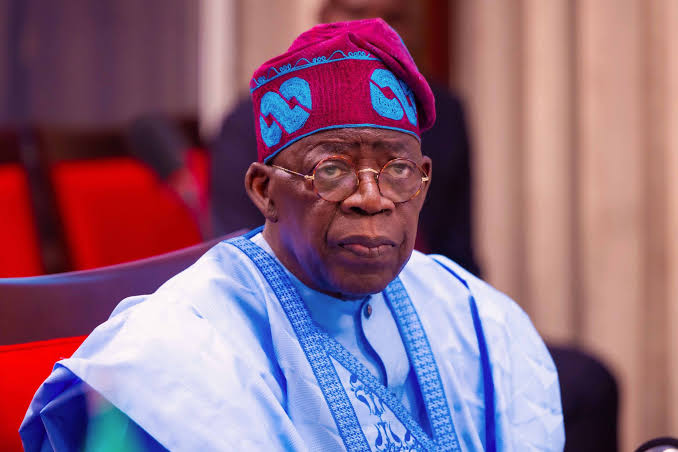



First, let me acknowledge that the nation is currently in mourning. I wish to use this opportunity to commiserate with the Nigerian Air Force and the families of the citizens whom we lost in the unfortunate plane crash in Igbokoda, Ogun State. May their souls find rest in the afterlife.
Following President Bola Tinubu’s declaration of national mourning, the Nigerian flag has been hoisted at half-mast for three days.
Coincidentally, my article today is about our green-white-green flag. But this piece was not conceived as a result of the plane crash. I planned to pen these lines on October 1, when I saw a lemon green-white-lemon green flag beside President Bola Tinubu as he gave his Independence Day speech.
In fact, the idea of discussing the Nigerian flag had crossed my mind a few times before then. As an environmentalist and climate advocate, I am ‘green’ by nature. But whenever I see prominent officeholders present creased and rumpled flags, my natural pride in our beloved nation’s exceptional national symbol deflates.
To be sure, I had seen President Tinubu make national broadcasts with creased flags flanking him. Same as several state governors and other political leaders. The flags were just furrowed, as if they were stored in a box for a long time, only to be excavated and hastily set up for the occasion without ironing.
That presents the wrong optics. It could be perceived, subconsciously, as a symbol of a nation that is sloppy and sleepy. The flag is a sacred national instrument of authority – alive, alert, agile and aware.
One could browse through international media channels and see national leaders who present their flags as if they were made with plastic materials – straight, shiny, silky and stern. Hence, the people standing beside those flags tend to communicate power and perfection without uttering a word.
That was why I was shocked on the morning of October 1, when I switched on the telly to listen to my President, and the first gaudy image that confronted my eyes was a bright lemon-green cloth packaged as the Nigerian flag.Flags are more than pieces of fabric fluttering in the wind; they are powerful symbols that embody the identity, history, and values of nations, organizations, and communities worldwide. From their vibrant colours and intricate designs to the meanings behind each element, flags tell a story of unity, pride, and tradition. When you mix up or miss a colour, you may have succeeded in obliterating a key element in the natural essence of the people the flag represents.
Interestingly, President Tinubu himself opened the Independence Day address by recalling that “our flag was raised” 66 years ago as a symbol of the sovereign nation.
To me, if we are going to place the Nigerian flag – depicting history and heft – beside the President on the most symbolically important national broadcast of the year, then the flag should be the correct national colour, properly made, properly pressed, properly positioned and properly displayed.
This is because, at a presidential address, the flag becomes a visual representation of the Nigerian state. It is not a studio prop. It is Nigeria. We, the citizens, see it. Foreign governments, diplomats, international media and the global audience see it too. If the green appears faded, washed out or noticeably different from the recognized Nigerian green, something is wrong.
And if the flag is hanging in a visibly creased, rumpled or poorly presented condition, that also deserves attention. This is not about aesthetics alone. The Nigerian flag was not designed merely to decorate government offices. It represents the country itself — its sovereignty, history, unity and aspirations.
That is why we should be careful about how we display it. The law itself recognizes the importance of proper presentation. The Flags and Coats of Arms Act provides that the National Flag should not be displayed in a faded or bad condition.
So, perhaps the Independence Day address and the lackluster flag that ushered it should prompt a simple question: Do we treat the Nigerian Flag with the dignity we say we have for Nigeria? A properly manufactured flag. The right shade of green; the correct green-white-green configuration; clean; unfaded; properly ironed or steamed; properly mounted; and properly positioned.Some may dismiss this as trivial, but I disagree. A nation communicates through symbols. Before a government speaks through policy, statistics or speeches, its symbols are already speaking.
On that day, President Tinubu spoke about Nigeria’s journey, its difficulties and its future. He reminded Nigerians that the national flag was raised 66 years ago when the country became independent. Yet, without telling us that those years have made us lose our deep-seated ancestral green faith, he communicated it via a not-so-green flag. A green that looked harassed and baked in the harsh climate of tropical heat – just like foliage plucked off its source of moisture.
That was the unspoken message from a lemon-green flag that is nowhere near our official emerald-green flag.
The President must hear this because he has many paid handlers and spin doctors, whose duty is to ensure that every one of the President’s outings is on point and in tune with the authority the office is bestowed with. If they do not do their duty, perhaps we, the citizens, should ensure that whenever that flag appears beside the President, it looks exactly like the flag of the Nigeria we are asking compatriots to believe in.
This is because patriotism should not only be demanded of citizens. It should also be demonstrated by the state – even in the way it displays its flag.
This also goes for every government agency and establishment. There is something particularly uncomfortable about seeing Nigerians expected to respect the National Flag while government institutions sometimes appear casual about the condition in which they present that same flag.
There are some things Nigerians should never have to debate. The colour of the Nigerian flag is one of them.Imagine the reverse – a Nigerian embassy abroad displaying another country’s national flag in a faded, badly creased or visibly incorrect form. Would we shrug? Would we say, “It is only a piece of cloth”? Of course not.
Or a foreign embassy displaying a lemon green-white-lemon green flag for us. We would protest. We would say the embassy had embarrassed Nigeria. Then why should the Nigerian flag receive less dignity at home?
There is also something psychologically important here. People learn patriotism partly through symbols. A child who sees the Nigerian flag flying proudly begins to understand that the green-white-green means something. A young person who watches the national flag being raised at a ceremony learns that it deserves respect. A soldier who salutes the flag is not saluting cloth. The soldier is saluting the nation.
That is why the condition of the symbol matters. The Nigerian flag has a prescribed identity. It is green-white-green. Not green-ish-white-green-ish. This is because the green represents the country’s rich natural wealth and forests, while the white represents peace and unity. In fact, the National Orientation Agency regulates this shade to prevent corporate or public misrepresentation, ensuring the flag is never altered to lighter variants like lemon or olive green.
So, here is my request: Let the President’s team give the Nigerian flag its green back, with correct proportions. Give it a clean, straight and dignified presentation. More importantly, establish a presidential standard that ensures no future Nigerian President has to stand beside a flag that looks like an afterthought.
By Greg Odogwu
President Tinubu must hear this