

















Corruption, terrorism, indiscriminate Police and Army killing of civilians and government impunity headlined a new report submitted to the United States Congress by Secretary of State John Kerry.Titled Country Reports on Human Rights Practices for 2012, the Department of State prepared the document based on information from United States embassies and foreign consulates, foreign government officials, non-governmental and international organisations.
Acts of terrorism such as killings, bombings and kidnappings by adherents of the Boko Haram Islamist sect, abuses by security services, and societal violence such as ethnic, regional, and religious killings were listed as the most worrisome human rights abuses of the year under review. The report detailed a blow-by-blow account of Boko Haram-motivated killings right from January to December 2012.
It also spotlighted Nigeria’s prison problems, ranging from prison congestion to obsolete facilities, spread of diseases among inmates, to rape of women in detention. It also highlighted widespread corruption in public offices and diminishing press and civil society freedom.
Huhuonline.com obtained the full report and presents it below:
EXECUTIVE SUMMARYS: Nigeria is a federal republic of 36 states and the Federal Capital Territory (FCT). In April 2011 President Goodluck Jonathan of the ruling Peoples Democratic Party (PDP), who had assumed the presidency in May 2010 following his predecessor’s death, won election to a four-year term, along with Vice President Mohammed Namadi Sambo, also of the PDP. International and domestic election observers considered the April 2011 presidential, gubernatorial, and legislative elections to be generally credible, orderly, and a substantial improvement over the flawed 2007 elections. However, there were reports of fraud and irregularities, including vote rigging and buying, underage voting, ballot stuffing, and political violence. Immediately following the presidential election, supporters of the opposition Congress for Progressive Change (CPC) candidate, Muhammadu Buhari, a northern Muslim, challenged the outcome of the election. Postelection violence in protest of Jonathan’s victory erupted in the North and in the Middle Belt states, directed towards local grievances and political targets, resulting in loss of lives, property damage, and restrictions on movement. The April 2011 legislative elections produced major changes in the National Assembly, as only an estimated one-third of the incumbents in both houses were reelected, and opposition parties gained many seats. The Supreme Court ultimately upheld the results of the presidential election, while the Court of Appeals upheld the results of most other contests in which challenges occurred. While security forces generally reported to civilian authorities, elements of the security forces periodically acted independently of civilian control.
The most serious human rights problems during the year involved abuses committed by the militant sect “People Committed to the Propagation of the Prophet’s Teachings and Jihad” (Hausa: Jama’atu Ahlis Sunna Lidda’awati Wal-Jihad)--better known by its Hausa name Boko Haram (“Western education is anathema”)--which conducted killings, bombings, kidnappings, and other attacks throughout the country, resulting in numerous deaths, injuries, and widespread destruction of property; abuses committed by the security services with impunity, including killings, beatings, arbitrary detention, and destruction of property; and societal violence, including ethnic, regional, and religious violence.
Other serious human rights problems included extrajudicial killings by security forces, including summary executions; security force torture, rape, and other cruel, inhuman, or degrading treatment of prisoners, detainees, and criminal suspects; harsh and life-threatening prison and detention center conditions; arbitrary arrest and detention; prolonged pretrial detention; denial of fair public trial; executive influence on the judiciary; infringements on citizens’ privacy rights; restrictions on freedom of speech, press, assembly, religion, and movement; official corruption; violence and discrimination against women; child abuse; female genital mutilation/cutting; the killing of children suspected of witchcraft; child sexual exploitation; ethnic, regional, and religious discrimination; trafficking in persons for the purpose of prostitution and forced labor; discrimination against persons with disabilities; discrimination based on sexual orientation and gender identity; vigilante killings; forced and bonded labor; and child labor.
Impunity remained widespread at all levels of government. The government brought few persons to justice for abuses and corruption. Police and security forces generally operated with impunity. Authorities did not investigate the majority of cases of police abuse or punish perpetrators. Authorities generally did not hold police accountable for the use of excessive or deadly force or for the deaths of persons in custody.
The militant sect Boko Haram perpetrated numerous killings, bomb and suicide bomb attacks, prison breaks, and kidnappings throughout the country. During the year the sect expanded its campaign of assaults and bombings from Borno, Bauchi, and Yobe states to Adamawa, Kano, Kaduna, Kogi, Niger, Plateau, Sokoto, and Taraba states. The sect claimed responsibility for coordinated assaults on multiple targets in Kano on January 20; the suicide bombing of churches in Kaduna and Jos on Easter; the suicide bombings of the This Day newspaper offices in Abuja and Kaduna on April 26; the kidnapping and killing of British, Italian, and German hostages; the bombing of multiple churches in Bauchi, Plateau, and Kaduna states in June; prison breaks in Lokoja and Abuja; and the killing of government, religious, and traditional figures throughout the year. Government officials, civil society, and religious leaders on multiple occasions claimed to have initiated a dialogue with Boko Haram, but elements of the sect denied any involvement in such talks.
Most militant groups in the Niger Delta accepted then president Yar’Adua’s offer of amnesty in 2009, and the overall level of violence there declined. Kidnappings and piracy in the Gulf of Guinea continued during the year.
Section 1. Respect for the Integrity of the Person, Including Freedom from:Share
a. Arbitrary or Unlawful Deprivation of LifeThe government or its agents committed numerous arbitrary or unlawful killings.
During the year Joint Task Forces (JTFs), composed of elements of the military, police, and other security services, conducted raids on militant groups and criminal suspects in Adamawa, Bauchi, Borno, Gombe, Kano, Kaduna, Kogi, Niger, Plateau, Sokoto, and Yobe states, resulting in numerous deaths and injuries to alleged criminals, militants, and civilians. According to credible eyewitness accounts, JTF members committed illegal killings during attempts to apprehend members of the extremist group Boko Haram in several states, including Borno, Kano, Kaduna, and Yobe states and surrounding areas. Local nongovernmental organizations (NGOs), international human rights groups, and political and traditional leaders from the affected states accused the security services of indiscriminate and extrajudicial killings, illegal detention, inhumane treatment of detainees, and torture during the year.
On October 9, witnesses in Maiduguri claimed members of the JTF “Restore Order,” based in Maiduguri, went on a killing spree after a suspected Boko Haram bomb killed an officer. Media reported the JTF killed 20 to 45 civilians and razed 50 to 100 houses in the neighborhood. The JTF commander in Maiduguri denied the allegations. On November 2, witnesses claimed the JTF shot and killed up to 40 people during raids in Maiduguri. The army claimed it dismissed some officers from the military as a result of alleged abuses committed in Maiduguri, but there were no known formal prosecutions in Maiduguri by year’s end.
Reports also surfaced during the year that the JTF based in Maiduguri illegally detained and killed suspected members of Boko Haram in the Giwa barracks in Borno State. Former detainees accused security forces of torture and mistreatment, which in some cases led to the death of detainees. Authorities publicly denied the claims, describing them as inaccurate or unbalanced.
During the year both Amnesty International (AI) and Human Rights Watch (HRW) released reports critical of the conduct of security forces in these raids.
In October HRW released the report Spiraling Violence: Boko Haram Attacks and Security Force Abuses in Nigeria. The NGO conducted three trips to the country, including to Maiduguri, Kano, Abuja, and Madella, between 2009 and 2012. HRW researchers conducted 135 interviews with 91 human rights activists, government officials, and witnesses of Boko Haram attacks or security force abuses. The report condemned Boko Haram attacks but also criticized the heavy-handed response of the government. HRW accused the JTF of excessive use of force, physical abuse, secret detentions, extortion, burning of houses and property, theft of money, and extrajudicial killings. HRW estimated the actions of Boko Haram and security forces charged with combating Boko Haram resulted in the death of 2,800 persons since 2009.
In November AI released the report Nigeria: Trapped in the Cycle of Violence. AI conducted five trips to the country, including to Abuja and to Kano, Borno, and Bauchi states, from 2010 to 2012. They conducted interviews with witnesses of the violence, the families of victims, human rights activists, and government officials. AI also condemned the actions of Boko Haram and alleged security forces also perpetrated serious human rights violations, including arbitrary detention without trial of Boko Haram suspects, enforced disappearances, and extrajudicial killings. The NGO accused the government of failing to adequately prevent or investigate the attacks, bring perpetrators to justice, or provide prompt or adequate reparation or remedy to victims.
The government criticized the AI and HRW reports as inaccurate and unbalanced and claimed the human rights groups did not contact it for input. Both NGOs claimed they requested meetings with various government offices but did not receive responses from any.
In addition to abuses by extremists and security forces, both reports highlighted how the population’s grievances regarding poverty, government and security force corruption, and police impunity and brutality created a fertile ground for recruiting Boko Haram members.
While press articles often contained contradictory and inaccurate information, multiple sources confirmed allegations of abuses.
Credible reports also indicated other uniformed military personnel and paramilitary mobile police carried out summary executions, assaults, torture, and other abuses throughout Bauchi, Borno, Kano, Kaduna, Plateau, and Yobe states (see section 1.g.). The national police, army, and other security forces committed extrajudicial killings and used lethal and excessive force to apprehend criminals and suspects, as well as to disperse protesters. Authorities generally did not hold police accountable for the use of excessive or deadly force or for the deaths of persons in custody. Security forces generally operated with impunity in the illegal apprehension, detention, and sometimes extrajudicial execution of criminal suspects. The reports of state or federal panels of inquiry investigating suspicious deaths remained unpublished.
On May 16, police and members of the local JTF in Kano reportedly beat and shot to death Gaddafi Salisu Soda as he passed a police station. Neighbors claimed Soda attempted to identify himself to police but they continued to beat him before shooting and killing him. Police announced they had begun an investigation, although there were no developments by year’s end. The family tried to sue the police, but on May 24, the court dismissed the suit, ruling it could not enforce fundamental human rights after death. The family instituted a suit against the police, but there were no updates by year’s end.
On July 15, soldiers travelling in a convoy through Lagos assaulted Adewale Olupitan-Hassan, cracking his skull. The soldiers claimed Olupitan-Hassan’s vehicle hit their vehicle, breaking the side view mirror. After beating him, the soldiers took Olupitan-Hassan to a police station where they made him pay for a new side mirror. On July 29, Olupitan-Hassan died of his injuries. Olupitan-Hassan’s family took the police to court. On October 24, the lawyer for the chief of army staff told the court he could not produce the soldiers charged with the assault because they had been transferred to other posts. The judge adjourned the case until November 28, but by year’s end there were no updates.
On May 6, the high court in Abuja awarded Eugene Okere 152 million naira ($974,000) after police shot and killed his wife in January 2011 while she was riding in a cab. Okere had not received payment by year’s end from the police and the attorney general, which was attributed by NGOs to a lack of enforcement of court decisions for punitive awards against the police.
The 2010 annual report of the Police Service Commission identified 253 pending disciplinary cases for misconduct by police officers. The report also said the commission had received 91 appeals and petitions during the year.
On January 9, after a lengthy trial, the Borno State government and the federal government and police paid 40 million naira ($256,000) and 60 million naira ($384,000), respectively, to the family of Baba Fagu, father-in-law of then-Boko Haram leader Muhammad Yusuf, for Fagu’s detention and murder by police in 2009. Buji Fai, a former state government official suspected of funding Boko Haram, also reportedly died in custody along with Fagu.
There were no new developments in the case of five police officers accused of executing MuhammadYusuf in 2009 at a state police headquarters. In July 2011 authorities arraigned five police officers in the federal high court in Abuja for the murder of Yusuf. The court granted bail to four of the officers, while one remained in custody.
In 2009 AI published Killing at Will: Extrajudicial Executions and Other Unlawful Killings by the Police in Nigeria, which documented 39 cases of security force killings and enforced disappearances based on interviews and research conducted between July 2007 and July 2009. According to the report, national police conducted hundreds of extrajudicial executions, other unlawful killings, and enforced disappearances each year. In a country where “bribes guarantee safety,” those who could not afford to pay risked being shot or tortured to death. Authorities did not investigate the majority of cases or punish perpetrators. When investigations occurred, they did not comply with international standards, and officers suspected of extrajudicial executions generally were sent away on training or transferred to other states instead of undergoing prosecution. Police often claimed the victim was an armed robber killed in an exchange of gunfire or a suspect killed while trying to escape custody. AI charged Police Force Order 237, which permits officers to shoot suspects and detainees who attempt to escape or avoid arrest, “lets the police get away with murder.”
Political violence remained an issue in Jos, but the frequency and level of violence lessened during the year in part due to a greater security presence, local efforts to reconcile communities, and the absence of local area government elections that were the root cause of violence in 2008 and 2010. In 2011 President Jonathan announced the government would release a harmonized white paper on the crisis in Jos, but by year’s end the report was not available. Additionally, neither the federal nor the Plateau State government, despite the recommendations of previous reports, had established truth and reconciliation committees by year’s end.
in July the CLEEN Foundation released the results of a national crime and safety survey revealing 31 percent of people claimed to have fallen victim to a crime over the past year. Only 21 percent of these self-reported victims reported those crimes to the police, possibly because 76 percent of respondents believed they would have to pay a bribe to receive services. The report noted that, over the past two years, incidents of robbery had increased 6 percent, while reports of domestic violence had increased 14 percent--possibly due to increased awareness of the crime. Of those who reported crimes, only 48 percent of respondents reported satisfaction with police handling of their case. The survey also suggested corruption, particularly among police, continued to affect the lives of many persons, and respondents pointed to government insincerity as the most significant obstacle facing the Economic and Financial Crimes Commission (EFCC) and the Independent Corrupt Practices and Other Related Offenses Commission (ICPC), the federal government’s two main anticorruption agencies. Respondents listed crime control as the top priority over all others deserving government attention.
Police use of excessive force, including use of live ammunition, to disperse demonstrators resulted in numerous killings during the year. For example, although the January fuel subsidy demonstrations generally remained peaceful, security forces reportedly fired on protesters in various states across the country during those demonstrations, resulting in 10 to 15 deaths and an unknown number of wounded.
Police used gunfire to control or disperse political rallies; although there were no reports during the year of deaths from gunshot wounds at these rallies, the excessive force used occasionally resulted in deaths and injuries from the ensuing stampedes.
In February the newly appointed inspector general of police (IGP) announced the closure of all police checkpoints across the country. The order resulted in a decrease in the number of civilians killed at checkpoints, but violence and lethal force at unauthorized police and military roadblocks and checkpoints continued. According to AI’s 2009 report, police often stopped commercial drivers and asked them to pay bribes, the amount of which depended on the weight of the vehicle. Police shot drivers when they refused to pay, when disagreement occurred over the extorted amount, or when it remained unclear whether the drivers had paid. These police practices continued during the year.
On February 8, police at a checkpoint in Onitsha, Anambra State, reportedly shot and killed a bus driver after he argued with them about paying a bribe. The bus conductor claimed the driver offered the men at the checkpoint 20 naira ($0.13) but the men demanded 50 naira ($0.32). The driver refused, arguing that his boss had already paid during a previous trip, and proceeded through the checkpoint. Police reportedly followed the bus and shot and killed the driver while injuring some passengers with stray bullets. Police authorities reportedly made arrests, but there was no update on the investigation by year’s end.
In January an in-house police trial led to the dismissal of three officers for the “misuse of firearms” that resulted in the shooting death of Victor Emmanuel in Bayelsa State. Emmanuel had criticized police for extorting money from motorists on the road to his church. A representative for the National Police Force (NPF) stated police filed murder charges against the three officers, but there was no information on a trial by year’s end.
Despite some improvements resulting from the closure of police checkpoints in many parts of the country, states with an increased security presence due to the activities of Boko Haram experienced a rise in violence and lethal force at police and military roadblocks.
For example, human rights groups and local leaders in Kano alleged security force harassment, extortion, abuse, beatings, and killings at checkpoints in the city during the months following the January Boko Haram attacks. On April 16, security forces reportedly shot and killed Zaharadeen Musa Mohammed and injured three of the passengers in his car when he approached a checkpoint in Kano.
Security force personnel sometimes shot bystanders indiscriminately or by mistake. For example, on July 29, a naval officer shot and killed six and wounded another 15 people in Ilaje, Ondo State. The victims were part of a group attempting to enter a ceremonial distribution of welfare packages. Eyewitnesses claimed the officer appeared drunk and opened fire after members of the crowd protested not being on the guest list.
Police and military personnel used excessive force to quell civil unrest and interethnic violence, and to deal with property vandalism. For example, on March 28, antiriot police shot a Benue State University student in the chest while trying to disperse protesting students. The students were protesting after a truck driver allegedly struck and killed a university student while driving through campus the previous day. There were no updates on an investigation by year’s end.
Boko Haram increased its attacks on police and security forces, banks, bars, restaurants, religious sites, schools, and government buildings in the North and the FCT. Shootings and bombings in Maiduguri, Borno State, occurred on a weekly--and sometimes daily--basis throughout the year. Violence spread to neighboring Adamawa, Bauchi, Kano, Kaduna, Kogi, Niger, Plateau, Taraba, and Yobe states by year’s end. Attacks occurred against a newspaper office and a detention facility in Abuja during the year (see section 1.g.).
For example, on July 2, unknown gunmen stormed a workers’ compound in Maiduguri, Borno State, and killed nine non-Muslim construction workers. The construction crew had been working on an Islamic Cultural Center adjacent to the Shehu of Borno’s central mosque in Maiduguri, Borno State. Boko Haram claimed responsibility for the killings.
b. DisappearanceContinuing abductions of civilians by criminal groups occurred in the Niger Delta and Southeast (see section 1.g.).
Other parts of the country also experienced a significant increase in abductions. Political figures were often targets of abduction, largely due to their status as wealthy figures in the community; rarely did kidnappers announce political motives for the abductions.
On May 30, a court arraigned Osun State PDP Chief Adedotun Adebowale and two others on charges of kidnapping Action Congress of Nigeria (ACN) member James Olusola in January 2011. On September 25, an Osogbo Magistrate Court adjourned the case until October 19. At year’s end the case remained open, but the trial had not begun.
Kidnapping for ransom spread to the Southeast, with Abia, Imo, and Anambra experiencing the highest levels of kidnapping. Fear of kidnapping deterred travel to the region by both citizens and foreigners.
In recent years Akwa Ibom, Abia, Anambra, Imo, and Rivers states passed strict antikidnapping laws that prescribe long prison sentences, and sometimes the death penalty, for those found guilty of kidnapping. These laws resulted in few convictions.
Police and other security forces were often implicated in the kidnapping schemes. On April 5, then acting inspector general of police Mohammed Abubakar ordered the arrest of the officer in charge of the Anti-Kidnapping Task Force in Delta State, a chief superintendent of police, and six other officers under suspicion they aided and abetted kidnappers in the state. The IGP also disbanded the task force. Police officials suspected the accused officers had provided information on the movements of prominent people in the state to kidnappers. In June the police service commission returned the head of the task force to his former position, provoking protests from the Delta State Legislature.
c. Torture and Other Cruel, Inhuman, or Degrading Treatment or PunishmentAlthough the constitution and law prohibit such practices and provide for punishment of such abuses, torture is not criminalized, and security service personnel, including police, military, and State Security Service (SSS) officers, regularly tortured, beat, and abused demonstrators, criminal suspects, detainees, and convicted prisoners. Police mistreated civilians to extort money. The law prohibits the introduction into trials of evidence and confessions obtained through torture; however, police often used torture to extract confessions.
JTF use of excessive force during raids on militant groups and criminal suspects in the Niger Delta and many states in the North resulted in deaths, injuries, mass rape, displacement of civilians, and other abuses (see section 1.g.).
In September the Network on Police Reform in Nigeria (NOPRIN) released the findings of a civil society panel convened in February to explore police reform. The report highlighted an inadequate and outdated NPF mission statement ill-suited for a liberal democratic society; a legal framework that has led to politicization and lack of professionalism in the force; overcentralization of power in the hands of the IGP; a lack of functional specialization among NPF officers; a duplication of policing functions in outside agencies; weak oversight agencies, especially the Police Service Commission; and an ineffectual performance appraisal system. The panel also discovered continued corruption and lack of public confidence in the force; ineffective training and a deficient training infrastructure; insensitivity to crimes against women; and funding problems including low budgetary allocation, incomplete release of budgeted funds, and late release of funds, all of which feed corruption.
In 2010 the Open Society Justice Initiative, together with NOPRIN, released a 138-page report, Criminal Force: Torture, Abuse, and Extrajudicial Killings by the Nigeria Police Force, with first-hand reports from investigations at more than 400 police stations. Describing summary executions of suspects, torture as a means of investigation, rape, and extortion, the report claimed the government had acknowledged these problems but had actually allowed the abuse to continue with “a stunning degree of impunity.”
Police commonly used a technique called “parading” of arrestees. Parading involved literally walking arrestees through public spaces, subjecting them to public ridicule and abuse. Bystanders often hurled taunts, food, and objects. Police defended this practice with the argument that public humiliation helped deter crime. For example, on August 24, the Nigerian Immigration Service (NIS) in Lagos paraded 13 Chinese teenagers (11 females and two males) after authorities arrested them on suspicion of prostitution. An NIS public relations officer noted preliminary investigations revealed the females had been trafficked into Nigeria with the promise of receiving factory jobs.
In July the IGP announced the creation of an e-mail address for citizens to notify the police of police brutality and abuse. During a graduation ceremony of 217 officers from human rights training in March, the keynote speaker noted that, since the creation of human rights desks at police stations, the police had received more than 1,000 cases and dealt with approximately 500. An April statement by NOPRIN claimed the human rights desks had “at best been docile while human rights violations in the force continue unchecked.”
In September the IGP presented a new police code of conduct. The code of conduct introduced a list of values with an emphasis on service to the community, building public trust, and respect for personal rights. The code also laid out the primary responsibilities of a police officer and stressed the need for impartial performance of duties, discretion, reasonable use of force, confidentiality, integrity, cooperation with other agencies, professional development, and ensuring an officer’s private life does not discredit the police force. While the code offered a general statement on the use of force by police, it did not repeal or make any clarifications in regard to Police Order 237.
Police and military use of excessive force in response to violent attacks by Boko Haram resulted in numerous deaths and injuries (see sections 1.a. and 1.g.).
Security forces beat journalists during the year (see section 2.a.).
According to credible reports, during the year security forces committed rape and other forms of sexual violence against women and girls with impunity. In 2010 the Open Society Justice Initiative reported that rape was “a routine but unspoken aspect of policing” and was regarded by police as “one of the fringe benefits attached to night patrol.” This report on corruption within the police force highlighted the rape of arrested prostitutes by police. The report described police officers raping women who could not pay 1,000 naira ($6.40) for their release. Police allegedly raped women who came to report crimes at police stations. The report also claimed officers, both male and female, sodomized women with bottles and metal pipes. Also in 2010 HRW released a report detailing widespread police abuse of power, including acts, or threats, of rape or sexual assault, to extort bribes from female detainees or women traveling between road checkpoints. In May the minister of the interior denied allegations some female inmates were impregnated while serving time in prison.
AI reported in 2009 police frequently raped women in detention but victims did not report the abuse because of the social stigma attached to rape and the fact that police officers had committed these crimes.
Varying Sharia (Islamic law) penal codes existed in 12 northern states, and Sharia courts could deliver “hadd” sentences. Such sentences could include, for example, caning for minor offenses such as petty theft, public consumption of alcohol, and prostitution. There were no reported hadd sentences during the year.
Statutory Sharia law mandates state governors either impose a stay or implement sentences, regardless of their origin in Sharia or penal code, including sentences such as amputation or the death penalty. Authorities often did not carry out sentences under Sharia due to the lengthy process for appeals. Because no relevant case had been appealed to the federal level, federal appellate courts had yet to decide whether such punishments violated the constitution. Courts consistently overturned stoning and amputation sentences on procedural or evidentiary grounds, but the sentences had not been challenged on constitutional grounds. Caning is also a punishment under common law in the Northern Region penal code and was not challenged in the courts as a violation of statutory law. In some cases convicted persons paid fines or went to jail instead of being caned. Sharia courts usually carried out caning immediately. The Sharia criminal procedure code allows defendants 30 days to appeal sentences involving mutilation or death. For example, in September 2011 an Islamic court in Zamfara ordered the amputation of the right hands of two suspects found guilty of stealing a bull worth 130,000 naira ($830). The suspects appealed the case, and their case remained pending at year’s end. Appeals often took months or years to decide. There were no new reported Sharia criminal cases during the year.
Ethnic or communal clashes resulted in deaths and injuries during the year (see section 6, National/Racial/Ethnic Minorities).
Prison and Detention Center ConditionsPrison and detention center conditions remained harsh and life threatening. Prisoners, a majority of whom had not been tried, were subject to gross overcrowding, food shortages, inadequate medical treatment, and infrastructure deficiencies that led to wholly inadequate sanitary conditions. Reports indicated guards and prison officials threatened inmates with extortion or levied fees on them to pay for the maintenance of the prison and subjected them to physical abuse; in some cases female inmates faced the threat of rape. Female prisoners pregnant at the time of incarceration gave birth to and raised their babies in prison.
Domestic and international human rights groups reported the existence of unofficial military prisons, including the Giwa military barracks in Maiduguri, Borno State. HRW and AI cataloged cases of illegal detention, inhumane and degrading treatment, beatings, torture, and extrajudicial killings in these prisons. AI estimated 200 to 500 people were detained at the Giwa barracks. Those interviewed for the reports claimed families and lawyers did not have access to suspects detained in these facilities, and authorities moved detainees frequently and without notice, making it difficult for families or lawyers to locate a detainee. The government claimed Giwa barracks was only used as a military barracks, and did not serve as a detention center. Boko Haram suspects were reportedly held in inhuman conditions at the Special-Anti-Robbery Squad (SARS) detention center, also known as the “abattoir,” in Abuja. On November 26, suspected Boko Haram militants attacked the SARS detention center, freeing an estimated 30 detainees, possibly including Boko Haram members.
Physical Conditions: The prison system included 12 maximum-security prisons, 83 satellite prisons, 10 farm centers, two women’s prisons, eight zonal offices, and six directorates, all of which held prisoners and detainees. The Nigerian Prison Service released statistics at the end of March indicating the prisons held 50,920 inmates. Of that inmate population, slightly less than 2 percent were females and 1 percent juveniles.
Overcrowding was a problem. Although national capacity stood at 47,284, an imbalance in the use of prisons resulted in underutilization at some facilities--some newer prisons had no inmates--while others were at 600 percent of their designed capacity. The Owerri Federal Prison had a capacity of 548 prisoners but held more than 1,784. Ogwuashi-Uku prison in Delta State, with a capacity of 64 prisoners, housed 541, while Port Harcourt prison, with a capacity of 804 prisoners, held 2,955. Ijebi-Ode prison in Lagos, with a capacity of 49 prisoners, held 309.
Most of the country’s 234 prisons, built 70 to 80 years earlier, lacked basic facilities. Lack of potable water, inadequate sewage facilities, and severe overcrowding resulted in dangerous and unsanitary conditions. Disease remained pervasive in cramped, poorly ventilated prison facilities, which had chronic shortages of medical supplies. Inadequate medical treatment caused many prisoners to die from treatable illnesses. Prison illnesses included HIV/AIDS, malaria, and tuberculosis. Inmates with these illnesses lived with the general prison population. Although authorities attempted to isolate persons with communicable diseases, facilities often lacked the space to do so. Prison authorities claimed the death rate in prisons was 89 out of 1,500 prisoners per year; no reliable independent statistics existed on the number of prison deaths.
During a June 22 visit to prisons in Enugu State and Owerri, Imo State, an observer noted cells designed for 20 inmates held 80, authorities conducted no routine screening for tuberculosis, other infectious diseases, or pregnancy, and they had not established isolation wards, adequately equipped clinic facilities, or proper sewage disposal systems.
Only those prisoners with money, or whose relatives brought food regularly, had sufficient food; prison officials routinely stole money provided for food for prisoners. Poor inmates often relied on handouts from others to survive. Prison officials, police, and other security force personnel often denied inmates food and medical treatment as punishment or to extort money.
Prisoners with mental disabilities remained incarcerated with the general prison population. Individual prisons made efforts to provide mental health facilities, but most prisons did not provide mental health care.
The federal government operated all the prisons but maintained few pretrial jail facilities. Of the total prison population, 72 percent were pretrial detainees.
Authorities sometimes held female and male prisoners together, especially in rural areas, and prisons had no facilities to care for pregnant women or nursing mothers. Infants born to inmate mothers usually remained with the mother until weaned. Juvenile suspects were often held together with adult prisoners.
Although the law precludes the imprisonment of children, minors, many of whom were born there, lived in the prisons. A report by the African Union on the rights and welfare of the Nigerian child found an estimated 6,000 children lived in prisons and detention centers. Despite a government order to identify and release such children and their mothers, authorities had not done so by year’s end.
Authorities held political prisoners with the general prison population.
Administration: Prison authorities allowed visitors within a scheduled timeframe. However, few visitors came due to lack of family resources and travel distance. Prisoners could attend religious observances, although prisons often did not have equal facilities for Muslim and Christian worship. In some prisons outside clergy constructed chapels or mosques.
The country does not have an ombudsman to serve on behalf of convicted prisoners and detainees in considering such matters as alternatives to incarceration for nonviolent offenders to alleviate overcrowding; the status and circumstances of confinement of juvenile offenders; or improving pretrial detention, bail, or recordkeeping procedures to ensure prisoners do not serve beyond the maximum sentence for the charged offense.
Prisoner complaints centered on lack of access to court proceedings, as in many cases inmates lacked transportation to attend a court hearing. All prisons suffered from poor facilities and lack of resources.
Monitoring: The National Human Rights Commission (NHRC) monitored prisons throughout the year. The commission compiles an annual prison audit but the report for 2012 was not available by year’s end. The Federal Ministry of Justice was also known to monitor prisons under the Federal Government Prison Decongestion Program. However, there were no regular outside monitors of the prisons, and no statistics on the mistreatment of prisoners or availability of food or medical care.
The government provided access to prisons for monitoring conditions, although few outside visits occurred. The local Red Cross made attempts to visit prisons but could not maintain a regular visit schedule. Authorities inconsistently maintained records for individual prisoners in paper form but without making them widely accessible.
Improvements: The government did not make widespread improvements to prisons during the year, but individual prison administrations attempted to collect donations from religious organizations, NGOs, and the National Youth Service Corps to benefit inmates. For example, on April 27, Junior Chamber International Nigeria renovated and donated a five-room housing unit to the Akwa Ibom prison. On May 13, the youth service corps donated a psychology clinic for the rehabilitation and counseling of inmates at the Onitsha prison.
d. Arbitrary Arrest or DetentionThe constitution and law prohibit arbitrary arrest and detention; however, police and security forces continued to employ these practices. The JTF arbitrarily arrested hundreds of persons during sweeps for militants, and security force personnel made arbitrary arrests during the national elections.
Role of the Police and Security ApparatusThe NPF reports to the inspector general of police, who is appointed by the president and responsible for law enforcement operations. An assistant inspector general commanded each NPF state unit. The constitution prohibits state and local governments from organizing their own police forces; however, state governors may direct federal police for local emergency actions. The SSS remains responsible for internal security and reports to the president through the national security advisor. Due to the police’s inability to control societal violence, the government continued to turn to the army in many cases. For example, throughout the year President Jonathan ordered the deployment of military, JTF, or Special Task Force units to Bauchi, Borno, Kano, Kaduna, Plateau, and Yobe states on a continuous basis in response to Boko Haram attacks and after local police could not contain outbreaks of ethnoreligious violence in Jos and Kaduna.
The NPF, SSS, and military reported to civilian authorities; however, these security services periodically acted outside of civilian control. The government lacked effective mechanisms to investigate and punish abuse and corruption. The NPF remained susceptible to corruption, committed human rights abuses, and generally operated with impunity in the apprehension, illegal detention, and sometimes execution of criminal suspects. The SSS also committed human rights abuses, particularly in restricting freedom of speech and press. In some cases private citizens or the government brought charges against perpetrators of human rights abuses in these units. However, most cases lingered in court or went unresolved after an initial investigation.
According to AI’s 2009 report, only a fraction of the NPF annual budget reached state and local police stations, and the lack of funding contributed to many police failures. In May and July the new inspector general of police, Mohammed Abubakar, publicly attributed poor performance and corruption among police to a lack of government support for the personnel, inadequate funding, poor work environment, lack of incentives, and low morale. On August 7, widows of slain police officers protested outside police headquarters in Abuja over the nonpayment of benefits (see section 4).
Arrest Procedures and Treatment While in DetentionPolice and security forces have authority to arrest individuals without first obtaining warrants, if they have reasonable suspicion a person committed an offense, a power they often abused. By law police may detain persons for 48 hours before charging them with an offense. The law requires an arresting officer to inform the accused of charges at the time of arrest, transport the accused to a police station for processing within a reasonable time, and allow suspects to obtain counsel and post bail.
Arbitrary Arrest: Police routinely detained suspects without informing them of the charges or allowing access to counsel and family members. Provision of bail often remained arbitrary or subject to extrajudicial influence. Judges often set conditions of bail too stringent to be met. In many areas with no functioning bail system, suspects remained incarcerated indefinitely in investigative detention within the prison system. Authorities kept detainees incommunicado for long periods. Numerous detainees alleged police demanded bribes to take them to court to have their cases heard. If family members wanted to attend a trial, police often demanded additional payment.
Police held persons who happened to be in the vicinity of a crime for interrogation for periods ranging from a few hours to several months. After their release authorities frequently asked them to return for further questioning.
Security force personnel arbitrarily arrested numerous persons during the year. Human rights groups accused the government and security forces of arbitrarily arresting male inhabitants of Maiduguri or family members of suspected militants following Boko Haram attacks. The number of such cases remained unknown, but AI and HRW catalogued examples of such cases throughout the year.
Security forces detained journalists and demonstrators during the year (see sections 2.a. and 2.b.).
Unlike in the previous year, there were few reports EFCC officials singled out political opponents of the governing party in their arrest and detention of state, local, and federal government officials on corruption charges during the year. These allegations tended to rise and fall with election cycles (see section 4).
The rape of women in detention by police remained a problem (see section 1.c.).
On May 8, the chief magistrate’s court sitting in Asaba, Delta State, sentenced six men to prison for wearing regalia of the Movement for the Actualization of the Sovereign State of Biafra (MASSOB) and for announcing their membership in the organization. Counsel for the convicted men said they would appeal the judgment. MASSOB petitioned President Jonathan for the release of the six men, who remained jailed at year’s end.
Pretrial Detention: Lengthy pretrial detention remained a serious problem, and human rights groups reported detainees awaiting trial constituted 72 percent of the prison population, with some awaiting trial more than 10 years. At year’s end 36,934 pretrial detainees were held in the country’s prisons, out of a total of 50,920 prisoners. The shortage of trial judges, serious trial backlogs, endemic corruption, and undue political influence continued to hamper the judicial system. Multiple adjournments in some cases resulted in serious delays. Many detainees did not have trials because police had insufficient vehicles to transport them to court on their trial dates.
The NHRC reported some detainees were held because authorities had lost their case files. Some state governments released inmates who were already detained for longer than the potential maximum sentences they would have received if found guilty. Although detainees had the right to submit complaints to the NHRC, the commission had yet to act on any complaint (see section 5). Detainees could try to complain to the courts but often found this approach impossible. Even detainees with legal representation often waited years to gain access to the courts.
In September 2011 the press reported Attorney General and Minister of Justice Mohammed Bello Adoke gave the Prison Decongestion Committee, established in July 2011, 90 days to free inmates who should not have been incarcerated. The nine-member committee, headed by the permanent secretary in the ministry, Alhaji Abdullahi Yola, toured prisons in all 36 states as part of the process. On July 4, the Joint Committee on Judiciary, Human Rights and Legal Matters, Interior and Police Affairs, led by Senator Umaru Dahiru, released a report that stated since 2006 the Federal Government had spent 8.7 billion naira ($55.8 million) on the decongestion plan with little to no results. Prison decongestion “contracts” were often awarded to legal groups or professionals who received payment to implement decongestion plans but often did not execute the contract. By year’s end there was no word of the permanent release of any inmates.
In June another committee on prison decongestion established by the acting inspector general of police released 182 suspects on bail and recommended the speedy trial of 601 other detainees.
Amnesty: In August the wife of the Adamawa state governor arranged for the release of 200 pretrial inmates from the Adamawa state prisons. She secured their release to help decongest the prison system. Her NGO, Adilaaku Free Legal Service, paid fines on their behalf totalling 900,000 naira ($5,770).
e. Denial of Fair Public TrialAlthough the constitution and law provide for an independent judiciary, the judicial branch remained susceptible to pressure from the executive and legislative branches and the business sector. Political leaders influenced the judiciary, particularly at the state and local levels. Understaffing, underfunding, inefficiency, and corruption continued to prevent the judiciary from functioning adequately. Judges frequently failed to appear for trials, often because they were pursuing other sources of income and sometimes because of threats against them. In addition court officials often lacked the proper equipment, training, and motivation to perform their duties, with the lack of motivation primarily due to inadequate compensation. During the year Supreme Court judges called for a more independent judiciary.
In August 2011 the National Judicial Council (NJC) recommended to President Jonathan he suspend the president of the Court of Appeals, Justice Ayo Isa Salami, after the latter refused the NJC’s directive to apologize to the NJC and to then chief justice Aloysius Katsina-Alu. Salami had accused Katsina-Alu of interfering in the proceedings of the 2007 Sokoto state gubernatorial court case. In an attempt to settle the dispute, the NJC set up three panels to investigate the disagreement. The panels declared neither justice was at fault, declared the issue resolved, and requested Salami apologize to the NJC and Katsina-Alu. The Nigerian Bar Association reached contrary findings, and Salami refused to apologize. After the NJC suspended Salami, President Jonathan used his constitutional authority to recommend the compulsory retirement of Salami and appointed Justice Dalhatu Adamu as acting president of the Court of Appeals.
On May 10, in response to a petition from an organization called Stakeholders Judicial Reform Committee, the NJC reversed its earlier recommendation and called on the federal government to reinstate Justice Salami. However, since Justice Salami had filed an appeal of his dismissal before the Court of Appeals, the federal government refrained from taking action while the case was pending. On September 5, Appeals Court Justice Hussain Muktar dismissed Justice Salami’s appeal without prejudice, ruling Justice Salami had failed to provide sufficient records of the proceedings against him for the court to reach a decision. There was no indication the federal government would take any action to reinstate Justice Salami as long as his appeal was pending. The case raised questions regarding the partisan nature and level of independence within the judiciary. Salami appealed the ruling, and the court case continued at year’s end.
The Ministry of Justice implemented strict requirements for education and length of service for judges at the federal and state level; however, no requirements or monitoring bodies existed for judges at the local level, which resulted in corruption and miscarriages of justice in those courts.
Sharia and customary (traditional) courts of appeal function in 12 northern states and the FCT. The constitution also provides the government should establish a federal Sharia court of appeal and a final court of appeal, but authorities had not done so by year’s end.
The constitution provides that states may establish courts based on common-law or customary-law systems. The law also provides states may elect to use the Sharia penal code in the courts. While Sharia courts have operated throughout the North for centuries, in 2000 Sharia courts received authority to also hear criminal cases and pass sentences based on the Sharia penal code, which outlines hadd offenses and punishments, including caning, amputation, and death by stoning.
The nature of a case usually determined which court had jurisdiction. The impetus to establish Sharia courts stemmed at least in part from inefficiency, expense, and corruption in the regular court system.
Defendants have the right to challenge the constitutionality of Sharia criminal statutes through the common-law appellate courts; however, no challenges with adequate legal standing reached the common-law appellate system. The highest appellate court for Sharia-based decisions remained the Supreme Court, staffed by common law judges not required to have any formal training in the Sharia penal code.
Trial ProceduresThe constitution provides for public trials in the regular court system and individual rights in criminal and civil cases. The constitution does not provide for juries or the right to access government-held evidence. However, the criminal procedure act provides for this access, and the defendant can apply to access government-held evidence either directly or through a lawyer. Defendants enjoy the right to presumption of innocence, to be informed promptly and in detail of the charges (with free interpretation as necessary), to a fair and public trial without undue delay, to communicate with an attorney of choice (or to have one provided at public expense), to adequate time and facilities to prepare defense, to confront witnesses against them and present witnesses and evidence, not to be compelled to testify or confess guilt, and to appeal. Authorities did not always respect these rights. Although an accused person is entitled to counsel of his choice, no law prevents a trial from going forward without counsel, except for certain offenses for which the penalty is death. The Legal Aid Act provides for the appointment of counsel in such cases and stipulates that a trial should not go forward without it. Defendants were held in prison awaiting trial for well beyond the term allowed in the constitution (see section 1.c.). Human rights groups alleged terror suspects detained by the military were denied their right to access to legal representation, due process, or the opportunity to be heard by a judicial authority.
In both common law and customary courts (including Sharia), indigent persons without representation were more likely to have their sentences carried out immediately, although all convicted persons have the right to appeal. The federal government instituted a panel of legal scholars in 2003 to draft a uniform Sharia penal code to replace divergent Sharia codes adopted by northern states; however, the panel did not produce a report, and states continued to apply their individual codes.
No legal provisions in common law barred women or other groups from testifying in civil or criminal proceedings or gave their testimony less weight, but the testimony of women and non-Muslims usually was accorded less weight in Sharia courts. Some qadis (Sharia court judges) allowed separate evidentiary requirements to prove adultery or fornication for male and female defendants. For women, pregnancy represented permissible evidence in some Sharia courts. In contrast, men could be convicted only if they confess or there is eyewitness testimony. Sharia courts provided women with certain benefits, including increased access to divorce, child custody, and alimony. It remained significantly easier, faster, and cheaper to get an audience in a Sharia court than in a common law court.
Military courts tried only military personnel
Members of the military who serve in the army, navy, or air force under the Armed Forces Act are subject to that act regarding civil and criminal matters. Charges against members of the security forces accepted by a higher military authority are subject to trial by a four-member court-martial. The law provides for internal appeals before military councils, with a final appeal to the civilian Court of Appeals. Members of the armed forces charged with crimes committed while performing their duties during active service are liable to court-martial under the Armed Forces Act and not civilian criminal law.
On January 30, a Lagos High Court sentenced Major Hamza Al-Mustapha, who had been held since 1998, to death by hanging for the 1996 murder of Alhaja Kudirat Abiola, wife of former president-elect Chief Moshood Kashimawo Olawale Abiola. Al-Mustapha’s attorneys announced they would file an appeal, but the appeal had not been heard by the court by year’s end. Authorities had arrested him on treason charges for, among other allegations, the assassination attempts on former president Olusegun Obasanjo and prominent prodemocracy activists. In 2010 the judge acquitted Al-Mustapha of the treason charges but continued to pursue charges for his alleged role in the killing of Abiola. During examination by the prosecution, Al-Mustapha claimed his confession of involvement in the death of Abiola was made under duress and therefore remained inadmissible as evidence. The judge rejected the motion, and the court case continued.
Political Prisoners and Detainees There were no reports of new political prisoners or detainees; however, persons arrested in previous years for alleged treason remained in detention at year’s end.
Civil Judicial Procedures and Remedies The constitution and law provide for an independent judiciary in civil matters. The executive, the legislature, and business interests, however, exerted undue influence and pressure in civil cases. Official corruption and lack of will to implement court decisions also interfered with due process. The law provides for access to the courts for redress of grievances, and courts can award damages and issue injunctions to stop or prevent a human rights violation. However, the decisions of civil courts were difficult to enforce.
f. Arbitrary Interference with Privacy, Family, Home, or Correspondence The law prohibits such actions, but authorities infringed on these rights during the year, and police entered homes without warrants. Human rights groups and the media reported security forces raided homes without warrants while searching for suspected Boko Haram militants. In some instances this occurred immediately following a bombing or attack by suspected militants. In others the security forces conducted searches and seizures during planned sweeps through neighborhoods in which they suspected Boko Haram militants resided. During the year the government did not punish family members for alleged offenses committed by individuals. However, reports indicated security forces arrested and detained the family members of suspected Boko Haram militants.
In Abuja the Federal Capital Development Authority continued to threaten eviction of residents in communities not deemed in compliance with the Abuja city plan. The FCT government typically claimed demolished homes, businesses, or churches lacked proper permits, even if owners were able to produce paperwork indicating the structures were built legally. No transparent legal process existed for deciding which homes would be demolished, and persons who lost homes lacked recourse to appeal and received no compensation. Many observers viewed the demolitions as motivated primarily by corruption and discrimination based on socioeconomic class, since mostly lower- and middle-class persons lost their homes and property. Once vacated, authorities sold these properties to wealthy persons with connections to government officials.
On August 16, the FCT Administration (FCTA) destroyed a series of shops in “illegal” settlements in the Abuja satellite town of Mpape. FCTA officials had previously announced an August 31 date for the demolitions. Attorney General Mohammed Bello Adoke delivered a letter to the FCTA requesting authorities halt the demolitions pending resolution of a suit on the matter by the FCT High Court. The FCTA argued the communities presented security and health risks, but many civil society groups and residents suspected Abuja property development interests had provided the real reason behind the demolitions. The FCTA did not continue with further demolitions by year’s end.
Between June 27 and July 2, the Rivers State government demolished houses in the Abonnema Wharf area in Port Harcourt. AI estimated that 10,000 to 20,000 people were forced out of their homes, many without any notice of the impending demolitions. Local civil society groups and AI contended that authorities did not offer most residents alternative housing or emergency shelter.
On July 16, Lagos State government authorities, in cooperation with the Nigeria Police Force, began demolishing dwellings in the waterfront community of Makoko, rendering upwards of several thousand people homeless. Police shot and killed one community leader during the course of the demolitions. After residents and civil society groups complained and international media brought heightened attention to the demolitions, government authorities halted the clearance of Makoko. In November and
December, Makoko community leaders received conflicting signals from the Lagos State government; the Lagos Ministry of Physical Planning expressed interest in helping residents improve infrastructure in Makoko, while the Lagos Taskforce on Environment and Special Offences stated its intention to proceed with the clearance of the community. The issue was not resolved by year’s end.
g. Use of Excessive Force and Other Abuses in Internal ConflictsThe JTF committed numerous killings during the year. The government claimed these JTF members faced disciplinary charges, but there were no reported cases in which a JTF member faced a discharge or criminal charges. The JTF allegedly committed numerous killings in Bauchi, Borno, Kano, and Yobe states after attacks by Boko Haram.
Security forces used excessive force in the pursuit of Boko Haram suspects, often resulting in arbitrary arrest, detention, torture, or extrajudicial killing of civilians. For example, on March 9, members of the JTF shot and killed Ali Muhammad Sadiq while he and others sought shelter in the service pit of a gasoline station in Kano following an earlier Boko Haram attack on a police station in the city.
The Niger Delta region is home to a large oil industry that has a maximum production capacity of approximately 2.5 million barrels of crude oil per day. However, during the year, floods, oil theft, and pipeline sabotage lowered production to approximately 2.2 million barrels a day. From 2006 to 2009, militant groups used violence, including kidnapping oil company workers, as part of a campaign to demand greater control of the region’s resources. In June 2009 the government announced a general and unconditional amnesty for militants in the Niger Delta, and almost all major militant leaders accepted the offer by the October 2009 deadline. Although the amnesty led to a sharp decline in attacks by militants, kidnapping for ransom, armed robberies, gang wars, and fighting connected to the theft of crude oil, known as illegal oil bunkering, continued and contributed to the region’s general insecurity and lack of economic vitality.
By year’s end 26,368 former militants had benefitted in some way from the amnesty program. Many former militants received vocational training and stipends. At year’s end 5,280 former militants were undergoing vocational training, with 1,538 attending courses abroad. The amnesty program resulted in a sharp decline in militant violence in the region. Some observers expressed concern, however, the militants used amnesty payments to purchase more arms.
The government’s amnesty program reduced the level of conflict for much of the year. Disagreements arose between former militants and the government concerning who qualified for the amnesty program, the amount of cash payments, the availability of vocational training, and continued possession of arms by former militants. On multiple occasions groups claiming to be former militants protested to the federal government over treatment of former militants. For example, on July 30, hundreds of former militants staged a mass protest in Benin City, Edo State, demanding payment of their allowance. On August 22, a group claiming to be former militants protested outside the Federal Secretariat in Abuja demanding to be included in a new phase of the amnesty program. There was widespread suspicion many of those demanding inclusion in the program were probably not militants.
Criminal gangs, called “cults” in some parts of the region, copied the methods of more sophisticated militants to amass wealth and power. In a recent trend, kidnappers targeted businessmen, doctors, teachers, religious leaders, foreign residents, and others. Gangs extended their reach beyond the Niger Delta states, where they originated as politically sponsored thugs to intimidate opponents and aid election rigging. Kidnappings committed primarily for ransom increased throughout the country, including in the North (see section 6). In recent years power struggles between gangs resulted in extensive property damage and hundreds of deaths, including of civilian bystanders.
Killings: On July 27, suspected pirates off the coast of Bayelsa State attacked an Agip (Eni) oil boat, killing at least one employee and possibly others working on the boat.
On November 26, dozens of gunmen attacked the police SARS detention center on the outskirts of Abuja in the Federal Capital Territory, killing two policemen and aiding the escape of at least 30 detainees, including many suspected Boko Haram members. Boko Haram splinter group Jama’atu Ansarul Muslimina Fi Biladis Sudan (Ansaru) later claimed responsibility for the attack in an e-mail to media outlets. The group claimed the aim of the attack was to free Muslims captured “by the Nigerian security or by the Christians in Plateau State.”
Boko Haram committed drive-by shootings and bombings; targeted killings of security personnel, local officials, religious leaders, and political figures; bombed churches; threatened, attacked, and bombed media outlets; coordinated attacks on police stations, military facilities, prisons, and banks; and conducted suicide bombings during the year, which resulted in the deaths of hundreds of persons. The rate of violent deaths at the hands of Boko Haram increased during the year to record levels.
On January 20, Boko Haram militants launched a coordinated assault on police stations and other government offices in Kano. The attackers employed assault rifles, car bombs, and other explosives in the attacks. The attacks killed between 150 and 200 persons, many of whom were civilians.
On April 8, a Boko Haram suicide bomber attacked a church in Kaduna during Easter services, leaving 25 to 40 dead and many more wounded.
On April 26, a Boko Haram suicide bomber attacked the This Day newspaper office in Abuja, killing seven people and injuring numerous others. A Boko Haram spokesman claimed the group targeted the newspaper because This Day defamed the Prophet Muhammad during a 2002 beauty pageant in Kaduna. The spokesman also threatened other news outlets.
In June Boko Haram suicide bombers attacked churches in Zaria, Kaduna State; Jos, Plateau State; and Bauchi State. The June 17 bombing of three churches in Kaduna State resulted in 20 to 50 killed and many more wounded. The attack sparked Christian reprisal attacks against Muslims in the surrounding areas, which resulted in up to another 50 deaths. A Boko Haram spokesman had announced that the group would make June the bloodiest month yet after a March statement by President Jonathan that Boko Haram would be gone by June.
On July 13, a 15-year-old suspected Boko Haram militant wearing a suicide vest detonated a bomb at the Central Mosque of Maiduguri. The bomber killed five people but missed his presumed targets: Shehu of Borno Abubakar Garbai El-Kanemi and Borno State Deputy Governor Zannah Umar Mustapha. Similar attacks by suspected Boko Haram militants on the Emir of Fika Mohammed Abali Ibn Idrissa on August 3 and Islamic cleric Sheikh Ahmed Gumi on August 14 were also unsuccessful but resulted in fatalities of bystanders and security personnel.
Abductions: Government authorities responded to kidnappings in the Niger Delta by deploying the JTF, which reportedly used excessive force and engaged criminals in gun battles.
During the year criminals continued to kidnap the relatives (usually children or parents) of prominent politicians for ransom or to force payment for services such as protection details and voter intimidation during elections.
An increasing number of kidnappings had links with terrorism. For example, on December 19, 30 gunmen in Katsina State stormed the residence of a French engineer who worked for energy firm Vergnet. The gunmen killed one security guard and a neighbor during the attack. On December 23, the radical Islamist group Ansaru announced it had kidnapped the French citizen over proposed French military action in Mali against Islamist groups and the French ban on the full face veil known as the niqab. Ansaru continued holding the French hostage at year’s end.
On January 26, gunmen kidnapped a German engineer at a road construction site outside Kano. On June 1, the captors shot and killed the hostage during a JTF raid on the house where he was held. Al-Qaeda in the Islamic Mahgreb claimed responsibility for his kidnapping and murder. A JTF spokesman claimed security forces did not know the German was in the building and that the operation was not a rescue operation but was intended to kill or capture a terrorist leader thought to be residing in the area.
Physical Abuse, Punishment, and Torture: During the year youths under the age of 18 took part in Boko Haram attacks. Reports suggested boys as young as 11 were paid to fight for Boko Haram, plant bombs, and serve as suicide bombers.
Witnesses of the June 17 suicide bombing of the Shalom Church in Kaduna described the suicide bomber as “young.”
Also see the Department of State’s annual Trafficking in Persons Report at www.state.gov/j/tip.
Other Conflict-related Abuses: Human rights groups and the media reported cases of security forces raping women while conducting raids to discover Boko Haram suspects. Both the AI and HRW cataloged accounts from witnesses who claimed they witnessed security forces raping women during raids. The groups also collected such accusations directly from women who alleged security force members had raped them while conducting operations.
Respect for Civil Liberties
Freedom of Speech and Press Although the constitution and law provide for freedom of speech, including for members of the press, the government sometimes restricted these rights in practice. Security forces beat, detained, and harassed journalists, sometimes for reporting on sensitive issues such as political corruption and security. Journalists were killed in the field while reporting stories. Journalists practiced self-censorship, and local NGOs claimed newspaper editors and owners did not report some killings and other human rights abuses, due in part to intimidation by security forces. Militant groups such as Boko Haram threatened, attacked, and killed journalists in connection with their reporting of the sect’s activities (see section 1.g.).
Freedom of Speech: The constitution entitles every individual to “freedom of expression, including freedom to hold opinions and to receive and impart ideas and information without interference.” Federal and state governments generally respected this right; however, there were reported cases in which the government abridged the right to speech and other expression.
For example, on October 24, police in Bauchi State arraigned civil servant Abbas Ahmed Faggo before a court for allegedly defaming the character of Governor Isa Yuguda. The state attorney general and commissioner of justice requested the police investigate claims that, on September 4, Ahmed posted messages on his Facebook account accusing the governor of spending public funds on his son’s wedding. On November 4, the court discharged Faggo, but media reported the state government fired him later that month.
Freedom of Press
: On May 1, Freedom House released its annual survey of media independence, Freedom of the Press 2012, which described the press in Nigeria as “partly free.” A large and vibrant private domestic press frequently criticized the government. Because newspapers and television were relatively expensive and literacy levels low, radio remained the most important medium of mass communication and information.
Violence and Harassment: Security forces beat, detained, and harassed journalists. On numerous occasions security forces and police arrested and detained journalists who criticized the government. Reporting on matters such as political corruption and security issues proved to be particularly sensitive.
On December 24, security forces without warrants raided the homes and offices of editor Musa Muhammad Awwal and reporter Aliyu Saleh of the Hausa-language weekly newspaper Al-Mizan. Security forces confiscated their laptops, cell phones, and detained the pair and their wives. On January 1, security forces released them but did not return their equipment. Human rights activists believed they were detained on account of an Al-Mizan front page story that alleged security forces were involved in the extrajudicial killing of suspected Boko Haram militants, although they were never given an official reason for their detention.
On August 9, staff of Lagos State University Teaching Hospital’s mortuary beat a photojournalist, Benedict Uwalaka, from Leadership Newspapers for taking photographs of corpses from the DANA airlines crash while the bodies were being released to family members. Security and the public watched but did nothing to stop the attack. The Nigeria Union of Journalists and the Media Rights Agenda threatened to sue the hospital for the brutal assault. Police arrested the attackers two days later on the order of the Lagos State governor, while the Lagos State command commissioner of police, Umar Manko, began a formal investigation into the case. On August 31, one of the assailants was officially arraigned in court on a two-count charge of assault and destruction of Uwalaka’s camera. The suspect pled not guilty on both counts, and a court date was set for February 2013.
Politicians and political parties harassed and attacked journalists perceived as reporting on them or their interests in a negative manner. During local and state elections, journalists were intimidated or attacked for covering certain election-related events.
For example, on January 5, thugs, reportedly hired by Governor Kwankwaso, attacked the Kano Daily Trust office.
On January 20, Henry Ibya sued Benue State Governor Gabriel Suswam and the commissioner of police over illegal detention and harassment from December 21, 2011, into January, after he had filed a story about the governor’s wife. The police had detained Ibya’s wife and his father to force him to appear after he went into hiding.
On February 1, a gang attacked a group of six journalists covering elections in Sokoto.
Journalists received death threats during the year (see section 2.a., Nongovernmental Impact).
Journalists were killed while reporting stories. On January 20, unknown gunmen killed Channels TV reporter Enenche Akogwu while he was reporting on the Boko Haram attacks and bombings in Kano that day.
Other journalists were also killed during the year, but the motives could not be linked to their status as journalists: on January 2
 |
|

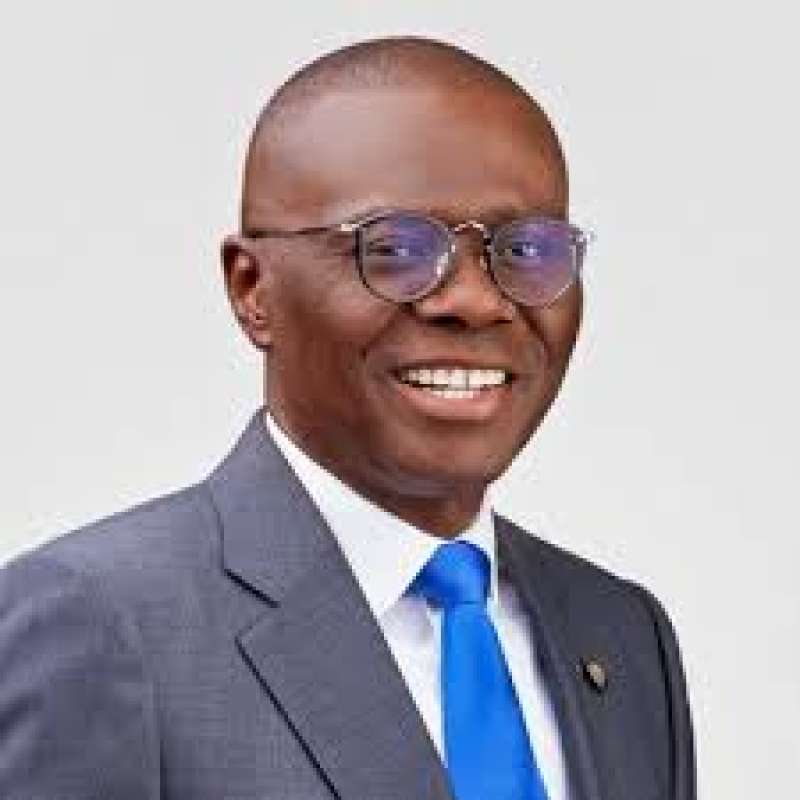
Lagos State Governor Babajide Sanwo-Olu has reportedly asked the Managing Director and Chief Executive Officer of the Lagos Waste Management Authority (LAWMA), Dr Muyiwa Gbadegesin, to resign amid growing concerns over the accumulation of refuse across the state.
The reported move follows mounting complaints about waste collection, with heaps of garbage littering roads, residential areas and drainage channels in several communities.
An unnamed source within the agency disclosed that the governor had become dissatisfied with the pace of waste evacuation and the implementation of his directives to address the situation.
According to the source, the governor's frustration reportedly intensified following his visit to the Olusosun Dumpsite in Ojota about a month ago, where he assessed operations and called for urgent measures to improve waste management.
Despite the directive and the subsequent declaration of a state of emergency on waste management, the source claimed that the governor remained concerned about the limited visible progress.
The source further alleged that Sanwo-Olu asked Gbadegesin to resign over the weekend, adding that the LAWMA chief had reportedly been seeking the intervention of influential figures in Lagos to retain his position.
Refuse Accumulation Raises Sanitation Concerns
Residents in several parts of Lagos have continued to experience waste collection challenges, with refuse reportedly accumulating along major roads, medians, residential streets and drainage channels.
Affected areas include Mushin, Egbeda, Surulere, Ajegunle, Ikorodu, Ojo, Obalende, Apapa and Mile 2.
The situation has raised concerns about environmental sanitation, public health risks and the potential impact on businesses and daily activities.
The state government had earlier announced emergency measures to tackle the problem and improve waste collection across the metropolis.
In September, Sanwo-Olu declared a state of emergency on waste management following an inspection of the Olusosun Dumpsite. The visit was attended by Deputy Governor Dr Obafemi Hamzat and other stakeholders in the waste management sector.
During the inspection, the governor acknowledged delays in waste evacuation and attributed some of the challenges to the failure of Private Sector Participation (PSP) operators to meet their obligations in recent weeks.
He also identified fires at dumpsites and ongoing waste-compaction projects as factors affecting operational efficiency.
According to the governor, the completion of projects at the Olusosun and Solous 3 dumpsites would increase their capacity, allowing each facility to receive approximately 450 trucks of municipal waste daily.
The planned improvements are expected to strengthen disposal operations and support more efficient waste collection by PSP operators.
LAWMA Reports Progress in Clearance Operations
Amid growing concerns over the waste situation, Gbadegesin announced on Saturday that clearance operations had recorded progress in several locations across Lagos.
In an update shared on his X account, the LAWMA chief said Mile 2 had been cleared, while three additional trucks had been deployed to Doyin-Orile and surrounding communities.
He also reported continued daily waste collection along Ijesha Road and Itire–Ikate, clearance operations at Bucknor–Ijegun, and ongoing collection activities in Ogolonto and Igbokusu.
According to the update, Okeira and Oluodo had been placed under interim LAWMA services following the termination of their PSP arrangements, while clearance operations continued at Iraye.
However, the agency was still awaiting field updates from four routes: Apapa, Abesan Estate, Idimu–Ejigbo Road and the Isheri–Igando corridor.
Gbadegesin said the agency's objective was to move beyond emergency clearance operations and establish consistent waste collection to prevent refuse from accumulating again in areas that had already been cleared.
Government Yet to Confirm Reported Resignation Request
As of the time of reporting, there had been no official confirmation of the alleged resignation request.
Efforts to obtain a response from Lagos State Commissioner for Information, Gbenga Omotosho, were unsuccessful, as an aide said the commissioner was attending a meeting and advised that contact be made later.
Gbadegesin was reappointed as LAWMA managing director by Sanwo-Olu following the governor's re-election.
The reported development comes as the state government faces continued pressure to address waste collection challenges and improve environmental sanitation.
Whether the alleged resignation request will result in a leadership change remains unclear, while residents continue to await sustained improvements in refuse evacuation across Lagos.
News
Ayobami Oyalowo, Executive Director of Finance and Administration at the Ogun-Oshun River Basin Authority, has said reforms implemented under Central Bank of Nigeria (CBN) Governor Olayemi Cardoso have improved the foreign exchange market, strengthened external reserves and enhanced the resilience of the banking sector.
Assessing Cardoso’s three-year tenure, Oyalowo said the apex bank had shifted towards a more orthodox monetary policy framework, prioritising price stability, market discipline and stronger financial sector supervision.
Cardoso assumed office in September 2023 amid significant economic challenges, including foreign exchange market distortions, declining external buffers and rising inflation. Headline inflation stood at 25.80 per cent in August 2023, while multiple exchange rates, foreign currency shortages and accumulated foreign exchange obligations weakened business confidence.
According to Oyalowo, the reforms marked a departure from the CBN’s extensive involvement in intervention programmes across sectors such as agriculture, aviation and power.
He recalled that Cardoso disclosed at the November 2023 Annual Bankers’ Dinner that the CBN had injected more than ₦10 trillion into the economy through various intervention programmes.
Oyalowo said the scale of the interventions raised concerns about excess liquidity, policy effectiveness and the central bank’s involvement in activities that could be better handled by fiscal authorities and development finance institutions.
“The economic significance of this shift lies in restoring consistency between the CBN’s objectives and its policy instruments,” he said.
Forex Market Reforms and Reserve Growth
Oyalowo identified the foreign exchange market as one of the major areas affected by the reforms, following years of multiple exchange rates, restricted access to foreign currency and accumulated obligations.
He said the CBN’s measures were designed to improve price discovery, enhance liquidity and rebuild confidence in the official market.
Among the key initiatives, he highlighted the Electronic Foreign Exchange Matching System, introduced in December 2024, and the Nigerian Foreign Exchange Code, launched in January 2025. Both measures were aimed at improving transparency, accountability and market conduct.
He also pointed to the settlement of verified foreign exchange obligations from an inherited backlog estimated at $7 billion, noting that the move helped address concerns among international investors, airlines and multinational companies over capital repatriation and legitimate financial claims.
However, Oyalowo acknowledged that the adjustment came at a significant economic cost, including sharp naira depreciation, higher import costs, increased production expenses for manufacturers and mounting pressure on household purchasing power.
On external reserves, he said Nigeria’s gross foreign exchange reserves increased from approximately $33 billion when Cardoso assumed office to about $55 billion in October 2026.
He added that net external reserves had risen to approximately $46 billion, compared with $34.80 billion at the end of 2025 and $3.99 billion at the end of 2023, citing figures disclosed by the CBN.
Oyalowo also referenced the CBN’s 2025 Annual Report, which showed that aggregate foreign exchange inflows rose by 13.81 per cent to $109.86 billion in 2025, from $96.53 billion in 2024.
Net foreign exchange inflows stood at $60.81 billion, while autonomous sources accounted for approximately 64 per cent of total inflows.
He described the growing contribution of autonomous sources as significant, explaining that private-sector inflows, export earnings and remittances could provide a more sustainable supply of foreign exchange than administrative allocation.
Improved Credit Outlook and Investor Confidence
Oyalowo further cited improvements in Nigeria’s international credit assessments as evidence of renewed confidence in the country’s economic direction.
He noted that S&P Global upgraded Nigeria’s sovereign credit rating from ‘B−’ to ‘B’ with a Stable Outlook in May 2026. Fitch Ratings also affirmed Nigeria’s ‘B’ rating in October 2026 and revised its outlook from Stable to Positive.
He said Nigeria’s return to the FTSE Russell Frontier Market classification in September 2026 reflected improvements in foreign exchange market accessibility and capital repatriation.
Despite these developments, Oyalowo acknowledged that Nigeria’s sovereign credit ratings remained below investment grade.
He also cited National Bureau of Statistics data showing that capital importation increased to $23.22 billion in 2025, compared with $12.32 billion in 2024.
Portfolio investment accounted for approximately $19.74 billion, representing 85 per cent of total capital importation, while foreign direct investment stood at about $923 million.
According to him, the figures indicated renewed investor interest but underscored the need to attract more long-term capital into manufacturing, infrastructure, energy and technology.
Inflation, Interest Rates and Household Pressures
On inflation, Oyalowo said the CBN had maintained a restrictive monetary policy stance through higher interest rates and liquidity management measures.
He noted that headline inflation moderated to 15.39 per cent in August 2026, from 15.43 per cent in July and 25.80 per cent in August 2023.
However, he cautioned that the rebasing of the Consumer Price Index in 2025 meant historical inflation comparisons needed to be interpreted carefully.
“Moreover, lower inflation does not mean prices have returned to previous levels,” he said, stressing that households continued to bear the cumulative effects of earlier price increases.
He added that while tighter monetary policy could help contain inflationary pressures, high borrowing costs had made it more expensive for businesses to access credit, potentially constraining investment and economic expansion.
Bank Recapitalisation Strengthens Financial Sector
Oyalowo also highlighted the CBN’s banking sector recapitalisation programme, introduced in March 2024, as a major component of the reforms.
The programme raised minimum capital requirements to ₦500 billion for commercial banks with international authorisation, ₦200 billion for national banks and ₦50 billion for regional banks.
By March 2026, he said, 33 banks had met the revised requirements, collectively raising ₦4.65 trillion in fresh capital.
Domestic investors contributed 72.55 per cent of the capital raised, while international investors accounted for 27.45 per cent.
According to Oyalowo, the recapitalisation exercise had strengthened banks’ capacity to absorb financial shocks and finance larger transactions.
However, he emphasised that increased capital must be supported by sound governance, effective risk management and responsible lending practices.
“Stronger balance sheets must be accompanied by sound governance, effective risk management and responsible lending,” he said.
He noted that the challenge for policymakers was to balance financial sector resilience with affordable access to credit, particularly for businesses operating under restrictive monetary conditions.
CBN, Finance Ministry Deepen Policy Coordination
Oyalowo identified the September 18, 2026, Memorandum of Understanding between the CBN and the Federal Ministry of Finance as another important development.
He said the agreement established a framework for closer coordination between fiscal and monetary authorities, covering government cash management, debt issuance planning, liquidity forecasting and macroeconomic analysis.
According to him, the arrangement could reduce the risk of fiscal and monetary policies working at cross-purposes, particularly where government borrowing and spending influence inflation, liquidity conditions and access to credit.
He added that the framework recognised the structural factors driving inflation in Nigeria, including food supply constraints, energy costs, transportation and logistics expenses.
Consolidating the Gains of Reform
Three years into Cardoso’s tenure, Oyalowo said the CBN had recorded measurable changes in foreign exchange market accessibility, external reserves, banking sector capitalisation and investor participation.
He maintained that the governor’s emphasis on monetary orthodoxy had provided the apex bank with a clearer institutional direction, while acknowledging the economic costs associated with the adjustment process.
He stressed, however, that sustaining the gains would require consistent policies, stronger productive investment and measures to ease the pressure on households and businesses.
“The next responsibility is to consolidate these reforms, preserve the gains in macroeconomic stability and create conditions for stronger productive investment, more affordable credit and improved living standards,” Oyalowo said.
Business
In The Spotlight
While delivering the 2026 edition of the Annual Omolayole Management Lecture, President, Chartered Institute of Directors and immediate past Managing Director of 11 PLC, formerly Mobil Oil Nigeria Plc, Adetunji Oyebanji, presented President Bola Tinubu with something to think about.
He declared, “Based on a 2025 normal Gross Domestic Product baseline of approximately US$290.79bn, Nigeria would need to sustain a compound growth rate of approximately 28.02 per cent over the five-year period from 2026 to 2030” to achieve the $1tn economy.
He added, “This rate far exceeds Nigeria’s historical performance and underscores the scale of economic expansion required,” and “Rather than serving as a forecast, this calculation establishes the benchmark against which future economic performance may be assessed.”
As if the priest spoke and thunder rumbled, Nigeria’s National Bureau of Statistics reported that Nigeria’s year-on-year GDP growth rate for the second quarter of 2026 was 4.43 per cent, while the World Bank projected 4.3 per cent growth rate for Nigeria in 2026, up from nearly 4.0 per cent recorded for 2025.
As Oyebanji observed, Nigeria’s economy experienced low growth rates and reversals in the last decade: from 2.65 per cent in 2015, to -1.62 per cent contraction in 2016, a modest 2 per cent rebound in 2017, another reversal, of -1.79 per cent occasioned by Covid-19 in 2020, to a positive rebound of 3.87, or nearly 4, per cent in 2025.
If anyone says President Tinubu has a yeoman’s job ahead of him, they’re spot on. And if he merely coveted the $1tn economy by faith and not with data, it would appear that the President is planning to fail.
And somebody should tell the Comptroller-General of the Nigeria Customs Service, Adewale Adeniyi, who pledged to support the President’s ambition to build the $1tn economy, not to confuse government revenue with a country’s economy.
Oyebanji recognised “governance as the central determinant of success” in the $1tn economy quest, and identified oil, gas and energy; agriculture and agro-processing; manufacturing and industrial development; technology, digital economy and innovation; infrastructure; solid minerals; and services and the creative industry as the sectoral drivers.
But it appears that only the digital, mineral resources mining, service and creative sectors can thrive in the current Nigerian economic environment, and the real sector, agriculture and manufacturing, that produce the strategic consumer goods that are mostly imported at the moment, cannot thrive yet.
The governance structures that Oyebanji suggests for the takeoff of the $1tn economy are macroeconomic stability through disciplined fiscal and monetary policies, consistency of policies, rapid investment in infrastructure and nifty tinkering with the economic environment.
These are the direct opposites of the current negatives: power supply deficit, infrastructure gap, inefficiency in the oil sector, an unstable foreign exchange rate, a low tax-to-GDP rate, insecurity, policy inconsistencies and a huge human capital deficit that compromise the capacity of the real sector and even the service industry.
If the President really wants the $1tn economy to become a reality in 2030, he should review Oyebanji’s perspectives, data and prescriptions and seek competent economists, management and financial planning experts to help him articulate a clear path to achieving this laudable economic prosperity.
Some experts, convinced he may not achieve his objective within the period he has earmarked, think he could at least set himself on the way by making ambitious efforts in electricity, security and logistics, including extensive road, railway, water and air travel networks.
Nigeria’s current electricity generating capacity is somewhere between 4,500 and 5,400 megawatts, whereas it is projected that Nigeria probably needs to generate anywhere between 20,000 and 28,000 megawatts for its 230 million population.
Some even argue that 28,000 megawatts of electricity won’t service the population of Nigeria that is projected to increase to 262 or 270 million by the magical 2030 that the President has set as a deadline for the $1tn economy.
If the electricity infrastructure is not addressed pointedly by the Federal and the state governments that have now been enabled by the transfer of electricity from the Exclusive Federal List to the Concurrent List of the Nigerian Constitution, the economy will not lift off as expected.
The declaration by the Nigerian Constitution that security and the welfare of the people of Nigeria is Job Number One of government confirms the nexus or relationship between public security, public order and the nation’s economic wellbeing.
The classic definition of the state, which is the final, supreme, absolute coercive power within a political realm, speaks to the place of the state, whose public face is the government, as both the arbiter and safeguard of the lives and economic livelihoods of the citizens of a country.
The current inability of the state or the government, which is supposed to have a monopoly on police and military force within the country, is consistently having a negative impact on the security and the economies of the North-East, North-West, North-Central and some corridors of Southern Nigeria.
The rural areas, where insurgency, terrorism, banditry, herder-farmer clashes, and kidnapping have become rampant, are unsafe for lives and unconducive for the farmers who produce the food consumed by the citizens and the cash crops that provide the raw materials for the growth of agro-allied and chemical industries.
Maybe it bears repeating that in addition to preventing harvests from the farms, insecurity is disrupting the transportation of food to the dining tables of Nigerian homes, as well as the cash crops that provide the raw materials for Nigerian industries.
The third basic aspect of the Nigerian economy that the President must take a long, hard look at, if he really wants to make the $1tn economy a reality, is logistics, which is already taking a beating from the insecurity running through most of Nigeria.
The Federal Government must find the funds and speed up the completion of Lagos-Calabar Coastal Road, the Sokoto-Badagry Expressway, the Calabar-Abuja Superhighway and additional longitudinal and lateral highways to link Nigerian farms, industries and homes.
No one can deny that roads encourage the founding and development of modern communities that later become metropolises. Look at the organic growth of urban communities from the Berger end of the Lagos-Ibadan Expressway to the Shagamu Interchange.
To prepare for the heavy lifting necessary to realise the $1tn economy, President Tinubu needs to study and take the best of the railway systems of America, which has the longest rail network in the world; China, with the largest high-speed rail network; Russia, the leader in heavy freight; and India, with the highest passenger rail network.
Cargo airports are more than necessary for quick evacuation of fresh agricultural produce from the farm gates to the urban centres where they will be consumed fresh or converted into raw materials for the agro-allied industries.
The President must find a way to harness the strength of Nigeria’s inland rivers not only to generate hydroelectric power, but also as an integral part of a transportation network that will include roads, railways and airports.
If electricity, security and logistics are taken care of, it shouldn’t be too difficult for the $1tn economy to take off organically.
By Lekan Sote
In The Spotlight
There is a question President Bola Ahmed Tinubu must answer before the 2027 presidential election: if he wants another four years in Aso Rock, why should Nigerians not expect him to stand before them, state by state, and defend his record?
His decision not to accompany his campaign team to every state has ignited a political storm, drawing criticism from opposition leaders, activists and ordinary citizens, while others insist that governance must not grind to a halt because of electioneering. The President argues that Nigeria’s pressing needs demand his attention and that members of the All Progressives Congress (APC) Presidential Campaign Council can carry his message to voters nationwide.
That argument is not entirely without merit. A sitting president has constitutional responsibilities that do not disappear during an election campaign. Government must function, security must be addressed, and the business of the nation must continue.
But there is a dangerous flaw in the President’s position: governance is not an escape route from accountability, and a campaign surrogate is no substitute for the candidate whose record is on trial.
Tinubu is not seeking a ceremonial extension of his stay in office. He is asking Nigerians to entrust him with another four years of power. That request demands more than carefully choreographed rallies, rehearsed speeches and party loyalists singing his praises. It demands answers.
What has happened to the promises made in 2023? What tangible relief have millions of struggling households received? How should Nigerians assess the consequences of petrol subsidy removal and naira reforms? What is the administration’s scorecard on electricity, food prices, employment, insecurity and the cost of living?
These are not questions that can be wished away by delegating campaign appearances to governors and party leaders. They are questions that belong to the President.
THE PEOPLE ARE NOT FOOLS
Across the country, the mood is unmistakable: Nigerians want to be heard. From the trader counting the dwindling contents of her purse to the worker whose salary struggles to survive the month, from the farmer threatened by insecurity to the young graduate searching desperately for employment, the public is entitled to demand a reckoning.
For many citizens, the election will not be an abstract contest of political slogans. It will be a verdict on their lived experience.
That is why Tinubu’s proposed absence from some campaign stops has struck such a sensitive nerve. To his critics, it suggests an unwillingness to confront public anger. Some have questioned his physical fitness; others believe he may be reluctant to defend his administration’s performance. These are allegations, not established facts. The President’s decision alone does not prove that he is unwell or afraid of voters.
Nevertheless, he should understand the political consequences of leaving such questions unanswered. In politics, a vacuum rarely remains empty. Suspicion rushes in where explanation is absent.
If the President is physically capable of discharging his duties, he should have no reason to leave Nigerians guessing about his willingness to engage them. If health or other legitimate considerations constrain his campaign schedule, he should communicate his plans clearly. Nigerians deserve honesty, not speculation.
Silence may be convenient, but it is a poor campaign strategy.
GOVERNANCE IS NOT A SHIELD
The argument that the President must remain focused on governance sounds reasonable. Indeed, Nigeria cannot afford a government that abandons its responsibilities whenever politicians hit the campaign trail.
But the same argument raises another question: what exactly is the President doing with the time he saves by skipping campaign stops, and how will Nigerians see the benefits?
If governance is the priority, then the evidence should be visible in improved security, greater economic stability, reliable electricity, better access to essential services and a meaningful reduction in the hardship confronting ordinary families.
The President cannot invoke the demands of governance as a shield against political scrutiny while asking the same citizens to renew his mandate. The two responsibilities are not mutually exclusive. A president can govern and explain his governance. He can attend to national business and still make himself available to voters.
Nor should the APC confuse the ability to organise rallies with the ability to win public confidence. Party machinery can mobilise crowds. Governors can deliver speeches. Spokespersons can defend policy. But none of them can erase the consequences of decisions taken by the President.
The mandate belongs to Tinubu. So does the responsibility to defend it.
THE OPPOSITION MUST DO MORE THAN SHOUT
Opposition figures, including former Vice President Atiku Abubakar and Peter Obi, have seized on the President’s position to question his commitment to accountability. The Labour Party and the Makinde/Daura Presidential Campaign Organisation have also criticised the plan.
Their central argument—that a president seeking re-election should personally defend his record—is persuasive. But criticism alone is not a credible alternative to leadership.
The opposition must do more than exploit public frustration. It must present workable policies, credible economic proposals, a serious security strategy and a clear plan for restoring public confidence. Nigerians deserve alternatives, not merely louder accusations.
Claims about poverty, economic failure, insecurity and government performance should be supported by verifiable evidence, not inflated for political effect. A campaign that demands accountability from the incumbent must be prepared to practise it itself.
Democracy suffers when the ruling party evades scrutiny. It suffers equally when opposition parties substitute rhetoric for substance.
THE PRESIDENCY IS NOT A PARTY HEADQUARTERS
There is another troubling issue in this controversy: the use of the Presidential Villa for the inauguration of the APC Presidential Campaign Council.
The Presidency is a public institution, not the private property of a political party. The President is entitled to lead his party and campaign for re-election, but the distinction between official state functions and partisan political activities must remain clear.
Public institutions must not be made to appear subordinate to party interests. The symbolism matters, particularly in a democracy where public trust is already under pressure. The appropriate rules governing the use of official premises and public resources must be respected without exception.
The President should set the standard, not leave Nigerians wondering whether the lines between state and party have become dangerously blurred.
FACE THE PEOPLE
Tinubu is under no obligation to conduct an exhausting, state-by-state campaign simply to satisfy political theatrics. Campaign schedules must accommodate legitimate security, administrative and personal considerations. No responsible editorial judgment should demand that a president jeopardise his health or neglect urgent national duties for the sake of appearances.
But there is a difference between not visiting every state and refusing to account for one's stewardship.
The President can publish a transparent record of his administration’s achievements and failures. He can hold substantive town halls, grant unscripted interviews, answer questions from citizens and journalists, and ensure that his campaign team presents verifiable evidence rather than political slogans. He can also visit a representative cross-section of states while explaining clearly why other stops may not be possible.
What he cannot reasonably expect is that Nigerians will accept delegation as a substitute for accountability.
Ultimately, the 2027 election must be about more than who can draw the biggest crowd or deliver the most electrifying speech. It must be about performance, policy, integrity and the willingness to answer difficult questions.
Tinubu has the right to seek another term. Nigerians have an even more fundamental right to scrutinise that ambition.
A second-term mandate is not a gift to be collected. It is a verdict to be earned.
The President should therefore face the nation with candour, defend his record with evidence and explain why he deserves another four years. If his achievements speak for themselves, let him present them. If his policies have delivered the promised gains, let him demonstrate them. If mistakes have been made, let him acknowledge them and explain what he intends to do differently.
No surrogate can do this convincingly on his behalf.
In the final analysis, the campaign may belong to the APC, but the verdict belongs to Nigerians. Their hardship cannot be delegated. Their questions cannot be outsourced. And their votes cannot be commanded.
Tinubu must face the people—not because every campaign rally is sacred, but because accountability is.