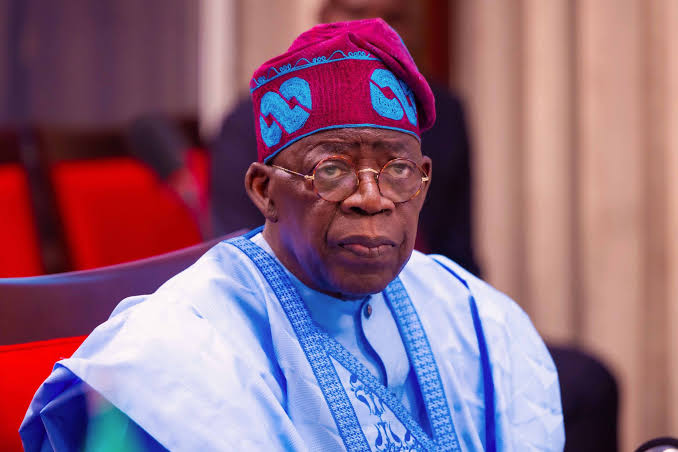



President Bola Tinubu says fresh foreign loans will finance critical infrastructure, create jobs and accelerate economic growth, but the Nigeria Labour Congress questions the justification for additional borrowing despite increased government revenue.
President Bola Ahmed Tinubu has defended his administration's plan to secure fresh foreign loans worth $20.5 billion and €1.45 billion, insisting that Nigeria must invest heavily in infrastructure if it hopes to achieve its ambition of becoming a $1 trillion economy by 2030.
The President argued that borrowing should not be viewed simply as an increase in national debt but as a strategic investment in roads, electricity, seaports and other critical infrastructure capable of stimulating economic growth and improving the country's productive capacity.
However, his position has drawn criticism from the Nigeria Labour Congress (NLC), which is demanding an explanation for the government's continued appetite for foreign loans despite increased revenue following the removal of petrol subsidy.
In a statement titled From Reforms to Delivery: Our Infrastructure Investment and Growth Strategy, Tinubu maintained that the central issue should be what Nigeria achieves with borrowed funds rather than the amount of money it secures.
"The key question is not how much we borrow, but what we build, the value we create and the future we leave behind," the President said.
Tinubu identified the Lagos-Calabar Coastal Highway, Sokoto-Badagry Superhighway, Trans-Sahara Superhighway, electricity grid improvements and the modernisation of major commercial ports in Lagos as some of the projects expected to benefit from the proposed financing.
According to him, the projects will connect economic regions, reduce transportation costs, facilitate agricultural and industrial activities, create employment opportunities and attract private investment.
The President projected that the Lagos-Calabar Coastal Highway alone could reduce transportation costs along its route by 15 to 20 per cent and contribute up to two per cent to Nigeria's Gross Domestic Product through increased trade, tourism and industrial activities.
He also estimated that the highway would generate approximately 100,000 direct jobs in construction and engineering, alongside more than 150,000 indirect jobs in logistics, building materials and related sectors.
"We are building more than highways. We are opening economic corridors, connecting markets, supporting industries and reshaping Nigeria's economic geography," he said.
Tinubu maintained that Nigeria's infrastructure must match its economic ambitions, arguing that the country cannot achieve a $1 trillion economy by 2030 with facilities designed for a much smaller economy.
Tinubu Highlights Economic Improvements
To justify the government's borrowing strategy, the President highlighted improvements in several economic indicators following the introduction of major reforms in May 2023.
He cited the removal of petrol subsidy, foreign exchange market reforms, tax restructuring and efforts to control inflation as measures that have strengthened government finances and improved the country's economic outlook.
According to figures released by the President, Nigeria's economy grew by 4.43 per cent in the second quarter of 2026, while headline inflation declined to 14.63 per cent in September, compared with 20.98 per cent during the corresponding period last year.
He further disclosed that the country's gross external reserves stood at $55.1 billion as of October 9, 2026, including approximately $46 billion in net reserves.
Tinubu also said Nigeria's tax-to-GDP ratio had increased from seven per cent to 12.5 per cent, while allocations from the Federation Account Allocation Committee rose by 44 per cent, from ₦15.2 trillion in 2024 to ₦21.9 trillion in 2025.
The President said these developments had strengthened international investor confidence, improved Nigeria's credit standing and enabled the country to negotiate more favourable borrowing terms.
He explained that the government was pursuing longer-term loans to ensure that repayment periods correspond with the economic lifespan of the infrastructure projects being financed.
However, Tinubu acknowledged the challenges associated with the country's debt obligations.
He disclosed that public debt stood at 35.75 per cent of GDP in the second quarter of 2026, while debt servicing consumed approximately 65 per cent of government revenue during the first half of the year.
He also said the Federal Executive Council's economic strategy included avoiding the printing of money to finance budget deficits and preventing expenditure commitments that were not backed by available funds.
NLC Questions Fresh Borrowing
Meanwhile, the Nigeria Labour Congress has challenged the Federal Government to explain why additional foreign loans are necessary despite its claims of increased revenue following the removal of petrol subsidy.
NLC President Joe Ajaero raised the concerns during an appearance on Channels Television's The Morning Brief, questioning the government's continued reliance on international financial institutions, including the International Monetary Fund and the World Bank.
"If you come out to tell us that subsidy is gone, that you are making more money and then you are giving more money to states, what is the justification for continually borrowing from the International Monetary Fund and the World Bank and other agencies when there is enough money?" Ajaero asked.
The labour leader also questioned the timing of the proposed borrowing, pointing to the increase in international crude oil prices.
He noted that the 2026 budget was based on an oil price benchmark of $70 per barrel, while crude oil prices had reportedly climbed above $100 per barrel amid tensions involving the United States and Iran.
Ajaero argued that the potential increase in oil revenue should prompt the government to reconsider its borrowing plans and explain why additional loans remain necessary.
He further expressed concern about the implications of continued borrowing for Nigeria's debt burden, insisting that the government must provide greater transparency regarding its revenue and expenditure.
Although he acknowledged that the NLC had no constitutional authority to approve or reject government loans, Ajaero maintained that Nigerians and relevant institutions had a responsibility to demand accountability.
Accountability Remains the Biggest Challenge
Tinubu has maintained that the success of his borrowing strategy will ultimately be measured by the completion of projects, the value delivered and improvements in the lives of Nigerians.
"Securing financing is only the beginning. The real achievement lies in completing projects, delivering value for money, and improving Nigerians' lives," he said.
The debate over the proposed loans comes at a critical time for Nigeria, as the government seeks to balance ambitious infrastructure investments with mounting debt-service obligations and growing public expectations for economic relief.
While the administration believes long-term borrowing is necessary to accelerate development and achieve its $1 trillion economic target, the NLC insists that increased government revenue must be properly accounted for before the country assumes additional foreign debt.
The proposed borrowing plan is therefore likely to intensify public scrutiny of the government's fiscal priorities, particularly how borrowed funds will be utilised and whether the projects will deliver the promised economic benefits.
Tinubu: Nigeria Must Borrow to Build $1tn Economy