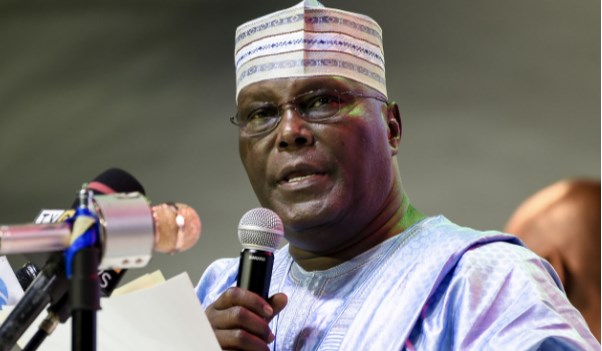


Former Vice President Atiku Abubakar has reignited one of Nigeria’s most contentious economic debates by promising to restore petrol subsidies if elected president in 2027. The proposal marks a significant change from his position during the 2023 presidential campaign, when he supported removing the subsidy within his first 100 days in office.
Atiku is fully entitled to reconsider his position and offer Nigerians an alternative economic programme. But because the subsidy question has profound implications for public finances, energy security, inflation and the welfare of ordinary Nigerians, his proposal deserves careful scrutiny beyond the political rhetoric.
The central question is simple: What exactly would a restored petrol subsidy cost Nigeria, and how would it be financed?
The subsidy question has changed
Nigeria’s old petrol subsidy system was not simply a government discount handed directly to consumers. It was a mechanism through which the state absorbed the difference between the regulated pump price and the cost of supplying petrol.
For years, the arrangement placed enormous pressure on government finances. It also created opportunities for inefficiency, opaque accounting, arbitrage and abuse. As the gap between the official price and the true cost of petrol widened, the financial burden on government became increasingly difficult to sustain.
The Petroleum Industry Act provided the legal framework for ending the subsidy regime by the end of June 2023. President Bola Tinubu accelerated the process when he announced the removal of the subsidy in May 2023.
The policy had an immediate and painful consequence: petrol prices rose sharply, transportation costs increased and the prices of food and other essential goods came under further pressure.
Those consequences cannot be dismissed. Nigerians have every reason to demand relief from the high cost of living.
But acknowledging the hardship does not automatically mean that the old subsidy system was the right solution.
Where did the savings go?
Atiku has questioned what happened to the resources supposedly released by subsidy removal.
He has argued that Nigerians were promised that the savings would help finance development, reduce poverty, improve education, strengthen security and create opportunities for young people. He has therefore demanded an accounting of the money and has alleged that substantial resources have not produced corresponding benefits for citizens.
That is a legitimate issue for public debate.
The Federal Government, for its part, has presented a different account. Finance Minister and Coordinating Minister of the Economy Taiwo Oyedele recently said subsidy reform generated about N15.8 trillion in resources for the federation between June 2023 and December 2025, while explaining that the figure reflected broader revenue effects, including the impact of exchange-rate reforms.
Atiku's camp has disputed the government's presentation and demanded reconciliation of what it describes as approximately N30 trillion in federation revenues, deductions, savings and transfers.
Rather than trading accusations, government should provide Nigerians with a clear, independently verifiable account of the financial impact of subsidy removal.
Citizens deserve to know how much was saved, how much additional revenue was generated, where the resources went and what measurable improvements they financed.
But the existence of accountability questions does not, by itself, establish that restoring the old subsidy system is the appropriate answer.
The real question: who pays?
Any government promising to restore petrol subsidies must answer a basic fiscal question.
Who will pay the difference between the market cost of petrol and the subsidised pump price?
If petrol costs substantially more to produce, transport and distribute than the price at which government wants consumers to buy it, somebody must absorb the difference.
That somebody is ultimately the Nigerian public.
The cost would have to be covered through government revenue, reduced allocations to other priorities, increased borrowing, accumulated obligations to suppliers or some combination of these.
The political appeal of subsidy is obvious: it allows government to promise a lower pump price immediately.
The economic reality is less attractive.
A cheap pump price does not mean that petrol has become cheaper. It means that part of the cost has been transferred from the consumer at the filling station to the government balance sheet.
Eventually, taxpayers, future governments and future generations pay the bill.
Therefore, anyone proposing to restore subsidy should provide Nigerians with precise figures: the proposed pump price, the expected annual subsidy bill, the revenue source, the financing mechanism and the safeguards against fraud.
Without those details, the promise remains a political slogan rather than a fully costed economic policy.
Nigeria’s petroleum industry is no longer what it was
Another important consideration is that Nigeria's petroleum landscape has changed significantly since the old subsidy regime operated at full scale.
For decades, Nigeria depended heavily on imported petrol despite being one of the world's major crude-oil producers. The country exported crude and imported refined petroleum products, spending enormous amounts of foreign exchange in the process.
That model created a fundamental contradiction: an oil-producing country was unable to adequately refine the crude it produced for its own domestic market.
The expansion of domestic refining capacity has begun to change that equation.
The emergence of the Dangote Refinery and the growth of other domestic refining projects create the possibility of a different petroleum economy—one in which more crude is processed locally, refined products are supplied to the domestic market and Nigeria increasingly participates in the export market for refined petroleum products.
That transition is important for foreign-exchange conservation, industrialisation, employment and energy security.
Any new subsidy policy must therefore be designed around today's petroleum market, not the market Nigeria had a decade ago.
Could subsidy undermine domestic refining?
This is one of the most important questions Atiku's proposal raises.
If government once again fixes petrol prices substantially below economic cost, the consequences for domestic refiners need to be carefully considered.
A subsidy that favours imported petrol or creates artificial price distortions could undermine the commercial viability of domestic refineries. It could also encourage renewed dependence on imports and place fresh pressure on Nigeria's foreign-exchange reserves.
That would be a step backwards.
The objective should be to create an environment in which Nigerian crude can be refined competitively in Nigeria, refined products can be distributed efficiently and consumers can benefit from increased domestic supply.
Domestic refining should not merely replace imports; it should become the foundation of a broader industrial ecosystem.
Subsidy removal has also changed government finances
One of the strongest arguments made in favour of subsidy removal is its effect on government revenue and federation allocations.
With the federal government no longer carrying the same petrol subsidy burden, more resources have become available for distribution through the Federation Account.
Monthly allocations to the federal, state and local governments have consequently increased substantially at various points.
This has provided state governments with greater fiscal room to pay salaries, maintain public services and finance infrastructure.
But this benefit should not be exaggerated.
Higher government allocations do not automatically translate into better living standards. Nigerians are entitled to ask whether additional public resources are being used efficiently and whether governments are delivering measurable improvements in education, healthcare, security, infrastructure and employment.
The answer should not be to return to subsidy simply because government has failed to spend additional resources effectively.
The appropriate response should be stronger accountability, better budgeting and more disciplined public expenditure.
Nigerians need relief—but subsidy is not the only option
The hardship caused by high petrol prices is real.
For millions of Nigerians, transportation is a major component of household expenditure. Higher transport costs feed directly into food prices, school expenses, business costs and household budgets.
Government therefore has a responsibility to reduce the burden.
But sustainable relief does not necessarily require returning to a blanket petrol subsidy.
Nigeria can pursue alternatives such as expanded compressed natural gas adoption, targeted transport support, improved public transportation, investment in mass transit, more efficient domestic refining, reduced logistics costs and targeted assistance to vulnerable households.
The promotion of CNG is particularly significant because natural gas is domestically available and can provide a cheaper alternative for many vehicles and commercial fleets when the necessary infrastructure exists.
The objective should be to reduce the cost of mobility and production rather than simply conceal the true cost of petrol.
Atiku's policy reversal deserves explanation
There is also an important political dimension to the debate.
During the 2023 presidential campaign, Atiku supported the removal of petrol subsidy. His present commitment to restoring it represents a significant change.
Changing one's mind is not inherently wrong. Economic circumstances change, and politicians have the right to revise their policies.
However, voters deserve to know what changed.
What new economic evidence has convinced Atiku that subsidy is now sustainable?
What has changed in his assessment of the fiscal consequences?
How much would his proposed subsidy cost annually?
Would he borrow to finance it?
Would he increase taxes?
Would states and local governments receive less money from the Federation Account?
Would domestic refiners be protected from distortions created by regulated prices?
Would the Petroleum Industry Act have to be amended?
And what mechanisms would prevent the fraud and leakages associated with previous subsidy arrangements?
These are not partisan questions. They are questions that any responsible presidential candidate should answer.
The debate should be about the future, not nostalgia
Nigeria should not approach the subsidy debate as a choice between a cheap pump price and an expensive pump price.
The real choice is between two economic models.
One model keeps government deeply involved in determining the price of petrol and absorbs part of the cost through public finances.
The other allows the market to determine prices while government focuses on regulation, competition, infrastructure, targeted intervention and social protection.
Neither model is automatically perfect.
A market system can impose painful short-term costs, particularly in a country where wages and productivity have not kept pace with inflation.
But a subsidy system can also create enormous long-term costs, particularly when government revenues are insufficient and oversight mechanisms are weak.
The challenge is therefore to create a system that protects citizens without destroying the public finances.
Accountability must apply to everyone
The Tinubu administration should not expect Nigerians to accept every claim about subsidy savings without evidence.
If the government says subsidy removal generated trillions of naira in additional resources, it should provide transparent documentation showing how those resources were calculated and how they have been utilised.
At the same time, political opponents should not promise a return to subsidy without explaining its full financial consequences.
Accountability cannot be selective.
The government must account for the resources released by reform.
Opposition politicians must account for the cost of the alternatives they propose.
And voters must be given enough information to determine which economic programme is sustainable.
Nigerians deserve a fully costed alternative
Atiku's decision to put petrol subsidy at the centre of his 2027 campaign may resonate with Nigerians struggling with high living costs. That political reality should not be ignored.
But sympathy for Nigerians' economic hardship cannot substitute for fiscal arithmetic.
If Atiku intends to restore petrol subsidy, he should tell Nigerians exactly what he plans to subsidise, how much it will cost, where the money will come from, how long the programme will last and how it will operate within Nigeria's post-PIA petroleum framework.
He should also explain how the policy would affect domestic refineries, petrol imports, foreign-exchange demand, government revenues and Federation Account allocations.
Most importantly, Nigerians should be presented with evidence that the proposed system would improve their lives more effectively than targeted alternatives.
Nigeria cannot afford another cycle in which apparently cheap petrol is purchased at the hidden cost of rising debt, depleted foreign exchange, reduced public investment and distorted markets.
The country needs cheaper energy, but it also needs sustainable energy policy.
It needs relief for households, but it also needs stronger public finances.
It needs domestic refining, but it must ensure that domestic refiners can compete.
And it needs political leaders who will explain not only what they intend to give Nigerians, but also what their promises will cost.
The 2027 election should therefore produce a serious debate about the future of Nigeria's economy—not merely a contest over who can promise the cheapest petrol.
Atiku Abubakar has every right to propose the restoration of petrol subsidy. Nigerians have an equal right to ask him—and every other candidate—a simple question:
How much will it cost, who will pay for it, and what guarantees do Nigerians have that they will actually be better off?
By EEA
Fuel Subsidy: Atiku’s New Position and Questions Nigerians Must Ask