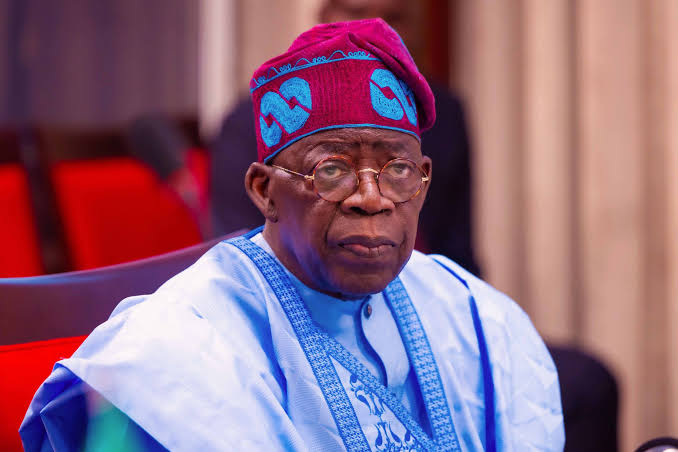



A federal judge in the United States has granted the FBI permission to submit confidential evidence explaining why it has withheld certain records connected to an investigation involving Nigerian President Bola Ahmed Tinubu.
Judge Beryl Howell of the U.S. District Court for the District of Columbia on Thursday, August 20, 2026, approved the FBI’s request to provide the court with an ex parte, in camera declaration. This allows the agency to explain certain aspects of its decision privately and under seal, without making the information available to the parties or the public.
The FBI had argued that publicly disclosing its full reasons for withholding the records could expose sensitive law-enforcement techniques and potentially put individuals at risk.
The records are being sought in a Freedom of Information Act (FOIA) lawsuit filed by American citizen Aaron Greenspan. His requests include FBI records relating to Tinubu and interviews allegedly conducted during an investigation in the early 1990s.
According to the FBI, one of the requests, identified as FOIA Request No. 1588244-000, sought the complete FBI file concerning Tinubu. A second request, No. 1593615-000, sought FBI Form 302 interview records involving Tinubu from an FBI case dating to 1992–1993.
The agency has relied on several FOIA exemptions, including provisions designed to protect personal privacy, confidential sources, investigative methods and the safety of individuals.
In its August 20 filing, the FBI told the court that it could not fully explain its reliance on certain exemptions in a public filing. It therefore asked to submit a sealed declaration addressing those portions of the disputed records.
The court has also given the FBI, the Drug Enforcement Administration (DEA), the U.S. Department of Justice and Tinubu until August 28, 2026, to file their opposition to the release of the records.
The litigation dates back to requests filed between 2022 and 2023 seeking records from U.S. agencies concerning allegations surrounding Tinubu, including an investigation and a 1993 civil forfeiture involving approximately $460,000 that was connected to him.
Tinubu has never been criminally charged in the United States over the matter and has maintained that the forfeiture was a civil proceeding, rather than a criminal case.
The latest ruling therefore concerns whether government records should be disclosed under FOIA, rather than determining whether the allegations against Tinubu are true.
US Judge Allows FBI to Privately Defend Withholding of Tinubu Drug Records