


For more than three years, Nigerians have been told to endure the pain of petrol subsidy removal in the hope that tomorrow would be better.
Now, tomorrow has been given a date: October 1.
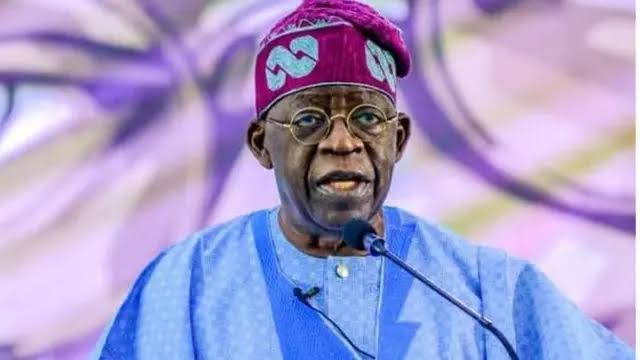
President Bola Ahmed Tinubu says Nigerians should begin to feel the benefits of cheaper fuel through lower transport fares from October. The vehicle of that promise is Compressed Natural Gas, or CNG.
The message sounds simple: if CNG is cheaper than petrol, transport operators should spend less on fuel. If operators spend less, passengers should pay less.
But economics — and Nigerian reality — rarely works that neatly.
The question Nigerians should be asking is not whether CNG is cheaper. It is.
The real question is: who will capture the savings?
That is where President Tinubu's latest promise becomes complicated.
Cheaper fuel does not automatically mean cheaper transport
Tinubu says a CNG-powered vehicle can spend between 60 and 80 per cent less on fuel than a petrol-powered vehicle.
If that saving is real and sustained, it is potentially significant.
But a commercial driver does not run a vehicle on fuel alone.
There are tyres, spare parts, engine repairs, insurance, vehicle financing, road-related costs, taxes, levies and — increasingly — the cost of surviving an economy battered by inflation.
And there is another uncomfortable reality: businesses do not normally reduce their prices simply because one component of their costs falls.
They reduce prices when competition, regulation or market pressure forces them to.
That means the government's most difficult task is not converting vehicles to CNG.
It is converting fuel savings into commuter savings.
The CNG paradox
The government's CNG programme has made considerable progress. More than 120,000 vehicles have reportedly been converted, while additional conversion kits and hundreds of refuelling stations are planned.
But there is a glaring contradiction.
You cannot persuade thousands of drivers to abandon petrol for CNG and then leave them stranded in queues because there are too few places to buy the gas.
That is already happening in parts of the country.
Drivers have reported spending hours waiting to refuel. Some commercial operators complain that the time lost in queues directly affects their earnings.
This raises a fundamental question:
What is the economic value of cheaper fuel if the driver cannot reliably obtain it?
A fuel that is cheap but difficult to find can become expensive in another way — through lost working hours, reduced trips and higher operating uncertainty.
Then comes Atiku's subsidy argument
This is where former Vice-President Atiku Abubakar has entered the debate.
Atiku is not calling for a simple return to the old petrol subsidy arrangement. His proposal is to move government intervention from imported petroleum towards crude supplied to domestic refineries.
His argument is straightforward: reduce the cost of fuel at the production end and allow consumers to benefit from lower prices.
The Tinubu administration rejects that logic and has criticised the subsidy approach.
But Atiku's political argument has struck a nerve because Nigerians are not debating subsidy as an abstract economic concept.
They are debating it with empty pockets.
They feel fuel prices every morning when they leave home.
They feel them again when they board a bus.
They feel them at the market because the trader paid more to transport the goods.
And they feel them at the dinner table.
That is why the subsidy debate refuses to disappear.
The danger of another promise
President Tinubu deserves credit for recognising that transportation is one of the biggest channels through which economic hardship reaches ordinary Nigerians.
But Nigerians have heard many promises before.
The October 1 target therefore creates a dangerous political expectation.
If transport fares fall meaningfully, the government will have a powerful argument that its CNG strategy is working.
If fares do not fall, however, the administration will face a much more difficult question:
Where did the savings go?
Did operators keep them?
Did higher maintenance costs absorb them?
Did infrastructure shortages eat them up?
Or did the promised savings simply never materialise at the scale advertised?
These questions cannot be answered with statistics about the number of vehicles converted.
A commuter does not eat conversion figures.
A student does not board a “CNG initiative.”
A trader does not pay transport fare with a government press release.
People pay in naira.
Governors cannot escape responsibility
The governors are now part of the equation.
They have endorsed the National Affordable CNG Transit Programme and acknowledged the need to work with the Federal Government and private sector.
But endorsement is not implementation.
Governors will need to show Nigerians exactly what they intend to do.
Will they subsidise conversion?
Will they support transport fleets?
Will they reduce taxes and levies on operators?
Will they regulate fares?
Will they invest in CNG infrastructure?
And, most importantly, how much will they spend?
If the money is coming from public funds, Nigerians deserve transparency.
If the programme is expected to be funded by private operators, the government must explain why those operators would voluntarily surrender a large portion of their savings to passengers.
The real subsidy question
Perhaps the debate has been framed incorrectly.
The choice may not simply be subsidy versus no subsidy.
The better question is:
What is the most efficient way to reduce the cost of moving Nigerians and Nigerian goods?
If a targeted intervention at domestic refineries can reduce fuel prices without recreating the corruption and opacity associated with the old subsidy system, that deserves serious examination.
If CNG can permanently reduce transport operators' fuel costs and those savings can be transparently passed to passengers, that also deserves support.
There is no prize for ideological purity when millions of Nigerians are struggling.
Government should use whatever policy works — provided the policy is transparent, affordable and measurable.
October 1 will expose the difference between politics and policy
The most important part of Tinubu's announcement is not the promise of 1,000 CNG stations.
It is not the 120,000 vehicles already converted.
It is not even the claim of 60 to 80 per cent fuel savings.
It is the promise that passengers will actually pay less.
That is measurable.
And it should be measured.
From October 1, Nigerians should be able to compare fares before and after the policy. Transport unions, state governments and regulators should publish clear fare benchmarks. The public should know which routes have benefited and by how much.
Otherwise, “cheaper fuel should mean cheaper fares” risks becoming another attractive slogan in an economy desperately searching for tangible relief.
Tinubu has put his administration's credibility on the line.
Atiku has put his alternative subsidy argument on the table.
The governors have joined the experiment.
Now the Nigerian commuter gets the final vote.
Not at the ballot box.
At the bus stop.
If fares fall, CNG will have made its case.
If they do not, Nigerians will have every right to ask why cheaper fuel somehow failed to produce cheaper transport.
And that, more than any speech, committee or infrastructure announcement, will determine whether Tinubu's October promise becomes a genuine economic intervention — or simply another political promise made to a population that has already endured too much pain.
By EEA, Publisher/Editor-in Chief
Subsidy or CNG? Tinubu’s October Transport Promise Faces the Street Test