







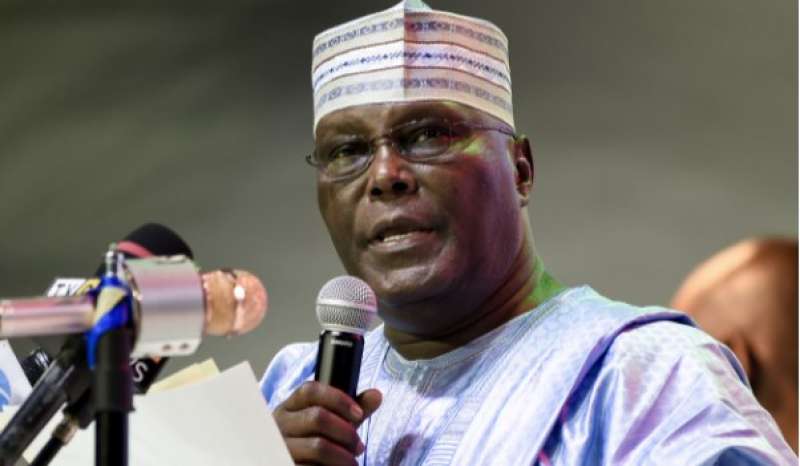




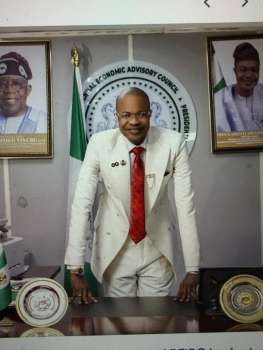



Former Governor of Osun State and court-reinstated National Secretary of the Peoples Democratic Party (PDP), Chief Olagunsoye Oyinlola has declared himself the undisputable National Secretary of the party, notwithstanding the party’s recent announcement of his suspension.
Speaking on Wednesday in Abuja during a press conference, Oyinlola reminded the party’s National Working Committee (NWC) Chaired by Alhaji Bamanga Tukur that by the import of the Court of Appeal judgement reinstating him and having been empowered by the constitution of our party, he remains the undisputed National Secretary of the PDP.
“Gentlemen of the press, on Monday night, I heard through the media, my purported suspension from the Peoples Democratic Party (PDP) by the Alhaji Bamanga Tukur led National Working Committee (NWC). I have since gone through the press statement containing my purported suspension and have come to the conclusion that I should make a formal reaction to this latest act of impunity by a section of the party, that is clearly out to ridicule the judiciary, denigrate the rule of law and destroy the very basic foundation of constitutionalism in our country”, Oyinlola said.
“You will recall that on January 11, this year, Justice Abdul Kafarati of the Federal High Court, Abuja, ordered my removal from office as the National Secretary of the PDP in his judgement, in a suit instituted by a faction of the Ogun State chapter of the party. Although I immediately appealed that court verdict, the Bamanga Tukur led PDP swiftly swore in my deputy as acting National Secretary, declaring that the judgement was declaratory, hence its implementation could not be delayed.
“The PDP and my humble self appealed that judgement. Surprisingly, the PDP, which was vicariously liable for my actions as National Secretary almost immediately, and without any reason or justification, withdrew its appeal. I was requested to pursue my appeal and report back if my petition lodged at the Court of Appeal succeeded. From then on, I patiently and diligently pursued my case at the Appeal Court which, a few days ago, upturned the Federal High Court verdict and re-validated my mandate as the validly elected PDP National Secretary. I expected the party to abide by that judgment”.
He described his suspension, which he found out only through the media, as a shocking and unbelievable reaction to his winning a court case. He recalled the history of the PDP as one of resistance to dictatorship and impunity, of robust opposition to all forms of negation of constitutionalism and the rule of law, and as a product of the rule of law, saying that realization informed his shock at the “blatant assault” on the courts and an unfortunate affront against the Judiciary, good conscience and morality.
“Gentlemen of the press, I want to say that assuming the Tukur leadership of the PDP felt dissatisfied with the court decision, what should it have done? Shouldn't it have asked the plaintiffs to appeal the verdict instead of declaring this needless war against the judiciary?” he queried.
“Even then, I need to stress the unconstitutionality of this act of suspension of Oyinlola, a member of the National Executive Committee of the PDP. In saying this, I wish to invite the attention of Nigerians to the provisions of section 57 of the PDP constitution which states in detail, the procedure for disciplining members of the party. Specifically, section 57 (4) states that ‘where an allegation is made against a member of the party, the Disciplinary Committee shall inform the member in writing of the allegations made against him or her’. Nobody has till date informed me of any wrong doing against my party.
“Again, Section 57 (6) is even more apposite here. It gives the consequences of not giving a member a fair hearing before a disciplinary action is taken against him or her. It states: ‘Any decision taken against a member who has not been informed of the charges against him or her, or, has not been given any opportunity of defending himself or herself shall be null and void’.
“As to Tukur's NWC suspending me so as to preclude me from enjoying the relief granted me by the Court of Appeal , I wish to shock them by informing them of the futility of their action. They should have been diligent enough to read section 57 (7) of our party's constitution. It states: ‘Notwithstanding any other provision relating to discipline, no Executive Committee at any level, except the National Executive Committee, shall entertain any question of discipline as may relate or concern a member of the National Executive Committee, Deputy Governors or members of the National Assembly...’ That is what our constitution says. I am a member of the NEC and so Tukur's NWC can only submit a complaint to NEC concerning me or any other member of the party listed above.
“For the records, Olagunsoye Oyinlola, as a loyal and committed PDP member, who has over the years been a lover of peace and amity, has demonstrated his preference for methodical and urbane conduct in office, by spear-heading several peace initiatives and amicable resolution of disputes. Accordingly, I have, in line with my stance on harmonious relationships and strict adherence to orderliness and respect for truth taken several steps in the past ten months since I was illegally removed from office by a contrived court ruling. Let me state with humility, that as a human being with feelings, I am bound to be hurt and aggrieved at the inhuman and unjust treatment meted to me in the course of the performance of my duties as national secretary. I, therefore, subscribed to several peace plans in line with the constitution of the PDP, as engineered by several organs, interests and individuals that have stakes in the affairs of the PDP. That itself is in conformity with the relevant sections of the PDP constitution on seeking redress by aggrieved party members.
“Among others, we met and discussed my plight a couple of times with the national leader of the PDP, His Excellency, Mr. President, Dr. Goodluck Jonathan, GCFR. I also made representations to the Governor Ibrahim Shema Committee set up by PDP Governors to examine the political crises in the South-west zone of the PDP through a memorandum presented to the body. Furthermore, I submitted a memorandum to the Committee headed by the esteemed Chairman of the Board of Trustees of the PDP, Chief Tony Anenih, and the Prof. Jerry Gana panel on the last PDP special national convention, among many other moves to resolve the impasse amicably. It could be safely stated that I took adequate steps to register my displeasure at the manner I was shabbily treated by the NWC of the PDP, which went to the extent of withdrawing the appeals filed on my behalf at the Federal High Court, Abuja; and the Lagos Division of the Court of Appeal, with an apparent intention of pushing me out of the PDP at all costs.
“My persecutors owe me an explanation on why I am being unjustly persecuted, and vilified unduly; especially considering the fact that no pronouncement has been made on the representations I have made to various authorities of the party in the past 10 months, aside from my illegal removal from office. The causes and effects of the political crises must have been examined by the various bodies that investigated the conducts of all the aggrieved PDP members in relation to the handling of the crises by party leaders. To have resorted to an anomalous decision to suspend an accused without allowing for a fair hearing makes the NWC appear to be a body at the crossroad. That decision, which is designed to serve the self-interest of a clique, destroys the very basis of internal democracy in PDP and makes nonsense out of the principles and values which all right-thinking members of the society cherish.
“It is more than a huge joke and travesty of justice that in the process of attempting to illegally terminate Oyinlola's membership of the PDP, the PDP NWC violated the party's constitution by refusing to give me - the accused top official and member of the National Executive Committee of the ruling party a fair hearing, before my purported suspension from the party. It is tragic that all these do not portray the actors as being free from destructive bias and an irrational fear of Oyinlola's penchant for due process. What could be a better proof of their feverish struggle to prevent Oyinlola from operating at the national secretariat than the PDP counsel's vow to the press last January that '’Oyinlola will never be allowed to return to office as PDP scribe?'’
“I also understand that Tukur's NWC spoke about referring my case to the Disciplinary Committee. I do not know the disciplinary committee they are talking about because, the one set up by the Tukur leadership has not been approved by the NEC as stipulated by the constitution of the party and so cannot exist talkless of trying anyone.
“I do not want to believe that there is no one in Tukur's NWC knowledgeable in the provisions of the party's constitution and in the operation of the rule of law. I would rather hold on to the belief that the rush to subvert the rule of law and mock our judicial system simply blinded the hawks in that NWC to what the law says.
“In saying all the above, gentlemen of the press, I am reminding Tukur's NWC that the import of the court of Appeal judgement and having been empowered by the constitution of our party, I remain the undisputed National Secretary of the PDP. If they are so determined to discipline me for whatever wrong they perceive, they should report me to the National Executive Committee of the party. There is no short-cut to it as long as the party's acts and conducts are governed by its own constitution and the constitution of the Federal Republic of Nigeria, which is the ground norm.”
Continuing, he drew their attention to Section 36(a-e) of the PDP constitution, which spells out the powers and duties of the national secretary, expressing hope that the consequences of having illegal persons perform those functions and exercise such powers in clear breach of the law have been noted. He therefore reiterated that the only person who can legitimately exercise those functions today and unless the Supreme Court says otherwise is Olagunsoye Oyinlola.“Gentlemen of the press, while I thank you for honouring my invitation to this briefing, I urge you to tell Nigerians to ask Alhaji Tukur and his cohorts what offence Oyinlola has committed against them to warrant the undisguised persecution and harassment? I have not offended them in anyway. Instead, I spent my days in Wadata Plaza, pursuing the peace, orderliness, progress and cohesion of the party at all levels, while not losing sight of the dictates of the law.
“Even Alhaji Tukur is a witness to my efforts in this regard. Why and how things got this bad in the party is what I cannot fathom. I, however, advise that in executing whatever plan they may have against Oyinlola, they should spare the Judiciary of the ridicule such as the ambush of last Monday, which they clearly designed to short-shrift the decision of the Court of Appeal. I am a law-abiding citizen and will always submit to the law. That was why I appealed Justice Kafarati's verdict. I urge my traducers to also endeavour to have faith in the law and in the Judiciary. If they are not satisfied with what the Court of Appeal said on Oyinlola, they have the Supreme Court to approach.
“Certainly, to live in terrible hate and perpetual fear is a terrible end to design and I will never allow my conscience to be imprisoned, while contributing my quota to the development of the PDP or any organization for that matter. Leadership must not allow itself to be part of a problem it is attempting to solve, as the result of this would definitely be loss of both credibility and efficacy to effect positive changes. Opinions must certainly differ on issues and developments, since we cannot all see through the same side of the prism in like manner. I am of the conviction that we could do better, as the ruling political party to restore and respect the rule of law, enshrine an ethic of accountability, fair play, responsibility in leadership and institutionalize the principles of equality, justice and respect for objectivity and truth. Doing otherwise exposes us to the ridicule of the advanced world as the political arena assumes higher levels of activity.
“Gentlemen of the press, I am happy to stress that by the combined effects of the judgment of the Court of Appeal and the provisions of the constitution of our party (particularly section 57), I, Prince Olagunsoye Oyinlola remain the National Secretary of the PDP - except and until the Supreme Court says otherwise, any other contraption from Tukur's NWC is illegal, null and void. Simply put, disobedience of the ruling of a properly constituted Law court leaves a sour taste in the mouth. Gentlemen of the press, no condition is permanent. That is why we all must fear the Creator in our dealings with fellow human beings. And like I have always maintained, the path of truth may be long, arrival at its destination is, however, definite”.
 |
|

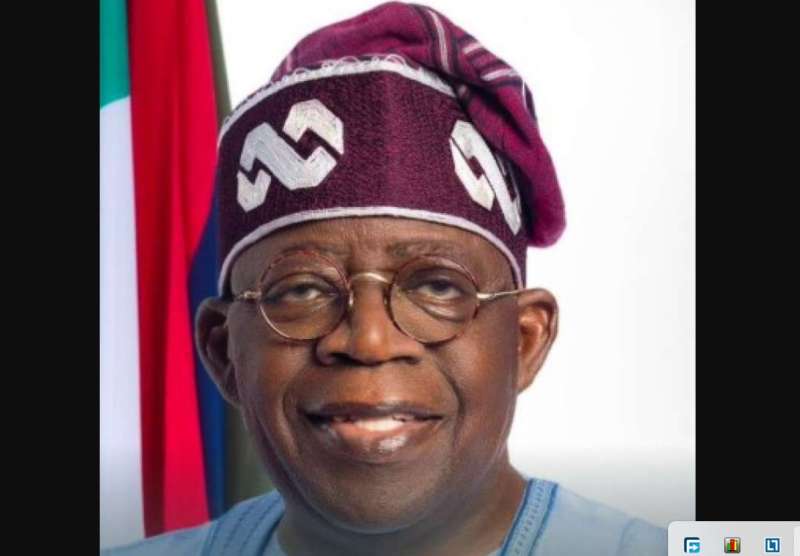
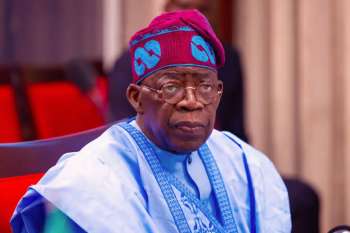
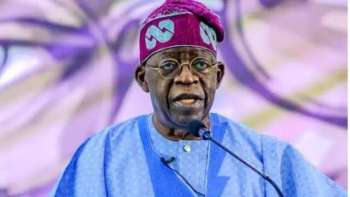
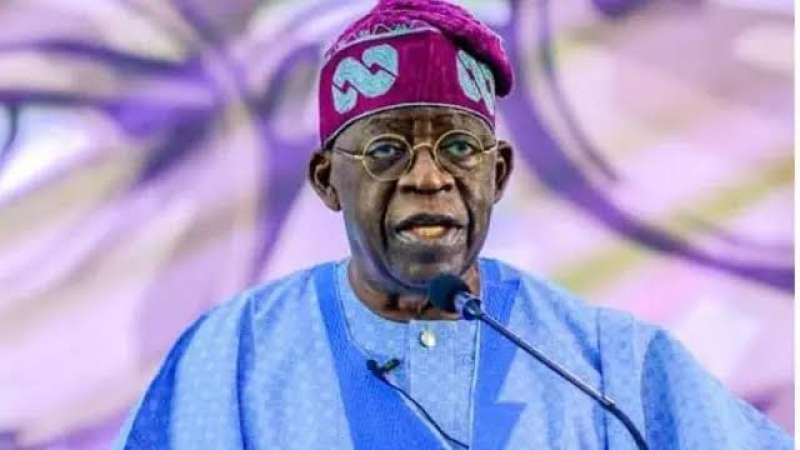
President Bola Ahmed Tinubu has left Nigeria for a three-week vacation in Europe, with his media aide, Sunday Dare, saying the President needs time to “refuel” after months of intense governance.
Dare, Special Adviser to the President on Media and Public Communication, said Tinubu’s leave was well deserved, citing what he described as major decisions taken by the administration on security, the economy and other national issues.
According to Dare, the President would remain in touch with developments at home throughout the trip, receiving regular briefings from ministers, service chiefs and other officials.
He said the vacation was also timely ahead of the coming campaign season, which he said would involve four to five months of intense political activity while governance continues.
But former Vice-President Atiku Abubakar has slammed the President’s decision to travel at a time he described as one of deep economic hardship and insecurity.
Atiku, the presidential candidate of the African Democratic Congress, said the country was facing a “disturbing vacuum of political leadership,” arguing that the President’s priority should be addressing the problems confronting Nigerians.
“Leadership is not merely the constitutional right to occupy an office; it is the judgment to know when your country needs you at home,” Atiku said in a statement posted on his social media accounts.
He pointed to high petrol prices, rising food and transport costs and insecurity, saying millions of Nigerians were struggling while the President was leaving the country for three weeks.
Atiku also questioned the timing of the trip, noting that Vice-President Kashim Shettima was already outside Nigeria on official duty at the African Union summit in Luanda, Angola.
Using a fire analogy, Atiku said: “A father may travel when all is well. But when his roof is burning and his family is trapped inside, he does not pick up his suitcase and head for the airport.”
He added that the controversy was not about whether a president should rest or travel, but whether the timing was appropriate given the challenges facing the country.
“Millions of Nigerians are being grounded by hardship while their President is airborne,” Atiku said.
While the Presidency insists Tinubu remains engaged with affairs of state despite his vacation, Atiku argues that the President should be physically present to confront the country’s mounting challenges.
The clash has once again put Tinubu’s leadership, economic policies and handling of Nigeria’s current difficulties at the centre of political debate.
If you want, I can also make it more like a Punch/Tribune-style hard-news story, with a stronger headline and a sharper opening paragraph.
News
Nigerian motorists are facing fresh petrol-price uncertainty after the Dangote Petroleum Refinery raised its gantry price by ₦65 per litre, bringing the cost of petrol to ₦1,265 — the refinery’s third increase in just eight days.
The latest adjustment has intensified fears of another round of pump-price increases as marketers grapple with rising supply costs.
Dangote had raised its petrol price from ₦1,165 to ₦1,185 per litre on August 21 before increasing it to ₦1,200 on August 26. Three days later, the refinery announced another ₦65 increase, taking the total rise within the period to ₦100 per litre.
The latest adjustment represents a 5.4 per cent increase and is expected to put additional pressure on retail petrol prices across the country.
The refinery also increased its coastal petrol price from ₦1,582,380 to ₦1,669,545 per metric tonne, while customers were directed to return existing Authorisations to Collect for repricing before loading could resume.
Marketers Brace for Higher Costs
The new price is likely to reverberate through the downstream petroleum market, with marketers expected to review their depot and retail prices.
Independent petroleum marketers have already reported petrol selling for between ₦1,250 and ₦1,300 per litre in some locations.
Industry operators have attributed the latest price movements to a combination of international crude-price volatility, higher freight charges, foreign-exchange pressures and challenges surrounding crude supply.
The consequences could extend far beyond filling stations.
Any significant rise in petrol prices is likely to increase transportation and logistics costs, with potential knock-on effects on food distribution, business operations and the prices of everyday goods and services.
For households already battling elevated living costs, another increase could deepen the pressure on disposable incomes.
Dangote Raises Alarm Over Petrol Imports
The latest price increase comes amid a growing dispute over the volume of imported petrol entering Nigeria.
The Dangote refinery says imported Premium Motor Spirit accounted for approximately 43 per cent of petrol supplied to the Nigerian market in July.
The company argues that the continued inflow of imported fuel is making inventory management increasingly difficult for domestic refiners.
Dangote said it has maintained substantial petrol reserves since beginning operations to ensure reliable supply across Nigeria. But keeping large quantities of fuel in storage requires significant spending on storage facilities, transportation and working capital.
According to the refinery, uncertainty over the quantity and timing of imported petrol makes it difficult to accurately forecast domestic demand and determine how much fuel should be produced and stored.
When imported products subsequently compete with locally refined petrol, the refinery can be left carrying expensive inventories for longer periods.
Refinery May Export More Petrol
Dangote has warned that it could increase petrol exports if the current situation persists.
The refinery said exporting surplus stocks could become more commercially viable than keeping large volumes of unsold petrol in storage.
It stressed that increased exports should not be interpreted as a sign that Nigeria lacks sufficient refining capacity.
Rather, the company said the exports are being driven by excess inventories arising from unpredictable import volumes.
Dangote maintains that it has the capacity to meet or exceed Nigeria’s petrol requirements and remains committed to supplying the domestic market.
However, the refinery says a more predictable and transparent market is necessary for efficient production planning and inventory management.
Pressure Mounts on Regulators
The company is calling for greater transparency in the issuance of petrol import licences and better coordination among regulators and industry players.
It argues that policies supporting domestic refining would help Nigeria reduce its dependence on imported fuel, conserve foreign exchange and strengthen the country’s energy security.
The latest developments expose the difficult balancing act in Nigeria’s downstream petroleum market.
Despite the emergence of major domestic refining capacity, petrol prices remain vulnerable to global crude prices, exchange-rate movements, freight costs, crude availability and competition from imports.
With Dangote’s gantry price now at ₦1,265 per litre, all eyes are on petrol marketers and filling stations for the next move.
For Nigerian consumers, the fear is that another refinery price increase could soon translate into another painful increase at the pump.
Business
In The Spotlight
There comes a point in every government’s life when explanations cease to matter and results become the only language citizens are prepared to hear.
For President Bola Ahmed Tinubu, that moment has arrived.
Three years after the dramatic declaration that “fuel subsidy is gone,” Nigerians are asking a brutally simple question: Are we better off today than we were more than three years ago?
The answer, is a resounding NO!
The government has bandied stats claiming that the economy is doing “well”. But there is another Nigeria — the Nigeria outside the conference rooms, financial markets and government statistics.
It is the Nigeria of the market woman whose transport fare has swallowed a large part of her profit. The Nigeria of the civil servant whose salary disappears within days. The Nigeria of the young graduate who cannot find work. The Nigeria of the small manufacturer whose diesel, petrol, electricity and financing costs have made production almost impossible. The Nigeria of parents who have reduced the quantity and quality of food on their children’s plates.
And it is the Nigeria of millions who have discovered that economic growth on paper, akin to what the character Squealer, the chief propagandist in ‘Animal Farm’, was used to churning out daily, does not necessarily translate into food on the table.
Reuters reported this month that the cost of living crisis remains acute despite investor optimism around the government’s reforms. It noted that petrol prices are roughly six times their level before subsidy removal and that the cost of preparing a basic jollof rice meal has more than doubled since Tinubu assumed office. That is the Nigeria Nigerians know.
Let us be clear: Nigeria’s old subsidy system was deeply flawed. It was expensive. It was vulnerable to corruption. It encouraged rent-seeking. It created opportunities for politically connected middlemen. But acknowledging the failures of the old system does not mean Nigerians were condemned to accept an equally damaging alternative.
The Tinubu administration presented Nigerians with what amounted to a false choice: Keep the old subsidy and risk fiscal collapse — or remove it and allow Nigerians to absorb the shock.
There was another option. A smarter option. A Nigerian option. A production-based subsidy. And that is precisely where Atiku Abubakar’s proposal enters the debate.
President Tinubu has repeatedly defended subsidy removal as necessary to save Nigeria from bankruptcy. Indeed, in May 2026, the President said subsidy removal saved Nigeria from imminent bankruptcy and laid the foundation for economic recovery.
But there is a question that cannot be answered by repeating the word “reform”: If the reform saved government finances, why did it have to destroy so much household purchasing power and dragged millions into the poverty trap?
This is not an argument against fiscal discipline. It is an argument for better fiscal discipline. A government exists not merely to balance its books but to improve the welfare of its citizens. It is actually enshrined in the constitution: The primary responsibility of a government is to ensure the security, safety and welfare of its citizens.
And the evidence of the hardship is not merely opposition political rhetoric. The IMF reported in 2026 that Nigeria’s poverty had reached approximately 63 percent at the national poverty line and an estimated 27 million Nigerians faced food insecurity in late 2025. That is an extraordinary indictment of the gap between macroeconomic reform and human welfare.
Indeed, Tinubu’s reform forgot the average Nigerian. This is where his administration’s economic philosophy deserves serious scrutiny. The government essentially told Nigerians: “Endure today. Prosper tomorrow.”
But what happens when tomorrow keeps moving further away? What happens when inflation eats salaries faster than wages can rise? What happens when transportation costs push food prices beyond the reach of ordinary families? What happens when businesses that were barely surviving before the reform begin closing their doors? What happens when young Nigerians conclude that their country has no economic future for them?
A government cannot indefinitely ask citizens to sacrifice their present for an unspecified future, especially when Tinubu and family and friends are living large. There must be a dividend. There must be relief. There must be evidence that the pain is producing something tangible. And for millions of Nigerians, that evidence remains painfully elusive.
Atiku’s answer: Move the subsidy from consumption to production. And this is why Atiku Abubakar’s latest proposal deserves a serious national conversation. It is important to understand what Atiku is actually proposing. He is not simply calling for a restoration of the old petrol-import subsidy system. That has gone with the wind.
His proposal is to move government support: from importation to production; from middlemen to Nigerian refineries; from unverifiable claims to verifiable barrels.
Under Atiku’s proposal, government support would be capped, targeted at domestic refining and tied to verified production, with the objective of reducing energy costs while accelerating domestic refining.
That is a fundamentally different proposition. And it deserves to be judged on its economic merits. Why subsidise imports when Nigeria can subsidise production?
This is the question Nigerians should be asking. Nigeria produces crude oil. Nigeria has enormous refining potential.
Nigeria now has the Dangote Refinery, a 650,000-barrel-per-day facility, alongside other emerging and existing refining capacity.
Yet we have spent decades in the absurd position of exporting crude oil and importing much of its refined petroleum needs. Why should Nigeria continue using public policy primarily to facilitate expensive imported petroleum products when it can use that same policy to strengthen domestic production? Why should Nigerian taxpayers subsidise foreign refineries and foreign economies when Nigerian refineries can be supported to produce for Nigerians?
That is the policy revolution Nigeria needs. And that is indeed the revolutionary #AtikuSubsidyPlan: Subsidise the barrel — not the middleman.
Imagine a system in which government says to a refinery: “We will provide a carefully capped production incentive, but only for verified Nigerian crude processed in Nigeria.”
No crude processed? No subsidy. No verifiable production? No subsidy. No measurable consumer benefit? No subsidy. False documentation? Criminal sanctions. Independent audit?Mandatory. Public disclosure? Non-negotiable.
That is how Nigeria can take the corruption out of subsidy without taking the affordability out of petroleum. The principle is remarkably simple: Let the subsidy follow the barrel. Not the politician. Not the middleman. Not the importer. Not the briefcase. But the barrel.
The #AtikuSubsidyPlan is not returning to an endless, opaque and uncontrolled subsidy regime. He understands that it is laden with corruption and not cost-saving. That explains why he also proposes to implement the Oronsaye Report.
For doubting Thomases, Atiku’s proposal should be understood as a carefully designed production incentive that helps Nigeria move from import dependence to domestic refining and eventually to a competitive petroleum market.
That is the difference between: subsidising consumption indefinitely and subsidising production to build capacity. The first can create dependency. The second can create industry.
Truth be told, Nigeria needs industrial policy, not economic punishment. The Tinubu administration’s defenders will argue that Nigerians had been living beyond the country’s means and that the subsidy had to go.
Fair enough. But economic reform is not a religious doctrine. It is a tool. If a policy produces unacceptable consequences, responsible governments modify it.
The objective should never be: “We removed the subsidy.” The objective should be: “We made energy affordable, built domestic refining capacity, created jobs, conserved foreign exchange and strengthened the Nigerian economy.” Those are very different objectives. And Nigerians deserve the second.
The government is now confronting the need to reform crude supply and pricing arrangements for domestic refiners. Reuters reported that Nigeria was considering reforms to crude allocation and pricing to improve feedstock access for domestic refineries, including the Dangote Refinery. Proposed measures include allowing producers to deliver crude directly to nearby refineries and discounts that reflect reduced transportation and handling costs.
That development actually strengthens the argument for an Atiku production-centred petroleum subsidy policy. The debate is no longer about whether Nigeria should refine domestically. The debate is about how government policy can make domestic refining economically viable and ensure Nigerians benefit from it. And Atiku’s proposal speaks directly to that question.
And to show that he means business, Atiku has already promised Nigerians that there will be no blank cheque subsidy. He has promised that every naira spent will be traceable. He has promised independent audits. He has promised to publish the volume of crude allocated to participating refineries. He has promised to publish the amount of subsidy paid. He has promised to publish the quantity of refined products produced. And he has promised to publish the pump-price benefit delivered to consumers. He has promised to establish penalties severe enough to make subsidy fraud economically suicidal.
Tinubu says his reform may have saved the government. The jury is still out. But who will save the Nigerian household? This is perhaps the most uncomfortable question of all. The government’s defenders say the reforms saved Nigeria from economic collapse. But if saving the government means millions of Nigerians are unable to afford food, transport, housing and basic necessities, then the reform cannot be the end of the conversation. It must be the beginning of a correction. Even Finance Minister Taiwo Oyedele has acknowledged that the government needs to do more to ensure prosperity is broadly shared. Reuters quoted him warning that persistent inequality is dangerous.
That admission is important. Because the debate is no longer whether the reforms have produced some macroeconomic gains. The debate is whether ordinary Nigerians are receiving a fair share of those gains.
And that is where the Tinubu administration remains vulnerable. Nigeria cannot eat GDP. Nigeria cannot ride on foreign reserves. Nigeria cannot cook investor confidence. Nigeria cannot pay school fees with a favourable credit outlook. Nigeria cannot transport farm produce with macroeconomic stability.
The Nigerian people need purchasing power. They need affordable energy. They need jobs. They need food. They need affordable transportation. They need businesses capable of producing competitively. They need an economy in which hard work once again provides a reasonable pathway to a decent life.
That is the economy that government must build. And that is where the 2027 choice becomes bigger than Tinubu versus Atiku. The 2027 election should not merely be a referendum on personalities. It should be a referendum on economic philosophy. Do Nigerians want another four years of: “Endure the pain; the benefits will eventually come”? Or do they want a government prepared to say: “We will reform, but we will reform intelligently. We will discipline public spending, but we will also protect production. We will eliminate corruption, but we will not punish the poor for the corruption of the powerful. We will build domestic industry and make Nigerians the primary beneficiaries of Nigeria’s resources.”
That is the choice. And Atiku’s production-based subsidy proposal trumps Tinubu’s current “suffering and smiling” reckless removal of subsidy.
President Tinubu asked Nigerians to trust his reform. Millions have paid the price. Atiku Abubakar’s production-anchored subsidy proposal is a better alternative — it will be transparent, capped, independently audited and firmly tied to measurable domestic production and lower prices for Nigerians.
The time has come to stop asking Nigerians how much more pain they can endure. The question should be: How much longer can Nigeria afford an economic policy that makes the Nigerian people poorer in the name of making Nigeria richer?
That is the question every Nigerian, handed the shortest end of the stick in President Tinubu’s subsidy removal misadventure, must answer with their ballots in 2027.
Nigeria deserves reform. But Nigerians deserve to benefit from the reform.
By Paul Ibe
In The Spotlight
For more than three years, Nigerians have been told to endure the pain of petrol subsidy removal in the hope that tomorrow would be better.
Now, tomorrow has been given a date: October 1.
President Bola Ahmed Tinubu says Nigerians should begin to feel the benefits of cheaper fuel through lower transport fares from October. The vehicle of that promise is Compressed Natural Gas, or CNG.
The message sounds simple: if CNG is cheaper than petrol, transport operators should spend less on fuel. If operators spend less, passengers should pay less.
But economics — and Nigerian reality — rarely works that neatly.
The question Nigerians should be asking is not whether CNG is cheaper. It is.
The real question is: who will capture the savings?
That is where President Tinubu's latest promise becomes complicated.
Cheaper fuel does not automatically mean cheaper transport
Tinubu says a CNG-powered vehicle can spend between 60 and 80 per cent less on fuel than a petrol-powered vehicle.
If that saving is real and sustained, it is potentially significant.
But a commercial driver does not run a vehicle on fuel alone.
There are tyres, spare parts, engine repairs, insurance, vehicle financing, road-related costs, taxes, levies and — increasingly — the cost of surviving an economy battered by inflation.
And there is another uncomfortable reality: businesses do not normally reduce their prices simply because one component of their costs falls.
They reduce prices when competition, regulation or market pressure forces them to.
That means the government's most difficult task is not converting vehicles to CNG.
It is converting fuel savings into commuter savings.
The CNG paradox
The government's CNG programme has made considerable progress. More than 120,000 vehicles have reportedly been converted, while additional conversion kits and hundreds of refuelling stations are planned.
But there is a glaring contradiction.
You cannot persuade thousands of drivers to abandon petrol for CNG and then leave them stranded in queues because there are too few places to buy the gas.
That is already happening in parts of the country.
Drivers have reported spending hours waiting to refuel. Some commercial operators complain that the time lost in queues directly affects their earnings.
This raises a fundamental question:
What is the economic value of cheaper fuel if the driver cannot reliably obtain it?
A fuel that is cheap but difficult to find can become expensive in another way — through lost working hours, reduced trips and higher operating uncertainty.
Then comes Atiku's subsidy argument
This is where former Vice-President Atiku Abubakar has entered the debate.
Atiku is not calling for a simple return to the old petrol subsidy arrangement. His proposal is to move government intervention from imported petroleum towards crude supplied to domestic refineries.
His argument is straightforward: reduce the cost of fuel at the production end and allow consumers to benefit from lower prices.
The Tinubu administration rejects that logic and has criticised the subsidy approach.
But Atiku's political argument has struck a nerve because Nigerians are not debating subsidy as an abstract economic concept.
They are debating it with empty pockets.
They feel fuel prices every morning when they leave home.
They feel them again when they board a bus.
They feel them at the market because the trader paid more to transport the goods.
And they feel them at the dinner table.
That is why the subsidy debate refuses to disappear.
The danger of another promise
President Tinubu deserves credit for recognising that transportation is one of the biggest channels through which economic hardship reaches ordinary Nigerians.
But Nigerians have heard many promises before.
The October 1 target therefore creates a dangerous political expectation.
If transport fares fall meaningfully, the government will have a powerful argument that its CNG strategy is working.
If fares do not fall, however, the administration will face a much more difficult question:
Where did the savings go?
Did operators keep them?
Did higher maintenance costs absorb them?
Did infrastructure shortages eat them up?
Or did the promised savings simply never materialise at the scale advertised?
These questions cannot be answered with statistics about the number of vehicles converted.
A commuter does not eat conversion figures.
A student does not board a “CNG initiative.”
A trader does not pay transport fare with a government press release.
People pay in naira.
Governors cannot escape responsibility
The governors are now part of the equation.
They have endorsed the National Affordable CNG Transit Programme and acknowledged the need to work with the Federal Government and private sector.
But endorsement is not implementation.
Governors will need to show Nigerians exactly what they intend to do.
Will they subsidise conversion?
Will they support transport fleets?
Will they reduce taxes and levies on operators?
Will they regulate fares?
Will they invest in CNG infrastructure?
And, most importantly, how much will they spend?
If the money is coming from public funds, Nigerians deserve transparency.
If the programme is expected to be funded by private operators, the government must explain why those operators would voluntarily surrender a large portion of their savings to passengers.
The real subsidy question
Perhaps the debate has been framed incorrectly.
The choice may not simply be subsidy versus no subsidy.
The better question is:
What is the most efficient way to reduce the cost of moving Nigerians and Nigerian goods?
If a targeted intervention at domestic refineries can reduce fuel prices without recreating the corruption and opacity associated with the old subsidy system, that deserves serious examination.
If CNG can permanently reduce transport operators' fuel costs and those savings can be transparently passed to passengers, that also deserves support.
There is no prize for ideological purity when millions of Nigerians are struggling.
Government should use whatever policy works — provided the policy is transparent, affordable and measurable.
October 1 will expose the difference between politics and policy
The most important part of Tinubu's announcement is not the promise of 1,000 CNG stations.
It is not the 120,000 vehicles already converted.
It is not even the claim of 60 to 80 per cent fuel savings.
It is the promise that passengers will actually pay less.
That is measurable.
And it should be measured.
From October 1, Nigerians should be able to compare fares before and after the policy. Transport unions, state governments and regulators should publish clear fare benchmarks. The public should know which routes have benefited and by how much.
Otherwise, “cheaper fuel should mean cheaper fares” risks becoming another attractive slogan in an economy desperately searching for tangible relief.
Tinubu has put his administration's credibility on the line.
Atiku has put his alternative subsidy argument on the table.
The governors have joined the experiment.
Now the Nigerian commuter gets the final vote.
Not at the ballot box.
At the bus stop.
If fares fall, CNG will have made its case.
If they do not, Nigerians will have every right to ask why cheaper fuel somehow failed to produce cheaper transport.
And that, more than any speech, committee or infrastructure announcement, will determine whether Tinubu's October promise becomes a genuine economic intervention — or simply another political promise made to a population that has already endured too much pain.
By EEA, Publisher/Editor-in Chief