


The numbers are staggering. ₦1.23 trillion. $684.48 million. 10,872 convictions. 10,053 forfeited assets.
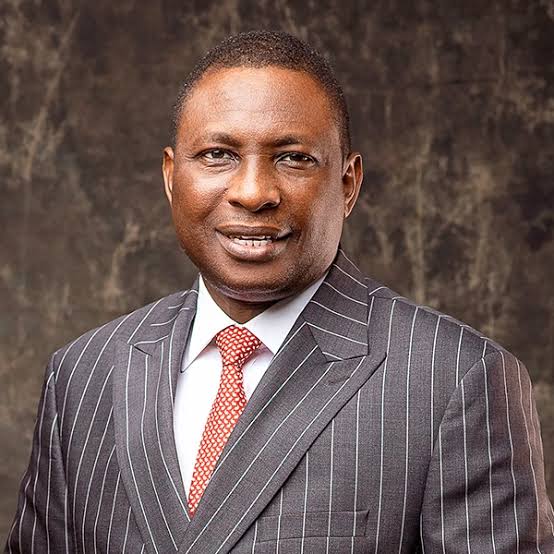
In 34 months, the Economic and Financial Crimes Commission has unleashed one of its most aggressive crackdowns on financial crime, according to its chairman, Ola Olukoyede.
Presenting his three-year stewardship report in Abuja on Monday, Olukoyede revealed that the EFCC received 49,673 petitions, investigated 39,615 cases and filed 14,476 cases in court between October 2023 and July 2026.
The result?
10,872 convictions.
And the numbers are rising.
In just the first six months of 2026, the commission secured 1,370 convictions from 1,889 court filings.
But the EFCC's war is not stopping at arrests.
It is following the money.
THE MONEY TRAIL
Between October 1, 2023 and June 30, 2026, the commission said it recovered:
₦1,233,612,040,411.11
$684,478,457.32
£373,905.78
€9,343,803.66But there is a striking detail buried inside the enormous figures.
Only 33 per cent of the naira recovery — ₦397.26 billion — was for the Federal Government.
The remaining 67 per cent, or ₦836.34 billion, was recovered for other beneficiaries — including government agencies, state revenue services, companies, individuals and foreign victims.
Put simply: For every ₦3 recovered, roughly ₦2 belonged to someone other than the Federal Government.
And Olukoyede insists that is precisely the point.
“Recovery is only meaningful when the value is ultimately returned to the public interest or rightful beneficiaries.”
So far, the EFCC says ₦661.32 billion and $492.37 million have been released to beneficiaries.
THE EFCC'S OWN HOUSE IS ALSO UNDER ATTACK
Perhaps the most explosive revelation was not about suspects outside the commission.
It was about corruption inside it.
More than 40 EFCC personnel have been dismissed for corruption and financial malpractice during Olukoyede's tenure.
More than five are now facing prosecution.
The chairman's warning was stark.
“You can’t be fighting corruption when your hands are soiled with corrupt practices.”
The commission has since renamed its Internal Affairs Department the Department of Ethics and Integrity, while introducing new rules on gifts and hospitality, conflicts of interest and the security of exhibits.
The message is unmistakable:
The anti-graft agency says the fight begins at home.
CYBERCRIME TAKES CENTRE STAGE
The face of financial crime is changing — and the EFCC says it is changing fast.
Between 2024 and 2026 year-to-date, the commission recorded 46,288 offences across nine major crime categories.
Advance-fee fraud and cybercrime accounted for almost two-thirds of them.
Even more alarming, recorded offences increased by 24.1 per cent between 2024 and 2025.
Procurement fraud surged.
Bank fraud increased.
Cybercrime expanded.
Economic-governance offences climbed.
For the EFCC, the battle is no longer simply about politicians accused of stealing public money.
It is increasingly about protecting ordinary Nigerians, businesses and institutions from sophisticated networks of fraud and economic exploitation.
NO SACRED COWS
Olukoyede also sent a message to Nigeria's political and business elite:
Status will not provide immunity.
The EFCC chairman pointed to the convictions of former Power Minister Saleh Mamman, Robert Orya and Chukwunyere Nwabuoku as examples of the commission's determination to pursue high-profile cases.
His declaration was unequivocal:
“No office, title or social status should place anyone beyond the reach of the law.”
But Olukoyede stressed that the EFCC would investigate professionally, prosecute on the basis of evidence and leave the final determination of guilt or innocence to the courts.
₦288 BILLION TAX BONANZA
The anti-corruption drive is also producing another financial dividend.
The EFCC said its enforcement activities generated approximately ₦288.1 billion in federal and state tax recoveries.
That includes:
₦173.2 billion in federal tax recoveries.
₦114.9 billion for state internal revenue services.
Olukoyede was quick to make one distinction:
These were existing tax obligations — not new taxes imposed on Nigerians.
The commission also reported about ₦257.2 billion recovered for federal ministries, departments and agencies.
FROM STOLEN WEALTH TO PUBLIC ASSETS
Cash is only part of the story.
Courts issued forfeiture orders covering a staggering 10,053 tangible assets.
Among them were:
8,198 electronic items.
1,177 properties.
370 automobiles.
251 plots of land.And that is not all.
Schools.
Factories.
Hotels.
Shops.
Oil rigs.
Barges.
Machinery.
Aircraft.
Even 102 tonnes of solid minerals.
The disposal of assets under final forfeiture orders generated approximately ₦12.07 billion, which was paid into government coffers.
FROM UNIVERSITY SEIZED TO UNIVERSITY SERVING STUDENTS
One of the most dramatic examples of the EFCC's asset-recovery policy is unfolding in Kaduna State.
NOK University in Kachia, recovered through the commission's asset-forfeiture process, has been transformed into the Federal University of Applied Sciences, Kachia.
By December 2025, 1,909 students had matriculated.
The symbolism is powerful:
An asset allegedly tied to criminal proceeds was transformed into an institution serving students.
₦200 BILLION FOR EDUCATION AND CREDIT
The government has also channelled recovered funds into national programmes.
In 2024, ₦50 billion each was allocated to the Nigerian Education Loan Fund and the Nigerian Consumer Credit Corporation.
Another ₦50 billion for each institution was approved in 2026.
For the EFCC, this represents a fundamental change in thinking.
Anti-corruption, Olukoyede argues, should not end with punishment.
Stolen wealth must be recovered.
Recovered wealth must be returned.
And returned wealth must create value.NIGERIA OFF THE GREY LIST
Olukoyede also linked the EFCC's enforcement drive to Nigeria's wider fight against money laundering and terrorist financing.
He described Nigeria's removal from the Financial Action Task Force Grey List in October 2025 as a major national achievement, saying EFCC investigations and enforcement contributed to strengthening the country's compliance framework.
The commission, he said, has deepened cooperation with international partners including the FBI, UK National Crime Agency, Royal Canadian Mounted Police and INTERPOL.
A DIGITAL EFCC
Inside the commission itself, the transformation is also underway.
Olukoyede said approximately 60 per cent of EFCC processes and operations have now been digitalised.
New guidelines have been introduced for arrest and bail.
Sting operations have been reviewed.
Specialised units have been created, including the Department of Fraud Risk Assessment and Control and the Cybercrime Rapid Response Centre.
The commission has also expanded its footprint, inaugurating directorates in Enugu and Ilorin and establishing new directorates in Ekiti, Anambra and Katsina.
₦1.23tn Recovered, 10,872 Convictions: EFCC Declares War On Corruption