


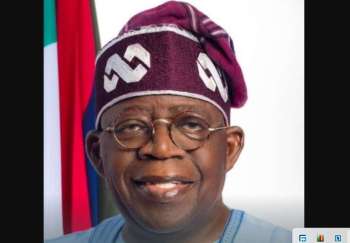




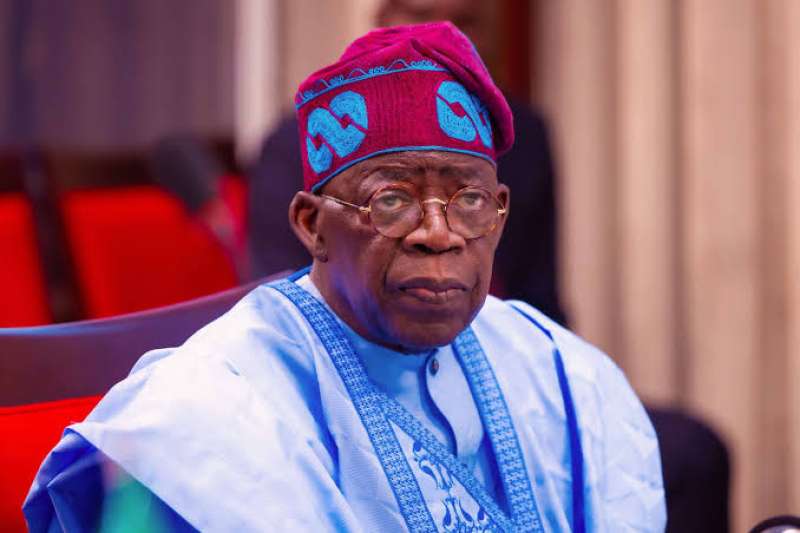
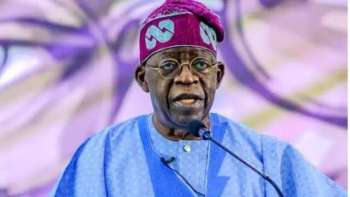





The incumbent President of Nigeria, Goodluck Jonathan has declared his intention to run for a second term in office on the platform of the Peoples Democratic Party (PDP).
Jonathan made the declaration at the Eagles Square, Abuja, Nigeria’s capital city on Tuesday. While giving the declaration speech, the president promised that his government would continue to place priority on the fight against terror, assuring that he would equip the military to ensure that the Chibok girls are freed.
He decried the bombing of a school assembly that occurred in Potiskum, Yobe State on Monday which claimed the lives of more than 40 pupils. He revealed that 60million naira has been set aside for the rehabilitation of victims of terror in the north east part of the country.
While speaking to the crowd of supporters at the Eagle Square, Jonathan reminded Nigerians that that under his watch as president the nation’s economy has been repositioned.
He pointed to the reforms in the power sector as one of his main achievements, saying progress is still been made in the sector and Nigeria remains on the firm path of achieving regular power supply.
He promised on behalf of himself and his party that if he is elected, Nigerian can always be assured of quality administration.
Full text of the declaration speech read:
Address by His Excellency, President Goodluck Ebele Jonathan, GCFR
On the Occasion of His Declaration of Intent to Run for the 2015 Presidential Elections under the Platform of the Peoples Democratic Party (PDP)
Eagle Square, Abuja
Tuesday 11th November, 2014
Dear Compatriots:
1. Four years ago, precisely September 18, 2010; I stood in this Eagle Square, to offer myself for election as the President of our beloved country on the platform of our great party; the Peoples Democratic Party (PDP).
2.Seven months after that declaration, you elected me to lead this country with overwhelming support from all parts of our Nation. I remain grateful for the trust you reposed in me to lead our Nation through uncommon challenges in our march of progress as a united and democratic country.
3. Over the years, the Almighty God has made it possible for me to develop a bond with you and I am grateful for your support and understanding in the difficult periods we have journeyed through.
4. Distinguished ladies and gentlemen, our stewardship has not been without challenges. We have had to deal with the wave of insurgency that has swept through some parts of our dear country. Only yesterday, Government Science Secondary School in Yobe State was bombed by insurgents, killing our promising young children who were seeking education to build the country and support their parents. Many Nigerians have lost their lives and property to these mindless killings. Let me crave the indulgence of all present here to stand up to observe a minutes silence in honour of these young lads who lost their lives. Clearly, this has cast a dark cloud on our Nation but we will surely win the war against terror. A number of young men and women have been kidnapped by these criminal elements including our daughters from Chibok. We will free our daughters and defeat terror.
5. We are equipping the armed forces and deploying special forces to engage the terrorist and end this senseless war. We must protect our country. We must save our people. I will do everything humanly possible to end this criminal violence in our Nation.
6.To ensure the long term stability and development of the affected areas, government has launched three programmes: The Presidential Initiative for the North East, the Victim Support Fund and the Safe School Initiative. The Presidential Initiative for the Northeast is focused on improving infrastructure and economic growth in the region. The Safe School Initiative is centred on creating a safe environment to encourage our children in the communities to acquire education. The Victim Support Fund, a partnership with the Private Sector, has raised about 60 billion Naira, which will help to empower and rehabilitate victims of terror. I promise the victims of these dastardly acts that we will continue to stand with you.
7. I am grateful to all Nigerians for standing with us.
8. Let me also thank the leaders and elders of our great party, the Peoples Democratic Party, for the opportunity you have given to me to serve our country, Nigeria.
9. I am overwhelmed by the trust, confidence and support of the various organs of our party, the Board of Trustees, the National Caucus, the National Executive Committee, the National Working Committee, the PDP Governors Forum, members of the PDP Caucuses of the National Assembly, and others.
10. This day affords me the opportunity to continue the conversation of development we started together. We must develop our country.
11. Infrastructure has been a major focus area of my administration and so, we pursued the power sector reform to this point of irreversible progress. Nigeria has undertaken a most transparent and corruption-free bidding process, attracting global commendation. The on-going 450MW Azura Power Plant in Edo State is a testimony to the success of this transformation.
12. We have also resumed development of our Hydro-Power potential, with the construction of the 700MW Zungeru Hydro-Power Plant, while construction work on the 3,050MW Mambilla Hydro-Power Plant is about to take off.
13. Our power generation and distribution companies have now been privatized. We are firmly on the road to guaranteed regular power supply in the months ahead. This our bold move, is paying off!
14. We are committed to environmental protection and conservation and reducing vulnerability to climate change. In this regard, we have embarked on a number of projects across the country. Of particular note is the African Great Green Wall Programmed, where we have released about 16 billion naira for implementation. The project will create a green belt across 11 states from Kebbi to Borno.
15. In the past three and half years, the water sector has witnessed unprecedented improvement. Access to potable water is now 67%, up from 58% in 2010, while sanitation coverage is 41%, from 32% within the same period.
16. Major developments in water include the completion of 37 Dams and rehabilitation of 10, with several others under-going construction. The flagship Kashimbila Multipurpose Dam which is being built to contain flood from Lake Nyos in Cameroon, is now at 90% completion. We have also completed about 5,000 rural and semi urban water schemes.
17. We are reforming the National Urban Water supply programmes in 12 states, with 385 formal and informal irrigation projects, covering a total land area of 118,000 hectares, cultivated mostly by small holder farmers. This has yielded over 3 million metric tons of assorted grains and vegetables, with a market value of about 45 billion naira
18. Before the advent of this administration, the Railway system was practically dead. Today, we have revived the rail sector. The narrow gauge line from Lagos to Kano has been rehabilitated with improved coaches providing regular services. The rehabilitation of the Port Harcourt-Maiduguri rail line is progressing with the Port Harcourt-Gombe segment as well as the branch line from Kafanchan to Kaduna expected to be completed and fully operational by December 2014.
19.Already, work on the Abuja-Kaduna standard gauge rail line, is progressing. The tracks of the rail line will be completed by December this year 2014. Upon completion of the project in the first quarter of 2015, it will be possible for Nigerians to live in Kaduna and work in Abuja. The Itakpe-Ajaokuta-Warri standard gauge line has attained an advanced stage, with the track completely laid. We hope to commence full operation before the end of 2015.
20. Other segments of the new standard gauge speed train network are planned, with contract already awarded for the Lagos –Ibadan Segment. There will be more of such modern and faster rail connections in the coming years. Already, discussions are now at advanced stage, for the Coastal rail line that will traverse through 10 states, from Lagos through the South-South and South-East, all the way to Calabar.
21. My administration has successfully completed the dredging of the lower River Niger from Baro in Niger State to Warri in Delta State. The cheering news is that over 6.7 million passengers and over 1.6 million tonnes of cargo have been moved through this channel in less than three years.
22. I am happy to also report that our ports now operate 24 hours service, which has led to the reduction of clearing time and improved efficiency.
23. When I assumed office in 2010, out of the 35,000km of federal roads nationwide, only about 5,000km were motorable. Today, that number has increased to about 25,000km. We expect to complete the remaining 10,000km in three years while initiating new ones.
24. I made a commitment to build two new major bridges across the River Niger and River Benue. Today, the new bridge over the River Benue, connecting Loko in Nassarawa State to Oweto in Benue State has reached an advanced stage of completion, while work has commenced on the Second Niger Bridge.
25.Beyond these, my administration has concluded plans to re-commence the construction of Bodo-Bonny Road with three major bridges on the alignment that will link the Island of Bonny with Rivers mainland.
26.Preliminary works have started on my administration’s planned re-construction and expansion of the Murtala Muhammed International Airport Road in Lagos to a world class entry point into our country. Only a few months ago, work started on the dualization of Kano-Katsina Road. While many Nigerians are celebrating the marked improvements on our roads, I want to assure that it will get even better as we move forward.
27.In the pursuit of an integrated transportation system, we embarked on the construction of five new Airport Terminal Buildings and Air-field facilities. We are also re-constructing existing ones. The re-construction upon completion, will lead to improved passenger processing, increased cargo handling capacity and enhanced Air-field facilities that meet international standards and improves safety. These efforts have been met with global acknowledgement including the attainment and retention of the FAA Category One status.
28.In housing, we signed the National Housing Policy to kick-start the framework for providing more affordable homes for our people. We have also expanded the National Housing Fund to accommodate more Nigerians. We have started a revolution in the housing sector with the start of the Nigerian Mortgage and Refinanced Company (NMRC), a new initiative of my administration, that will enable more citizens in the lower income bracket to become first time home owners.
29.Our partners such as the World Bank group are supporting this with US300million dollars interest free credit, while my administration will back it with over 100billion naira in bonds. We are already processing 66,000 mortgage applications for our young people. We have amended the PENCOM Act to enable the pension funds invest in housing sector bonds. This will create a boom in the housing sector.
30.In the Federal Capital Territory, we are rapidly building a befitting National Capital by expanding and providing new infrastructure, developing ten new districts and Satellite Towns to cater for the ever increasing population. In no distant future, you will be able to arrive at the Nnamdi Azikiwe International Airport and proceed to the city using the Abuja Light Rail. In addition to providing durable health, educational and transportation services, we are also collaborating with Organized Labour to build functional, affordable and social housing in Abuja.
31.Other critical capital developments that are being packaged by this Administration include the development of the Ultra-Modern World Trade Centre, the Abuja Town Centre, the Jabi Lake Comprehensive Centre, the Centenary City and the Land Swap Districts. This private sector driven infrastructural development will positively change the skyline of the city and provide the required office and residential accommodation, shopping and recreation as well as tourism and entertainment facilities in the FCT.
32. In our determination to encourage much greater participation of Nigerians in the oil and gas industry, one of the first actions I took, was the enactment of the Nigerian Oil and Gas Industry Content Development Act. As a result of this law, indigenous Nigerian participation levels, in upstream and downstream activities of the oil and gas industry have increased by over 45%, thereby increasing employment opportunities for our youth.
33. We have also succeeded in eliminating the long queues that previously characterised our filling stations, through regular and sustained product supply.
34. Gas infrastructure to ensure adequate Gas to Power and Gas to Industry, is being aggressively put in place. Over 450km of gas pipelines have been installed over the last 3years. Another 2,000km is planned over the next 4years. Critical petrochemical and fertilizer facilities have commenced including the gas industrial park in Delta State, for which I am scheduled to perform the ground-breaking ceremony this Friday. This will create millions of jobs and make Nigeria a regional hub.
35. In addition, as a result of government’s favourable policies the private sector is investing over 12 billion dollars in the petrochemical sector, over the next 4years. This will surely create millions of jobs for our people.
36. In terms of gas supply, we have grown from less than 500 million cubic feet per day, 4years ago, to about 1.5 billion cubic feet per day currently. Our goal is to attain 4 billion cubic feet per day, over the next 4years.
37. We have changed the face of agriculture. We moved agriculture away from a development Programme to agriculture as a business. My vision is to create wealth for our people through agriculture.
38. We have focused on encouraging the private sector to boost investments in the agricultural sector. As a result, the number of seed companies rose from five to eighty in the past three years. Private sector investment in the agricultural sector expanded by $ US 5.6 billion across the Agricultural value chain.
39. We ended decades of corruption in the fertilizer and seed sectors. We developed a transparent and efficient system of reaching farmers directly with subsidized farm inputs. Before our reforms, fertilizer procurement and distribution took from the needy and gave to the greedy. We restored dignity back to farmers. Today, 14 million farmers, of which 2 million are women, access fertilizers with their mobile phones, through an e-wallet system. Nigeria is the first country in the world to develop an e-wallet system to reach farmers with subsidized farm inputs on their mobile phones. Several African countries are now borrowing this transparent and efficient e-wallet system for their own countries.
40. Our national food production expanded by an additional 21 million metric tons between 2011 and 2014, a record, exceeding our set target of 20 million metric tons set for 2015. The Dangote Group, has committed to invest $US 1 billion in commercial rice production and processing. With all these developments, we are expected to be an exporter of rice in the next five years. This will be a new dawn!
41. The benefits are showing on our food imports. Our food import bill has declined from 1.1 trillion Naira in 2009 to 684 billion Naira by December 2013, even with our increasing population, a reduction of 40%.
42. Nigeria met its Millennium Development Goal One on reducing hunger and extreme poverty, two years ahead of the 2015 target set by the United Nations, and was given an award by the Food and Agriculture Organization of the United Nations.
43.To sustain this trend, we are encouraging young graduates through the Nagropreneurs Programme to go into commercial Agriculture. We are also encouraging our students in Post Primary Schools to embrace commercial Agriculture through the National School Agriculture Programme.
44.My dear people, corruption remains a big challenge in our national life. It corrodes our efforts at development and at motivating competence in critical sectors of our national growth. We have eradicated it in the agricultural sector and we will surely eradicate it in other sectors of our economy.
45.Going forward, my focus is to continue to reinforce institutions, systems, and processes to tackle corruption, and also to bring to justice those that perpetrate corruption. Through the Integrated Payroll and Personnel Information System (IPPIS), we have weeded out 56,000 ghost workers from the Federal Civil Service, saving 162 billion naira.
46.I have directed ICPC to bring the perpetrators of this criminal act to book. Let this be very clear, public officers must live by example, fully accounting for the national trust and resources in their care.
47.In our journey to progress, knowledge is indispensable. Knowledge is power! This is why my administration established 14 new Universities out of which 12 are conventional and two are specialized Police and Maritime Universities. Under my watch, every state in Nigeria, now has a Federal University.
48. In addition, over 500 billion naira has been spent, through the Tertiary Education Trust Fund (TETFund) and the special NEEDS assessment fund on various projects to increase access and improve the quality of infrastructure at the tertiary level of our education system.
49. To provide equal access and opportunities in education and ensure that no Nigerian child is left behind, we have established and equipped 150 Almajiri Schools across the Northern states and the Out-of-School-Children Programme including Specialized Boys and Girls Schools across the country.
50. Fellow Nigerians, our country was faced with a major National security, humanitarian, and economic threat in the form of the Ebola Virus Disease, which arrived in the country on July 20, 2014, by way of a foreign national, Mr Patrick Sawyer.
51. Realizing the imminent threat, I declared a national emergency, pulling states, local and federal government into action as well as individual Nigerians to combat this disease. Without the quick action of patriotic Nigerians at the First Consultants Hospital, as well as the co-operation of Lagos and Rivers States, where the disease occurred, working with the Federal Ministry of Health and the co-operation of all Nigerians we could not have succeeded in overcoming this deadly disease. Fellow Nigerians, we stopped Ebola together.
52. Just as we stopped Ebola, we are on our way to eradicating the Polio Virus in our country. We have reduced the incident of new Polio Virus from 300 in 2010, to 6 today.
53. My brothers and sisters, to encourage entrepreneurship and self-reliance among our teeming graduates, we have developed creative opportunities for enterprise for our young people.
54. Programmes such as YouWIN, the Graduate Internship Scheme, the Nagropreneurs Initiative, the 220 Billion Naira Micro, Small and Medium Enterprises Development Fund and the 3 Billion Naira Grant to Nollywood are empowering our graduates, the creative industry and other young people to start up their own businesses and employ others.
55. We have supported the growth of industry through policy and action. We launched The National industrial Revolution Plan (NIRP), and the National Enterprise Development Programme as key drivers to bring about our desires in the industrial sector and to diversify our economy. Our new National Automobile Policy is transforming Nigeria into a vibrant hub for the automobile industry. Our own Innoson Motors is producing world standard vehicles, and Nissan, Hyundai, and Kia, have set up factories in Nigeria and are employing thousands of our people.
56. Our support for cement production is unprecedented. We have increased our installed capacity from 16.5 million metric tons per annum in 2011 to 39.5 million metric tons per annum in 2014. Nigeria is now exporting cement. We are moving forward!
57. Our efforts to create an enabling environment for job creation in different sectors of the economy including the MSME sector, agriculture, housing and manufacturing have yielded results. Between the third quarter of 2012, when we started tracking jobs created and the end of 2013, 1.9 million jobs were created. To deepen our success in this area, I have created a Presidential Jobs Creation Board headed by the Vice President with the mandate to create at least two million jobs a year.
58. My brothers and sisters, our economy is heading in the right direction and our efforts are yielding positive results. Our economy continues to grow at the rate of 6 to 7 percent annually, one of the highest in the world. Our country is now the top investment destination and the largest economy in Africa, with a GDP of 80trillion naira (510billion dollars) as well as the 26th largest economy in the world.
59. As part of its efforts to support inclusive growth and economic development in Nigeria through the CBN, my administration has created and disbursed the sum of 200billion naira via the Commercial Agric and Credit scheme, 300billion naira Power and Aviation fund, 220billion naira Micro, Small and Medium Enterprise Fund, as well as 300 billion naira rail sector refinancing facilities at single digit interest rate. We will continue to deepen the reforms in the financial sector, in order to sustain the growth of our economy and uplift our people from poverty to prosperity.
60. Dear Compatriots, I promised as President, that we would sanitize and restore integrity in our electoral process, by ensuring that our votes are not only counted, but truly count. We have gone to great length to ensure transparent, free, fair, and credible elections. Elections have been conducted across the country with local and international election observers testifying to their transparency.
61. On the international scene, we have advanced our regional, continental and global objectives. We have strengthened our relationships with our neighbours and in many instances supported them to protect their democracy, security and stability. We are serving for a second time within a period of 4 years at the United Nations Security Council. This is unprecedented in our Nation’s history. My brothers and sisters, this is a growing attestation of our country’s growing influence.
62. In the first quarter of this year, our country celebrated its centenary. To prepare the nation for the challenges of the next one hundred years, I convened a National Conference where recommendations and resolutions were reached towards a more perfect union. We shall implement the report.
63. Four years ago, I made a commitment to advance the rise of womanhood. Today, I am glad that we have made remarkable progress in this regard, trusting in the potential of our women and reaping from their dedication and ingenuity. I believe that any nation that ignores womanhood cannot achieve its full potential. It is in this regard that I ensured that women were given more opportunities in government, and I have not been disappointed.
64. Specifically, I doubled the percentage of women in the cabinet and gave them more challenging assignments.
65. The Nigerian Defence Academy (NDA), is now admitting female cadets as regular combatants and it is now possible for a woman to rise through the ranks to the peak in military service, and become a full general.
66. We must continue to sustain the banner of freedom and justice that we have held high in our country. I am proud to say that there are no political prisoners in Nigeria today. No Nigerian has been driven into exile and no one will be, under my watch.
67. It is in furtherance of a peaceful, participatory and inclusive democracy that I signed the Freedom of Information (FOI) Bill into law, to expand the frontiers of our fundamental freedom.
68. Let me re-affirm that under a Jonathan Presidency, your views, no matter how freely expressed, will not send you to prison or into exile.
69. I am convinced that I have kept my pact with Nigerians, and it is now time to look to the future. With your tremendous support, we have collectively done so much in the last three and half years, but to take our country to the next level, there is still more to be done.
70. History has shown that the path of honour for any true leader is not to walk away from his people in moments of challenges. We must stand together in adversity and overcome all threats to our development. We must defend our future, for the sake of our children.
71. So many things have inspired me in the journey to this moment. I want to appreciate ordinary Nigerians, especially young people, for the solidarity shown to me by contributing their meagre resources to enable me arrive at this point.
72. I appreciate the kind gesture of the Cattle Breeders Union, Miyetti Allah, and the Market Women Association, who encouraged me by coming together to contribute to the purchase of my Nomination form.
73. In the same vein, I am touched by the National Association of Widows who also encouraged me with their widow’s mite.
74. This labour of love, from ordinary Nigerians, has increased my appreciation of your solidarity, my trust in our joint destiny, and all we have achieved together these past three and half years.
75. Therefore, after seeking the face of God, in quiet reflection with my family and having listened to the call of our people nationwide to run, I, Goodluck Ebele Azikiwe Jonathan, have accepted to re-present myself, on the platform of The Peoples’ Democratic Party, for re-election as the President of the Federal Republic of Nigeria, in the 2015 general elections.
76. Democracy is a collective action, energized by individual responsibility. Your mandate at this time will inspire in me the strength to complete the good work we have started together.
77. My dear people of Nigeria, we must complete the task of ensuring that we lift the poor out of the depth of want, and place their feet firmly on the ladder of prosperity.
78. In this election season, I appeal to all of you, not to harm, maim or kill; and not to incite violence of any kind. We must never forget our common bond, one people from the womb of one Nigeria. Again I say: My ambition to serve you is not worth the blood of any Nigerian. I remain committed to this principle of non-violence.
79. If you believe that we must build a country that works for all, where the strong lift up the weak, and not trample upon them, where the vote of every citizen determines who governs or represents you, where the democratic space is open to all citizens to fulfil their aspirations, irrespective of the circumstances of birth, your brother, Goodluck Ebele Azikiwe Jonathan stands ready to continue in service to you.
80. My brothers and sisters, we cannot go back to the old ways! Our railways were allowed to rot in neglect, we have revived and are modernising them.
81. Our road infrastructure collapsed. We are reconstructing, and expanding federal roads across the country.
82. Our airport terminal buildings were dilapidated and our airspace unsafe. We are fixing this.
83. Our agricultural practices did not benefit our farmers and our people. Fertilizer distribution was a major source of fraud and we were importing more food than our budget could support. Now we are on our way to self-sufficiency in food production.
84. We cannot go back to the old ways, where there were long queues at our filling stations due to irregular supply of products and our people were exploited.
85. We cannot go back to the old ways, when women and youths were denied opportunities in government and in responsible positions.
86. We had skewed distribution of tertiary institutions. Whereas some states had more than one degree awarding institution, some had none. We have now made sure all states have at least one Federal University.
87. Our economy is now the largest in Africa. Once, we were virtually importing everything, now we are exporting several products, including cement.
88. In 2009, average life expectancy was 47 years, by the end of 2013, it was 52 years. Some of our hospitals now perform open heart surgeries, kidney transplants and other challenging operations as we reposition our health service to end decades of medical tourism that drains our scarce resources.
89. Together, in unity, we overcame Ebola, and in the process demonstrated the strength of the Nigerian spirit. And together, united, we must maintain our vigilance.
90. We cannot go back to the old ways where individual freedoms were trampled upon and citizens were locked up for expressing their views or criticising government.
91. We must continue to have free and fair elections. We cannot go back to the era where ballot box snatching and stuffing became the norm. Where your votes never counted.
92. Certainly, we cannot!
93. We have to move forward! Only forward!!, my dear people, Forward!!!
94. In moving forward, I see a Nigeria that thirsts for progress with children across the nation, eager for knowledge and safely in schools!
95. I see a Nigeria where all who have taken up arms, would again embrace peace!
96. I see a Nigeria where our women can aspire to any heights, without hindrance!
97. I see a Nigeria where the flames in the Eagles will rekindle, and the Falcons will soar higher in victory!
98. I see a Nigeria where the children of Mustapha, and Christopher, Ade and Ada, Timi and Bunmi, Nnamdi and Namadi, do not go hungry!
99. I see a Nigeria where all, no matter their beliefs, live in peace and harmony!
100. I see a Nigeria where the green passport is accorded a royal reception the world over!
101. I see a Nigeria where one day the next generation will take us to outer space.
102. Distinguished ladies and gentlemen, leadership is about staying focused to achieve goals despite challenges. I have been faced with many challenges since coming to office as President. With your support and encouragement, we have stayed the course.
103. We are succeeding, against all odds. For the young Nigerian child, who grew up in the rural area, just like me, we are expanding opportunities and giving them hope. For the market woman, we are expanding opportunities. For our young entrepreneurs, we are expanding opportunities. For the right of our people to vote and for their voices to be heard, we are expanding opportunities. For Nigerians to have the right to free speech, we are expanding opportunities. For the job seekers, against all odds, we are expanding opportunities.
104. While serving our people, I will always ensure the rule of law. I do not intimidate, I expand the democratic space. I give voice to the voiceless and uphold the weak, for the nation belongs to us all. Fellow Nigerians, as we build our democracy, leaders must show temperance at all times. That is a virtue, one which I treasure, and will always uphold.
105. My people, Nigeria is destined for greatness. Today, here at Eagle Square, I say to Nigeria, that working together in love, in strength and in faith, we will build a nation of one people, united in purpose and in action.
106. Fellow Nigerians, it is forward ever! We must put our hopes to work! Together, we will realize our collective destiny.
107. Thank you.
108. God bless Nigeria.
 |
|

As millions of Nigerians struggle with soaring living costs, unemployment and deepening economic pressures, the reported distribution of seven brand-new 2026 Toyota Land Cruiser Prado SUVs to APC youth leaders has ignited a fierce debate over political priorities, campaign spending and the meaning of youth empowerment.
Seven luxury SUVs. An estimated ₦1.12 billion. And a country where millions of citizens are struggling to make ends meet.
That is the striking contrast confronting Nigerians following the announcement by Dayo Israel, the All Progressives Congress (APC) National Youth Leader, that he had presented brand-new 2026 Toyota Land Cruiser Prado SUVs to selected youth leaders to support election mobilisation ahead of the 2027 general elections.
The announcement, made on X, immediately raised questions about the scale of the expenditure, the source of the funding and the message the ruling party is sending to young Nigerians at a time of widespread economic anxiety.
Israel expressed gratitude to First Lady Oluremi Tinubu for her continued support for the party’s youth structure.
“Today, I presented a brand new 2026 Prado to my committed selected youth leaders to aid their election mobilisation activities,” he wrote.
He also declared that the APC would demonstrate its political strength during the coming election season, promising to deliver “polling unit by polling unit”.
The message was unmistakable: the party is gearing up for 2027, and its mobilisation machinery is already being assembled.
But beyond the political symbolism and the gleaming new vehicles lies a more uncomfortable question: what does a billion-naira fleet of luxury SUVs say about political priorities in a country where many young people are struggling to secure jobs, finance businesses or afford basic necessities?
Seven SUVs, more than ₦1 billion
The figures are staggering.
According to prices listed on the Nigerian website of Toyota's authorised distributor, CFAO Mobility, the 2.4-litre turbo-petrol Adventure version of the Land Cruiser Prado costs approximately ₦160 million, while the Premium version is listed at ₦190 million.
At the Adventure price, seven vehicles would cost about ₦1.12 billion.
At the Premium price, the bill would rise to approximately ₦1.33 billion.
These are estimates based on advertised retail prices, not confirmed figures for the vehicles presented by Israel. Their exact specifications and actual purchase costs have not been independently established.
Nevertheless, the estimates provide a sense of the financial scale involved.
Using a reported Central Bank of Nigeria exchange rate of ₦1,329.51 to the dollar on September 25, 2026, the estimated ₦1.12 billion translates to roughly $842,000.
At the Premium price, the seven vehicles would be worth approximately $1 million.
The figures are estimates, not proof of the amount actually spent. And the announcement does not establish who paid for the vehicles, whether they were purchased by the party, donated privately or financed through another arrangement.
That distinction is important.
There is currently no established evidence in the announcement that public funds were used to acquire the SUVs. Nor does the statement provide enough information to determine the identity of the funder or the precise financial arrangements behind the presentation.
Yet the absence of those details makes transparency even more important.
Who financed the vehicles? Were they purchased outright or donated? What criteria determined which youth leaders received them? And what mechanisms will ensure that the vehicles are used for the stated purpose of election mobilisation?
These are legitimate questions about a high-value political expenditure, particularly when the recipients belong to the youth structure of the party controlling the federal government.
Election mobilisation or a display of political privilege?
Political parties need resources to organise campaigns. Vehicles can help officials travel, coordinate volunteers, attend meetings and reach communities that might otherwise be difficult to access.
Providing transport to campaign officials is not, in itself, evidence of wrongdoing.
The controversy lies in the scale of the reported investment and the broader economic circumstances in which it has occurred.
For many young Nigerians, the struggle is not about choosing between a luxury SUV and another premium vehicle. It is about finding a job, paying rent, securing affordable transportation, raising business capital or keeping a small enterprise alive amid rising costs.
Against that backdrop, seven high-value SUVs intended for political mobilisation inevitably invite questions about whose needs receive priority and what the ruling party considers an effective investment in young people.
The APC's youth leadership operates within the political organisation supporting President Bola Tinubu's administration. Its activities therefore attract scrutiny beyond ordinary party logistics, especially when they are presented as part of preparations for another presidential election.
The question is not whether campaign officials deserve transportation.
It is whether the scale of political spending is matched by a comparable commitment to expanding economic opportunities for the millions of young Nigerians whose support political parties seek.
What else could ₦1.12 billion achieve?
Consider the alternatives.
At an estimated cost of ₦1.12 billion, the money represented by the seven vehicles could equal:
- 11,200 grants of ₦100,000 for aspiring entrepreneurs.
- 1,120 grants of ₦1 million for small businesses requiring greater start-up capital.
- 16,000 monthly wage payments of ₦70,000, using Nigeria's national minimum wage as a benchmark.
These are illustrative comparisons, not claims that distributing money alone would solve unemployment or guarantee sustainable businesses. Effective empowerment programmes require careful beneficiary selection, training, oversight, access to markets and mechanisms to prevent waste.
But the comparisons expose the opportunity cost of expensive political investments.
A young graduate searching endlessly for employment might see a different kind of hope in a credible job-creation programme. A trader struggling to expand a business might benefit from affordable credit. A skilled young person with a viable business idea might need equipment and training more than another political rally.
The seven Prados may improve the mobility of their recipients. They do not, by themselves, create jobs, lower food prices, expand vocational training or provide affordable credit to young people outside the party's political network.
Those challenges require action from government, financial institutions, employers and other stakeholders.
But for a ruling party seeking another mandate, the contrast between the resources devoted to election mobilisation and the economic difficulties facing ordinary citizens is difficult to ignore.
Opposition voices question APC's priorities
The announcement has drawn criticism from political opponents, who argue that the reported expenditure highlights a disconnect between the ruling party's political preparations and the hardship confronting Nigerians.
An African Democratic Congress (ADC) chieftain, Samuel Ede, said the development raised serious questions about the party's priorities.
“At a time when millions of Nigerians are battling hunger, unemployment and rising living costs, the APC is preparing for 2027 with seven luxury SUVs worth an estimated ₦1.12 billion. This raises serious questions about the party’s priorities. Nigerian youths need jobs, opportunities and economic relief, not just political mobilisation ahead of elections,” he said.
Political analyst Sunday Tukur also questioned what the vehicles would achieve beyond their stated electoral purpose.
“The question Nigerians should be asking is what seven Prados worth an estimated ₦1.12 billion will achieve beyond electoral mobilisation. That amount could support meaningful youth empowerment initiatives if properly invested. Political parties have a right to organise for elections, but the contrast between luxury campaign spending and the economic hardship facing ordinary Nigerians deserves serious scrutiny,” he said.
Their comments reflect a wider debate over whether political parties should be judged solely by their ability to build campaign structures or also by the economic vision they offer citizens.
The APC could argue that an effective mobilisation network is essential to electoral competition. Critics, however, contend that the scale of the reported expenditure deserves explanation in a country where economic insecurity remains a central public concern.
Neither argument eliminates the need for transparency about the vehicles' funding and intended use.
Economic hardship meets political extravagance
The controversy has unfolded against a difficult economic backdrop.
A Reuters report published in August 2026 highlighted continuing cost-of-living pressures in Nigeria despite signs of improving investor confidence. The report cited World Bank estimates indicating that more than half of Nigerians lived in poverty in 2025, compared with approximately 42 per cent in 2022.
Those figures provide important context for understanding why the announcement has attracted such strong reactions.
For households struggling with food bills, transport fares, rent and other essentials, the image of brand-new luxury SUVs being distributed for political activities can become a symbol of the distance between the political establishment and everyday economic realities.
The vehicles are not proof that government funds were misused. But the announcement has reopened a difficult debate about the relationship between political power, wealth and the expectations placed on leaders during a period of economic strain.
And because the vehicles are intended to support election mobilisation, the timing makes the questions even more pointed.
As the 2027 campaign season approaches, political parties will be seeking votes, loyalty and public confidence. Their spending decisions will inevitably become part of the wider conversation about what they prioritise and how they intend to govern.
Nigerians react: “What is this?”
On X, the announcement triggered a wave of criticism, with some users drawing sharp comparisons between the luxury vehicles and the financial difficulties confronting ordinary Nigerians.
Political commentator Kayode Ogundamisi questioned the symbolism of the presentation, arguing that it reflected a widening disconnect between the ruling party's political elite and citizens enduring economic hardship.
He wrote:
“For context, @dayoisrael is the youth leader of Nigeria’s ruling APC, the same party whose president, Tinubu, is asking Nigerians to endure more suffering.
“When a party’s youth leader can donate multiple Prados to party loyalists, you begin to understand why more Nigerians are turning against Tinubu and the APC.”
Ogundamisi also questioned the broader culture of political gift-giving and the display of wealth by influential figures associated with the ruling establishment.
Other reactions were more confrontational, with critics accusing the party of prioritising electoral machinery over the needs of struggling citizens.
One X user questioned the contrast between calls for ordinary Nigerians to engage in small-scale economic activities and the distribution of luxury vehicles to political operatives.
The user wrote:
“These are the issues. Remi Tinubu asked our mothers and us to go and be frying Ankara, roasted corn and kulikuli, but APC National Youth Leader, Dayo Israel, presented a brand-new 2026 Prado SUV to APC youth leaders for election mobilisation activities.”
Another user expressed disbelief over the announcement, writing:
“You’re a disgrace, Dayo Israel. For one moment, I thought these were ambulances for FMC, Abeokuta. What is this?”
Other comments contained partisan accusations and calls for political change ahead of 2027. Such statements reflect the views of individual users and should not be treated as evidence of wrongdoing or as a measure of nationwide public opinion.
Still, the intensity of the reactions illustrates how quickly a political spending announcement can become a wider debate about economic hardship, fairness and accountability.
The questions APC must answer
For all the anger and political rhetoric surrounding the presentation, the central issues remain straightforward.
The public deserves clarity about the source of funding, the actual purchase price, the specifications of the vehicles and the conditions attached to their use.
The APC should also explain how the distribution fits into its broader youth engagement strategy and what measurable benefits its political activities are expected to deliver.
If the vehicles were privately funded, transparent disclosure could help clarify that point. If they were purchased with party resources, the party could explain the expenditure in the context of its campaign budget.
And if the presentation is being promoted as an example of support for young people, the party should be prepared to explain how that support extends beyond the selected recipients to the much larger population of young Nigerians outside its political structure.
These questions do not presume that the expenditure was unlawful. They recognise that large political expenditures, especially those publicly associated with election mobilisation, deserve scrutiny.
Seven Prados cannot answer the bigger question
Ultimately, the controversy is about more than seven vehicles.
It is about the kind of political priorities Nigerians see as the country moves towards another general election.
For the APC, the Prados may represent a practical investment in campaign organisation, intended to strengthen its presence across polling units and improve coordination among youth leaders.
For critics, the estimated ₦1.12 billion cost represents a troubling contrast between the resources available to political operatives and the challenges confronting young people who need jobs, affordable credit, skills and economic opportunities.
Both the stated purpose of the vehicles and the questions raised by their distribution deserve to be examined on the available evidence.
The critical issue is whether political mobilisation is accompanied by a credible commitment to improving the lives of the citizens whose votes political parties seek.
As 2027 approaches, Nigerians will be weighing campaign promises against economic realities, political displays against policy outcomes, and declarations of youth empowerment against the opportunities actually available to young people.
Seven luxury SUVs can transport party officials across the country. They can support meetings, campaigns and electoral coordination.
But they cannot, on their own, answer the questions of an unemployed graduate, finance a struggling entrepreneur or relieve a household burdened by rising living costs.
The APC has signalled its readiness to mobilise for 2027. The bigger test is whether its vision for young Nigerians extends beyond the campaign trail—and whether it can demonstrate, with measurable results, how its promises translate into better lives for the people it hopes to represent.
News
Ayobami Oyalowo, Executive Director of Finance and Administration at the Ogun-Oshun River Basin Authority, has said reforms implemented under Central Bank of Nigeria (CBN) Governor Olayemi Cardoso have improved the foreign exchange market, strengthened external reserves and enhanced the resilience of the banking sector.
Assessing Cardoso’s three-year tenure, Oyalowo said the apex bank had shifted towards a more orthodox monetary policy framework, prioritising price stability, market discipline and stronger financial sector supervision.
Cardoso assumed office in September 2023 amid significant economic challenges, including foreign exchange market distortions, declining external buffers and rising inflation. Headline inflation stood at 25.80 per cent in August 2023, while multiple exchange rates, foreign currency shortages and accumulated foreign exchange obligations weakened business confidence.
According to Oyalowo, the reforms marked a departure from the CBN’s extensive involvement in intervention programmes across sectors such as agriculture, aviation and power.
He recalled that Cardoso disclosed at the November 2023 Annual Bankers’ Dinner that the CBN had injected more than ₦10 trillion into the economy through various intervention programmes.
Oyalowo said the scale of the interventions raised concerns about excess liquidity, policy effectiveness and the central bank’s involvement in activities that could be better handled by fiscal authorities and development finance institutions.
“The economic significance of this shift lies in restoring consistency between the CBN’s objectives and its policy instruments,” he said.
Forex Market Reforms and Reserve Growth
Oyalowo identified the foreign exchange market as one of the major areas affected by the reforms, following years of multiple exchange rates, restricted access to foreign currency and accumulated obligations.
He said the CBN’s measures were designed to improve price discovery, enhance liquidity and rebuild confidence in the official market.
Among the key initiatives, he highlighted the Electronic Foreign Exchange Matching System, introduced in December 2024, and the Nigerian Foreign Exchange Code, launched in January 2025. Both measures were aimed at improving transparency, accountability and market conduct.
He also pointed to the settlement of verified foreign exchange obligations from an inherited backlog estimated at $7 billion, noting that the move helped address concerns among international investors, airlines and multinational companies over capital repatriation and legitimate financial claims.
However, Oyalowo acknowledged that the adjustment came at a significant economic cost, including sharp naira depreciation, higher import costs, increased production expenses for manufacturers and mounting pressure on household purchasing power.
On external reserves, he said Nigeria’s gross foreign exchange reserves increased from approximately $33 billion when Cardoso assumed office to about $55 billion in October 2026.
He added that net external reserves had risen to approximately $46 billion, compared with $34.80 billion at the end of 2025 and $3.99 billion at the end of 2023, citing figures disclosed by the CBN.
Oyalowo also referenced the CBN’s 2025 Annual Report, which showed that aggregate foreign exchange inflows rose by 13.81 per cent to $109.86 billion in 2025, from $96.53 billion in 2024.
Net foreign exchange inflows stood at $60.81 billion, while autonomous sources accounted for approximately 64 per cent of total inflows.
He described the growing contribution of autonomous sources as significant, explaining that private-sector inflows, export earnings and remittances could provide a more sustainable supply of foreign exchange than administrative allocation.
Improved Credit Outlook and Investor Confidence
Oyalowo further cited improvements in Nigeria’s international credit assessments as evidence of renewed confidence in the country’s economic direction.
He noted that S&P Global upgraded Nigeria’s sovereign credit rating from ‘B−’ to ‘B’ with a Stable Outlook in May 2026. Fitch Ratings also affirmed Nigeria’s ‘B’ rating in October 2026 and revised its outlook from Stable to Positive.
He said Nigeria’s return to the FTSE Russell Frontier Market classification in September 2026 reflected improvements in foreign exchange market accessibility and capital repatriation.
Despite these developments, Oyalowo acknowledged that Nigeria’s sovereign credit ratings remained below investment grade.
He also cited National Bureau of Statistics data showing that capital importation increased to $23.22 billion in 2025, compared with $12.32 billion in 2024.
Portfolio investment accounted for approximately $19.74 billion, representing 85 per cent of total capital importation, while foreign direct investment stood at about $923 million.
According to him, the figures indicated renewed investor interest but underscored the need to attract more long-term capital into manufacturing, infrastructure, energy and technology.
Inflation, Interest Rates and Household Pressures
On inflation, Oyalowo said the CBN had maintained a restrictive monetary policy stance through higher interest rates and liquidity management measures.
He noted that headline inflation moderated to 15.39 per cent in August 2026, from 15.43 per cent in July and 25.80 per cent in August 2023.
However, he cautioned that the rebasing of the Consumer Price Index in 2025 meant historical inflation comparisons needed to be interpreted carefully.
“Moreover, lower inflation does not mean prices have returned to previous levels,” he said, stressing that households continued to bear the cumulative effects of earlier price increases.
He added that while tighter monetary policy could help contain inflationary pressures, high borrowing costs had made it more expensive for businesses to access credit, potentially constraining investment and economic expansion.
Bank Recapitalisation Strengthens Financial Sector
Oyalowo also highlighted the CBN’s banking sector recapitalisation programme, introduced in March 2024, as a major component of the reforms.
The programme raised minimum capital requirements to ₦500 billion for commercial banks with international authorisation, ₦200 billion for national banks and ₦50 billion for regional banks.
By March 2026, he said, 33 banks had met the revised requirements, collectively raising ₦4.65 trillion in fresh capital.
Domestic investors contributed 72.55 per cent of the capital raised, while international investors accounted for 27.45 per cent.
According to Oyalowo, the recapitalisation exercise had strengthened banks’ capacity to absorb financial shocks and finance larger transactions.
However, he emphasised that increased capital must be supported by sound governance, effective risk management and responsible lending practices.
“Stronger balance sheets must be accompanied by sound governance, effective risk management and responsible lending,” he said.
He noted that the challenge for policymakers was to balance financial sector resilience with affordable access to credit, particularly for businesses operating under restrictive monetary conditions.
CBN, Finance Ministry Deepen Policy Coordination
Oyalowo identified the September 18, 2026, Memorandum of Understanding between the CBN and the Federal Ministry of Finance as another important development.
He said the agreement established a framework for closer coordination between fiscal and monetary authorities, covering government cash management, debt issuance planning, liquidity forecasting and macroeconomic analysis.
According to him, the arrangement could reduce the risk of fiscal and monetary policies working at cross-purposes, particularly where government borrowing and spending influence inflation, liquidity conditions and access to credit.
He added that the framework recognised the structural factors driving inflation in Nigeria, including food supply constraints, energy costs, transportation and logistics expenses.
Consolidating the Gains of Reform
Three years into Cardoso’s tenure, Oyalowo said the CBN had recorded measurable changes in foreign exchange market accessibility, external reserves, banking sector capitalisation and investor participation.
He maintained that the governor’s emphasis on monetary orthodoxy had provided the apex bank with a clearer institutional direction, while acknowledging the economic costs associated with the adjustment process.
He stressed, however, that sustaining the gains would require consistent policies, stronger productive investment and measures to ease the pressure on households and businesses.
“The next responsibility is to consolidate these reforms, preserve the gains in macroeconomic stability and create conditions for stronger productive investment, more affordable credit and improved living standards,” Oyalowo said.
Business
In The Spotlight
From ending hunger to eradicating poverty, President Tinubu is making big promises ahead of 2027. But after more than three years in power, Nigerians deserve answers, evidence and measurable results—not another round of political assurances.
Nigeria is hungry for change. Yet, as President Bola Ahmed Tinubu asks Nigerians to give him another four years, he is offering a familiar menu of promises: prosperity, economic recovery, cheaper food, more jobs and an end to poverty.
At the All Progressives Congress (APC) campaign flag-off in Kaduna, the President sought to reassure Nigerians that better days were ahead. He promised growth, opportunity and recovery, insisting that his administration was working to eradicate hunger and poverty.
But Nigerians have heard these promises before.
In 2023, Tinubu campaigned on the promise of Renewed Hope. Today, as he prepares to seek another mandate, the question confronting his administration is unavoidable: what has happened to the hope Nigerians were promised the first time?
For millions of citizens battling soaring living costs, struggling businesses and shrinking purchasing power, another promise of prosperity may sound less like reassurance and more like a demand for patience from people who have already waited long enough.
Campaign rallies are designed to inspire. Governing, however, demands results.
And it is on that score—not the volume of applause at a stadium—that Tinubu’s promises must be judged.
The President Promises Prosperity. But Where Is the Relief?
Tinubu’s declaration that Nigeria is on the path to prosperity raises an uncomfortable question: prosperity for whom?
The government has defended its economic reforms, particularly the removal of petrol subsidies and changes to the foreign-exchange system, as necessary steps towards stabilising public finances and correcting longstanding economic distortions.
There may be a case for reforms that address structural weaknesses. But economic policies cannot be judged by government revenue, market confidence or official declarations alone.
They must also be judged by what happens in the homes of ordinary Nigerians.
Can families afford three meals a day? Can workers pay their bills without exhausting their salaries? Can small businesses survive rising operating costs? Can young graduates find decent jobs instead of spending years searching for employment?
These are the questions that matter.
Macroeconomic stability is important, but it means little to a family that cannot afford food or a worker whose salary loses purchasing power every month. Growth that fails to improve living standards risks becoming a statistic without meaning for those left behind.
Tinubu cannot simply ask Nigerians to trust that prosperity is coming. He must show them where it is, how it is being delivered and when they can reasonably expect to feel its benefits.
Poverty Will Go? Nigerians Want to Know When.
Perhaps no promise is more consequential—or more demanding—than Tinubu’s pledge to eradicate poverty.
At the Kaduna rally, the President blamed previous administrations and political opponents for hunger and poverty, insisting that his government was trying to eliminate both.
But blaming yesterday’s leaders cannot become an excuse for the shortcomings of today’s government.
Nigeria’s economic problems predate Tinubu’s presidency. Years of weak growth, insecurity, infrastructure deficits and policy failures have contributed to the country’s difficulties. Yet Tinubu has been in charge since May 2023, and his administration must accept responsibility for its own record.
The President cannot claim credit for every improvement while assigning every setback to his predecessors.
If his government is serious about ending poverty, Nigerians deserve clear targets, credible timelines and regular reports showing how many people have been lifted out of poverty and how many remain trapped in it.
Which programmes are working? Which have failed? How much has been spent? What has changed for the poorest households?
Without answers, the promise to eradicate poverty risks becoming another attractive campaign slogan—repeated at rallies while struggling families continue to count the cost of survival.
Fuel Subsidy: Nigerians Are Paying, But What Are They Getting in Return?
Tinubu’s declaration that petrol subsidy belongs to the past leaves little doubt about his intention to maintain the policy direction adopted in 2023.
His administration has argued that removing the subsidy would free public resources for infrastructure, education, healthcare and other essential services. It has also cited corruption and inefficiencies associated with the former system.
But a policy does not become successful merely because a president insists that there is no going back.
The removal of the subsidy has had far-reaching consequences for transport costs, food distribution and the operating expenses of businesses. For many households, the increased cost of getting to work, moving goods and meeting basic needs has become a daily burden.
The crucial question is whether the promised benefits are reaching the people who have borne the costs.
Where is the transparent accounting of the savings? How much has been channelled into public services? What measurable relief have vulnerable households received?
If the government believes the policy is working, it should demonstrate that success with verifiable evidence.
Nigerians cannot be expected to accept hardship indefinitely on the strength of promises about future benefits. Sacrifice without visible returns is not a sustainable economic strategy; it is a test of public patience.
Hunger Cannot Be Defeated With Speeches
Tinubu’s promise to eradicate hunger is another declaration that must be measured against reality.
Food is not a luxury. It is a basic necessity. When families struggle to afford it, the consequences extend beyond household budgets to public health, education, productivity and social stability.
The administration’s 2023 agenda included agricultural hubs, improved storage facilities, reduced post-harvest losses and other measures intended to strengthen food production and affordability.
These are relevant objectives. But Nigerians need to know how far the programmes have progressed and whether they are producing measurable results.
Farmers need security to cultivate their land. They need affordable fertiliser, seeds, equipment, financing and reliable access to markets. Food must also be transported and stored efficiently before it reaches consumers.
A serious food-security strategy must address the entire chain, not simply promise more agricultural production.
The government should publish clear figures on food production, food insecurity, agricultural investment and the prices consumers pay for essential commodities.
It must also explain what it will do differently where existing interventions have failed to deliver sufficient relief.
The President may declare war on hunger, but the victory will be determined at the market, in the kitchen and on the tables of Nigerian families.
One Million Digital Jobs: Where Is the Scorecard?
Tinubu’s 2023 campaign included a pledge to create one million jobs in the digital economy. His wider agenda also promised employment through industrial development, infrastructure and support for businesses.
As he seeks another term, these commitments demand a public accounting.
How many sustainable jobs have been created? How many young Nigerians have secured paid employment through government-backed initiatives? How many trained participants have found work? How many businesses have expanded their workforce because of government support?
These are basic questions, not political traps.
Nigeria’s young people need more than motivational speeches about opportunity. They need an economy in which education can lead to employment, enterprise can lead to growth and hard work can provide a route out of poverty.
Training programmes are useful, but training without employment opportunities cannot solve the jobs crisis. Entrepreneurship initiatives matter, but young business owners also need affordable finance, reliable electricity, dependable internet and a stable operating environment.
If the administration has made substantial progress, it should publish the figures. If it has fallen short, it should explain why and present a credible corrective plan.
A million-job promise should not remain suspended between campaign rhetoric and public expectation.
## Workers May Receive Their Salaries, But Can They Still Afford to Live?
Tinubu has defended his administration’s record on regular salary payments, praising APC governors for their performance.
But the regular payment of salaries, important as it is, cannot be the sole measure of workers’ welfare.
What matters is what those salaries can buy.
A worker may receive a salary on time and still struggle to pay rent, buy food, cover transport costs and meet school fees. A nominal increase in wages can also lose much of its value when prices rise faster than earnings.
Workers need purchasing power, decent working conditions and access to affordable essential services. They need an economy in which employment offers security rather than merely a monthly reminder of how much living has become.
The administration should therefore look beyond payroll compliance and demonstrate how its policies are affecting real wages, household incomes and living standards.
For millions of workers, the question is brutally simple: if they are earning, why are so many still struggling?
Roads Are Welcome. Accountability Is Essential.
Tinubu’s inauguration of an 81-kilometre section of the Abuja-Kaduna-Zaria-Kano dual carriageway provides a tangible infrastructure milestone for the administration to showcase.
Roads can improve connectivity, facilitate trade and help farmers move produce to markets. Infrastructure investment can also create jobs and support economic growth.
But an inauguration is not the end of the story.
Citizens deserve to know how much projects cost, whether they were delivered on schedule, whether construction meets the required standards and what economic benefits they are expected to generate.
The same scrutiny should apply to railways, electricity projects, ports and other major public investments.
Nigeria has enormous infrastructure needs and limited public resources. Every naira spent must therefore be justified by value, quality and public benefit.
The government should not merely count kilometres of roads inaugurated. It should demonstrate how completed projects reduce transport costs, improve access to markets and strengthen economic activity.
Public infrastructure is not a political gift to citizens. It is a public investment financed with resources that belong to them.
Four More Years? First, Account for the First Three.
Tinubu’s request for another term raises a legitimate question of continuity: should an administration have more time to complete reforms whose benefits may take years to materialise?
There is no automatic answer. Some reforms require sustained implementation, and governments cannot reasonably be expected to solve every structural problem in a single term.
But continuity cannot be an argument for postponing accountability.
Before asking Nigerians to renew his mandate, the President should provide a detailed performance report against his 2023 commitments. That report should distinguish completed promises from ongoing programmes, explain missed targets and establish measurable objectives for any proposed second term.
It should include:
- Poverty: Verifiable evidence of progress in reducing poverty and improving household incomes.
- Food: Measurable progress on food insecurity, agricultural productivity and consumer prices.
- Jobs: An independently verifiable account of employment created, including the durability and quality of those jobs.
- Economic reforms: Transparent information on fiscal savings, public spending and the distribution of benefits and costs.
- Workers: Evidence of improvements in real wages and purchasing power.
- Infrastructure: Project costs, delivery schedules, quality assessments and public benefits.
These are the foundations of responsible democratic accountability.
A second-term manifesto should not simply recycle the first term’s ambitions. It should explain what has been achieved, what has not, why the gaps exist and how the administration intends to close them.
Conclusion: Hope Must Not Become an Excuse for Broken Expectations
Tinubu’s Kaduna campaign has placed prosperity, poverty eradication, food security, employment and infrastructure at the centre of his re-election message.
These are precisely the issues on which Nigerians need decisive progress. But the importance of the promises makes scrutiny more necessary, not less.
The President can defend his reforms. He can argue that the economy needs more time to respond. He can point to projects completed and policies introduced. But he must also confront the hardship that persists and demonstrate that the benefits of his economic agenda are reaching ordinary citizens.
Nigerians should not have to choose between accepting every government explanation and dismissing every policy initiative. They deserve the evidence needed to judge the administration on its actual record.
The 2027 campaign must therefore be more than a contest of speeches, slogans and promises. It must be an opportunity to demand measurable commitments and hold those seeking power accountable for their performance.
Tinubu says poverty will go. Nigerians want to know when. He promises prosperity. They want to know for whom. He asks for four more years. They want to know what he has achieved with the years already given to him.
These are not hostile questions. They are democratic obligations.
The burden is on the President to show that his promises amount to more than words spoken from a campaign podium.
Nigeria does not need hope without evidence, reforms without accountability or promises without deadlines. It needs results that citizens can see, feel and afford.
In The Spotlight
The 2027 elections are just two months away, and nothing about the opposition tells you that they are serious and that they are ready to wrestle power from the ruling APC. The APC has a whopping 12.9 million registered members; the PDP has 2.4 million; the ADC has between 1.2 and 1.6 million; and the LP has 1.3 million. This registration is NIN-based, so figure manipulation is eliminated.
The figures speak volumes about the parties’ nationwide spread and presence, and their ability to mobilise supporters for elections. In the recent off-season elections held in Bauchi, Kano, Gombe and Delta states, the APC swept all the seats, with only the APM winning one seat in Bauchi state.
This is a glimpse of the level of preparedness of the parties across the country, 3 months away from an election. The APC has a controlling majority in terms of the number of state governors, leading with 31 governors, with the APM following with 2, while ACCORD, APGA, and Labour parties have one each. It is the same picture in the National Assembly, with the APC leading with 88 senators, followed by the ADC with 9 senators, PDP with 5 senators, NDC with 4 senators, while APGA, ACCORD, and Labour parties have 1 senator each. In the House of Representatives, the APC has 242 seats, the PDP has 72, the Labour Party has 22, the NNPP has 15, and the rest are shared among the other parties.
If the opposition was upbeat about Gov. Adeleke’s victory in Osun State, today, he is leading President Bola Ahmed Tinubu’s presidential campaign council in the state. This is not limited to Osun State alone in the ranks of the opposition parties, as Prof. Charles Soludo, the Governor of Anambra State, is also the coordinator of President Tinubu’s campaign council in his state. The FCT minister, Mr Nyesom Wike of the PDP, also leads President Tinubu’s campaign council in Abuja, even though he belongs to the PDP. Mr Wike is leading a rainbow coalition, a cross-party political platform convened by the FCT minister to support President Tinubu’s 2nd-term election. All these governors and party leaders have set aside political and party differences to support President Tinubu’s 2nd term. The political parties and their leaderships, namely the APC, APGA, ACCORD, and PDP, have reached a consensus on their preferred presidential candidate, even if they have different ideas or candidates at the grassroots level.
The Peter Obi/Kwankwaso ticket of the NDC has lost considerable steam for many reasons. The momentum Peter Obi gathered in 2023 has waned because he has been deemed to lack focus and a clear ideology. He has flip-flopped innumerable times on policies and has failed to produce a blueprint or manifesto for what he wants to do. The large followership he commanded in the North Central states has been considerably broken by President Bola Ahmed Tinubu’s forays into the region. Most of those states are now APC states, with the APC party chairman, Prof. Nentawe Yilwatda, and the Defence Minister, Gen. Christopher Musa, as well as Gov. Agbu Kefas of Taraba and Gov. Caleb Mutfwang of Plateau, leading President Tinubu’s charge for North Central votes. Prof. Soludo of Anambra State is also keen on making significant forays into the Obidients’ followership in his state. This is the same in Imo, with Gov. Hope Uzodinma curtailing Peter Obi’s influence in the state, thereby reducing Peter Obi’s support base in the South East. Kwankwaso’s influence on the ticket is limited to Kano alone, not to a single other northern state. Kano is likely to be evenly split between President Tinubu and Peter Obi/ Kwankwaso of the NDC.
Alh. Atiku Abubakar’s ADC charge has been lacklustre, uncoordinated, and lacking in momentum. It also seems to be lacking in funding, unlike previous campaigns he waged, in which he went toe-to-toe with the ruling party and matched their spending. His campaign also lacks heavyweights that could make a difference. It does not have the PDP structure it has run on previously, so the finances and the personnel are just not there. Unfortunately for him, his politicking only comes alive during election seasons, and he has been unable to build and maintain a political structure outside them. He has not been able to mobilise the opposition to come together under his umbrella, to launch a charge to unseat President Tinubu. The Kwankwasos and the Elrufais are missing from his campaigns, and so are the Wikes. Former Governor Rotimi Amaechi, as his running mate, lacks the support they require from the massive votes in Rivers and seems clueless in other South-South states. This is perhaps Atiku’s poorest outing yet, and I believe he ought to have relinquished his quest for the Presidency this time round. Changing political parties every election season does not exude ideology, vision, or focus. It reeks of desperation. The greatest undoing of the opposition, however, is their collective inability to come together as one and push a single candidate. They remain disunited in their quests.
President Tinubu’s wager for the Presidency back in 2023 was a well-organised, well-oiled, and properly structured campaign that made use of structures long built over the years. Against all odds, he emerged as the APC flagbearer and eventually the winner of the elections. Since then, his government has embarked on reforms and policy implementation that have led to the emancipation of our economy. Our foreign reserves are stronger, our GDP is on a continuous upward trend, we have stronger FDI inflows than we have seen in decades, and we are achieving food security. Agreed, more can be done to cushion the effects of these reforms on the common man, and the government is not resting on its laurels. The opposition does not have clear policies and programmes to run on.
Their only programme is to seize power, and that is it. As far as 2027 is concerned, President Tinubu’s campaign council is not only replicating the structure and mode of operation of its 2023 campaigns but also perfecting them, with 31 governors and their structures on board. The fact that President Tinubu is visiting a select number of states makes it even more efficient. Those states are the ones he needs to make a difference in from the last round of elections. He is better prepared and more equipped now, with more hands on deck. He is not ’emilokaning’ this one; he is bossing it as the C-in-C, without any gimmicks or cabals standing in his way.
By Tahir Ibrahim Tahir